



Walking the Tyrna Living Root Bridge
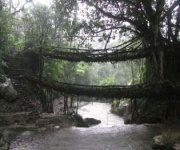
The Tyrna Living Root Bridge Walk leads visitors into the wetter, greener side of Sohra, the Meghalaya region commonly marketed as Cherrapunjee. Beyond the bus parks and main viewpoints, a stone path descends from Tyrna village through subtropical forest to the remarkable double-decker living root bridge at Nongriat. Its woven structure spans a deep ravine above a forest stream.
Most travellers return along the same trail, creating a moderate day of approximately four kilometres. Stone steps, uneven surfaces and abundant moisture make it less straightforward than the distance suggests. The reward is a close look at an extraordinary piece of Khasi engineering, where roots trained over generations have become a permanent bridge.
Australians should treat this as a planned excursion rather than a quick roadside stop. Transfers, permits, local guiding and weather alternatives all deserve attention, particularly during the monsoon. The walk also pairs easily with Sohra’s caves, waterfalls and second living root bridge at Nongstoin.
Choosing the right Tyrna walking route
Before arranging transport, check the essential travel links for current directions, visitor information and contact details for reaching Tyrna from Sohra or Shillong. Walking distances vary slightly according to the starting point, side paths and the distance markers used by local guides.
| Route option | Approximate distance | Terrain and highlights | Best suited to |
|---|---|---|---|
| Tyrna village to Nongriat | About 1.5 km one way | Steep stone steps, rainforest paths and the double-decker living root bridge | Visitors wanting a focused bridge visit |
| Tyrna village and Nongriat return | Roughly 4 km overall | Repeated descent and ascent, waterfall views and village stops | Most first-time walkers |
| Nongriat and Nongstoin extension | Around 6 km overall | A second living root bridge and quieter stepped paths | Comfortable walkers with extra time |
| Guided rainforest extension | Approximately 5–8 km | Local trails, streams and more time beneath the forest canopy | Active visitors seeking a longer outing |
The standard return walk usually takes three to four hours, including photographs and short stops. Monsoon rain can stretch that considerably, while slippery steps make a slower pace sensible. Nongstoin adds a worthwhile extension, although its paths can become steep and waterlogged.
A local Khasi guide adds more than commentary. At Nongriat, a guide can explain how the roots were cultivated, identify changing trail conditions and direct visitors away from unstable edges and unofficial shortcuts. Guided walking also keeps tourism income within the community.
What makes a living root bridge special
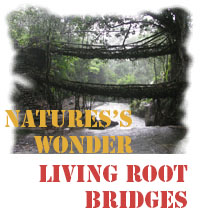
The Nongriat structure is not made from cut timber. Roots of the rubber fig were trained across supports and gradually fused into a living framework, with soil and small stones packed into the walking surface. The upper level is older and narrower, while the lower deck offers a different perspective across the ravine.
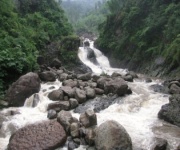
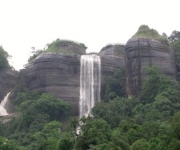
Walking toward the bridge is an experience in itself. Waterfalls spill beside the path, bamboo and dense foliage soften the edges of the gorge, and the sound of running water changes with the rainfall. Mist can hide the valley completely, then lift within minutes to reveal the bridge and forest below.
The clearest conditions generally occur between October and March, although rain remains possible at any time. During the wettest months, the bridge can look dramatic while the trail becomes demanding. Visitors should remain on established paths, avoid loud music, carry away their rubbish and refrain from picking plants or moving stones.
Preparing for monsoon country
For travellers leaving Sydney or Melbourne, distances in kilometres and left-side traffic are familiar. The greater adjustment comes during the road transfer from Shillong or Guwahati, where mountain roads, heavy vehicles and intense monsoon rain may slow the journey. Australian travellers accustomed to smartphone navigation should still download offline maps because mobile reception can be inconsistent.
Visa and entry arrangements require particular attention. Australian passport holders should verify their eligibility for India’s tourist e-visa instead of assuming a visa on arrival is available. Foreign tourists generally also need a Meghalaya restricted-area permit in addition to their Indian visa. Current requirements should be confirmed through official Indian authorities and the Australian Department of Foreign Affairs and Trade’s Smartraveller advice before departure. Although written for Mauritius, a relaxation holiday checklist offers useful reminders to compare inclusions, cancellation terms, guiding standards and emergency support.
Pack for wet ground, changeable temperatures and the possibility of a longer return journey.
- Lightweight waterproof jacket with a hood, plus a dry layer for under the bag
- Grippy walking shoes or boots suitable for steep, slippery stone steps
- Daypack containing water, a snack, power bank and waterproof phone pouch
- Some rupees in cash for village stalls, along with mosquito repellent and basic first-aid supplies
Plan the day around comfort, visibility and responsible access.
- Start after the early-morning rain and allow at least three hours for the return
- Carry your permit, copies of your passport details and travel insurance information
- Use a local guide for Nongriat and Nongstoin, especially during monsoon conditions
- Turn back if thunder is close, a stream is running strongly or a path becomes flooded
- Respect no-swimming signs and keep away from gorge edges when the rocks are wet
Staying near Cherrapunji and extending the visit
Sohra’s hotels and resorts provide the most convenient base for the Tyrna trail, generally placing it within roughly 30 to 45 minutes by road in normal conditions. Shillong offers a wider choice of accommodation but adds a longer transfer. During the drier season, and around weekends and public holidays, arrange accommodation and a vehicle in advance rather than relying on a walk-up arrival.
Local food is another reason to allow time in Sohra. Regional meals commonly feature rice, vegetables, fresh fish or smoked meat, with vegetarian choices available when requested. Spices and chillies vary considerably, so visitors sensitive to strong flavours can explain their preferences when booking. Card payment works at many established businesses, while small village shops and guides may prefer cash. Larger hotels and restaurants in Sohra also serve Australian visitors accustomed to contactless payments, but keeping a small reserve of Indian rupees remains useful.
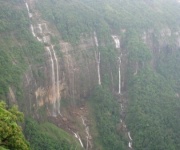
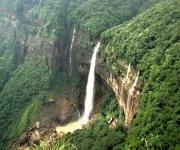
Nearby attractions broaden the itinerary beyond Tyrna. The Arwah Cave, Polish Church, Elephant Falls, Seven Sisters and Nohkalikai viewpoint offer different experiences, although access arrangements can change with weather and local conditions. A multi-day Meghalaya holiday can combine these stops with Nongstoin, the cave country and a slower pace around Sohra. Local guides and drivers can also arrange appropriate village contributions and explain cultural traditions beyond the trail.
Plan your Tyrna Living Root Bridge walk
For a broader Meghalaya schedule, the four-night Meghalaya itinerary provides a useful starting point for combining Tyrna with Sohra’s principal attractions. Longer packages can include additional nights in Shillong, visits to living root bridges and guided outings around the East Khasi Hills.
Choose an operator that confirms the exact walking route, transport times, guide service, village payments and what happens if rain closes a trail. Australian consumer guarantees do not automatically apply to an overseas operator, so examine the booking terms carefully rather than relying on familiar home-country protections. Ask for a written itinerary, cancellation policy and emergency contact, and check that travel insurance covers guided walks in monsoon conditions.
Contact India Beacons Sojourn using the booking information on Cherrapunjee.net. Provide your preferred dates, group size, fitness level and whether you want the standard Tyrna return or the Nongstoin extension, then request a written quote covering accommodation, transport, guiding, permit assistance and a wet-weather alternative. This gives the team a clear basis for matching the route and package to your travel plans.