




A guide to Cherrapunjee’s living root bridge treks
Cherrapunjee, also known as Sohra or Cherrapunji, is famous for dramatic rainfall, mist-covered escarpments, waterfalls, and limestone caves. Yet some of Meghalaya’s most remarkable sights are created slowly by local communities and living trees. The region’s living root bridges are functional works of landscape architecture, shaped from the aerial roots of rubber fig trees and maintained across generations.
Reaching these bridges usually involves forest paths, steep stone stairways, stream crossings, and humid subtropical terrain. The journey can be demanding, but it offers far more than a photo opportunity. Trekkers pass through betel nut groves, village settlements, fern-filled ravines, and dense jungle while seeing how Khasi communities have adapted to the landscape.
A successful trek depends on choosing the right route, allowing enough time, and preparing for slippery conditions. This Cherrapunjee travel guide is useful for combining a root bridge excursion with waterfalls, caves, viewpoints, accommodation, and other attractions around Sohra.
Why the root bridges are so special
Living root bridges are formed by guiding the flexible aerial roots of the Indian rubber fig tree, or Ficus elastica, across streams and ravines. Local people use bamboo, areca palm trunks, or temporary supports to direct the roots toward the opposite bank. As the roots grow, they are woven and strengthened until they become a stable crossing.
Unlike a wooden bridge, a living root bridge can grow stronger over time. Additional roots may be trained into the structure, while stones and soil gradually fill gaps in the walkway. Some bridges are believed to be several hundred years old, although their exact ages are difficult to establish. Their resilience is especially valuable in a region where monsoon rain can quickly swell streams and damage conventional construction.
The bridges also reflect Khasi ecological knowledge. Communities do not simply preserve an old structure as a monument; they continue guiding, repairing, and adapting it. A trek therefore reveals a living tradition connected to farming, water management, forest use, and village mobility.
The Nongriat Double-Decker route
The best-known excursion is the trek to Nongriat, home of the famous Double-Decker Living Root Bridge. Most visitors begin at Tyrna village, reached by road from Cherrapunjee. From there, a long stairway descends through forest toward the Umshiang River valley. The return journey is considerably harder because it involves climbing the same steep route uphill.
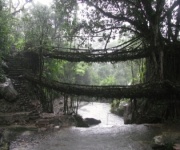
The Double-Decker Bridge consists of two root crossings arranged one above the other. The lower level is generally easier to view, while the upper level provides the distinctive layered appearance seen in photographs. The bridge is surrounded by lush vegetation and flowing water, making the setting feel secluded even when other trekkers are nearby.
Many visitors continue beyond the main bridge toward natural pools and smaller crossings. The exact condition of these paths can change after heavy rain, and stream levels may make certain sections unsafe. A local guide can help with route decisions, river crossings, timing, and directions through less obvious sections of the trail.
The trek is often described as a day hike, but its difficulty should not be underestimated. The stairway includes thousands of uneven steps, and humidity can drain energy quickly. Travelers who want a slower experience can stay overnight in Nongriat or nearby villages, allowing more time for bathing in natural pools and exploring the surrounding forest.
Other bridges and walking routes around Sohra
The single-decker living root bridge near Riwai is a more accessible alternative for travelers who cannot manage the longer Nongriat descent. Riwai is near Mawlynnong, east of Cherrapunjee, and the bridge is reached by a relatively short walk from the road. It is set in a forested area with a stream below and is often paired with a visit to Mawlynnong village and nearby viewpoints.
The Riwai route is not a substitute for the Double-Decker trek in terms of scale, but it offers a clear view of how a single root crossing works. The walk is suitable for a broader range of visitors, though paths may still be muddy or uneven during the monsoon. Families should supervise children around wet stones and stream edges.
Other root bridges and traditional crossings can be found in the broader Khasi Hills, including routes around Pynursla and remote villages in the East Khasi Hills. These trails usually require more local knowledge and careful planning. They may lack marked entrances, reliable mobile coverage, or nearby services, so independent exploration should be approached cautiously.
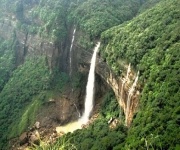
Travelers interested in several walks can combine one major root bridge trek with a shorter village trail. This creates a more balanced itinerary than attempting demanding hikes on consecutive days. The surrounding region also includes attractions such as Mawsmai Cave, Nohkalikai Falls, Seven Sisters Falls, and forest viewpoints.
Route choices and practical difficulty
The table below gives a general comparison of the most popular options. Walking times vary with fitness, weather, stops, trail repairs, and the amount of time spent at the bridge.
| Route | General access | Typical walking effort | Best suited to | Main considerations |
|---|---|---|---|---|
| Nongriat Double-Decker Bridge | Start at Tyrna | Full-day strenuous trek or overnight excursion | Fit hikers seeking the classic experience | Long stairway, humid weather, difficult uphill return |
| Nongriat with natural pools | Start at Tyrna, continue beyond the bridge | Full day or overnight | Hikers wanting swimming and forest exploration | River conditions can change after rain |
| Riwai Single-Decker Bridge | Short approach near Riwai village | Easy to moderate walk | Families and travelers with limited trekking time | Slippery paths and fewer extended trail sections |
| Remote Khasi Hills bridges | Local village access varies | Moderate to strenuous | Experienced trekkers with local support | Limited signage, transport, and emergency services |
Fitness preparation is more useful than speed. Regular walking, stair climbing, and moderate hill hikes can help visitors cope with the route. Take short breaks before exhaustion sets in, and avoid treating the descent as an easy part of the trek. Descending uneven stairs can place significant strain on knees and ankles.
Weather is a major factor. Cherrapunjee receives intense rainfall, especially during the monsoon, and wet steps can become slippery. Rain may also affect visibility, transport, and stream crossings. Even during a drier period, carry protection against sudden showers and check local conditions before leaving.
What to pack for a root bridge trek
Footwear is the most important choice. Wear trail shoes or sturdy sports shoes with reliable grip rather than smooth-soled sandals. Shoes should be comfortable when wet and secure enough for uneven stairs. A lightweight second pair can be helpful if the first becomes soaked, particularly for overnight trips.
Carry a refillable water bottle, basic snacks, a small first-aid kit, personal medication, sunscreen, insect repellent, and a compact rain jacket. A waterproof pouch protects phones, wallets, cameras, and documents. Trekking poles can provide extra stability on steep steps, although they may be awkward on narrow sections of bridge.
Pack lightly. A heavy backpack makes the uphill return from Nongriat much harder. If staying overnight, confirm what bedding, food, and charging facilities are available before starting. Cash is useful because remote villages may have limited card or internet payment access.
Respect the natural setting by carrying rubbish back to a suitable disposal point. Avoid loud music, damaging roots, climbing on fragile sections, or entering pools when water levels are unsafe. Ask before photographing residents, homes, farms, or religious and community spaces.
Planning transport, guides, and timing
Tyrna is commonly reached by hired car or taxi from Cherrapunjee. Public transport may be available on some routes, but schedules can be limited and return connections may not match a full-day trek. Arrange transport in advance, especially if you plan to finish after sunset or return from a remote village.
Starting early gives trekkers more daylight, cooler conditions, and extra time for breaks. It also leaves a buffer for unexpected delays. Avoid beginning a long route late in the afternoon, even if the downhill section initially feels manageable. The climb back can take longer than expected.
A local guide is particularly valuable for first-time visitors, groups, and anyone planning to continue beyond the main bridge. Guides can identify safer paths, explain local customs, and assess water levels. Their knowledge also helps distribute tourism income within the communities that maintain these landscapes.
A multi-day itinerary allows the trek to fit naturally alongside sightseeing. Travelers can spend one day visiting waterfalls and caves, another on the Nongriat route, and a further day exploring villages or the Mawlynnong area. The four-night package can provide a practical starting point for organizing accommodation, transport, and local excursions around Sohra.
Recommendations for a safer and richer trek
- Choose the Nongriat route only if you are comfortable with prolonged stair climbing and a demanding uphill return.
- Visit early in the day, especially during busy periods or unstable weather.
- Hire a local guide for remote trails, changing river conditions, or overnight village stays.
- Wear grippy footwear and carry rain protection even when the morning forecast looks clear.
- Combine the bridge trek with nearby waterfalls, caves, and cultural stops instead of rushing through the region.
The best living root bridge experience comes from allowing the landscape to set the pace. Pause to observe the roots, listen to the stream, and notice how forest paths connect villages and farms. These crossings are part of an active community tradition, so thoughtful travel helps protect both the structures and the culture that sustains them.
Before booking, check the season, route condition, transport arrangements, and accommodation availability. A well-planned visit to Cherrapunjee can turn a strenuous walk into one of Meghalaya’s most memorable journeys, combining physical adventure with a close look at indigenous environmental knowledge. Begin planning your Sohra stay and reserve time for a living root bridge trek that matches your fitness, interests, and travel schedule.