





A Guide to Cherrapunjee’s Annual Cherry Blossom Season
Every autumn, Meghalaya takes on a softer colour as Himalayan cherry trees produce delicate pink and white flowers. The annual cherry blossom season is closely associated with Shillong, where public celebrations and cultural events attract visitors from across India. Cherrapunjee, also known as Sohra or Cherrapunji, offers a quieter way to experience the same seasonal change while exploring waterfalls, caves, forests, and living root bridges.
The flowering period usually falls between late October and November, although the exact timing changes with rainfall, temperature, and local conditions. Blossoms may appear gradually rather than opening across the whole region on one fixed date. Travellers who plan around the season should therefore allow flexibility and treat the flowers as one part of a wider Meghalaya holiday.
Sohra is especially rewarding during this period because the post-monsoon landscape remains green, roads are generally more comfortable for sightseeing, and many famous attractions are accessible in a single trip. With sensible planning, a visit can combine early-morning blossom walks with viewpoints, waterfalls, Khasi food, and memorable cave experiences.
When The Flowers Usually Appear
Himalayan cherry, commonly called Prunus cerasoides, is a deciduous tree that flowers during the cooler months. In Meghalaya, the first blooms often begin appearing in October, with November frequently offering the strongest display. Some trees flower early while others open later, so visitors may see a mix of bare branches, fresh buds, and full clusters during the same journey.
Weather has a major influence on the season. Extended rain, an unusual warm spell, or strong winds can shift the flowering window by several days. The most reliable approach is to check current local updates shortly before travelling and avoid expecting every roadside tree to be in peak bloom. The annual festival atmosphere in Shillong may follow a specific calendar, while blossom viewing in and around Sohra remains more dependent on nature.
Morning is generally the best time for photographs. The light is gentler, roads and viewpoints are less crowded, and flowers often stand out clearly against the blue sky or misty hills. An early start also leaves enough time for the region’s major attractions before afternoon cloud or rain develops.
Finding Blossom-Season Scenery Around Sohra
Cherrapunjee is not a formal cherry blossom garden with one guaranteed viewing gate. Instead, seasonal trees can be encountered along roads, near residential areas, around accommodation, and in open highland spaces. Their scattered appearance is part of the charm, but it means that a local driver or guide can be valuable when identifying trees that are currently flowering.
The approach roads from Shillong can also provide attractive opportunities, particularly where villages, grassland, and wooded slopes open into broad views. Travellers should stop only in safe pull-off areas and never block narrow roads for photographs. Asking permission before entering private land, gardens, or community-managed spaces is an important part of respectful travel in Meghalaya.
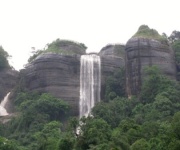
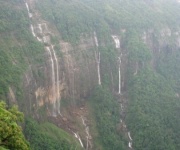
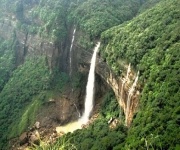
Sohra’s well-known attractions add variety when blossom sightings are brief. Nohkalikai Falls, Seven Sisters Falls, Mawsmai Cave, Eco Park, and the dramatic plateau scenery are all suitable companions to a flower-focused itinerary. A short walk through a wet forest or village edge may be more rewarding than searching for a single famous tree.
Pairing Flowers With The Region’s Highlights
A two- or three-night stay gives visitors enough time to enjoy the seasonal scenery without rushing between distant viewpoints. One day can focus on the main Sohra circuit, another on caves and waterfalls, and a third on a slower village or root-bridge excursion. If the flowers are late, the rest of the itinerary still offers a complete travel experience.
Caves are especially appealing during the cooler season because visitors can explore them without the intense humidity of the summer months. Those interested in geology, fossils, and the natural history of the area can use this Arwah Cave guide when deciding how to include the cave in a sightseeing plan. Closed shoes with grip are essential, since cave floors can remain damp even after the monsoon.
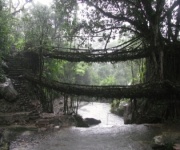
The living root bridges require more time and physical effort than a roadside viewpoint. Nongriat, for example, involves a substantial descent and an equally demanding climb back. Visitors who want to include a root bridge should reserve a full day, begin early, carry drinking water, and avoid trying to fit the walk between several distant attractions.
| Travel period | Likely blossom experience | Typical conditions | Best suited to |
|---|---|---|---|
| Early October | First scattered flowers may appear | Mild, with occasional showers possible | Flexible travellers and photographers |
| Late October | Increasing colour in suitable locations | Cooler mornings and improving road conditions | Short sightseeing breaks |
| Early to mid-November | Often the strongest chance of widespread blooms | Pleasant days, crisp mornings, some cloud | Blossom viewing combined with tours |
| Late November | Some trees may remain in flower, while others fade | Cooler and generally drier, though variable | Quieter travel and outdoor exploration |
| December | Blossom season is usually ending | Cooler, clearer highland weather | Waterfalls, caves, and scenic walks |
Weather, Clothing, And Photography
Cherrapunjee has a reputation for heavy rainfall, yet the autumn blossom period is usually more comfortable than the peak monsoon months. Conditions can still change quickly. A clear morning may become misty by midday, and a short shower can arrive without much warning. Checking the forecast for both Shillong and Sohra is useful because the two places may experience different conditions.
Layered clothing works better than a single heavy jacket. Pack a light waterproof shell, a warm layer for early mornings, comfortable walking trousers, and shoes with firm traction. A small umbrella can help in town, but a waterproof jacket is more practical for trails and viewpoints. Keep cameras, phones, and spare batteries in weather-resistant bags.
Soft morning light is ideal for close-up flower images, especially when petals carry dew. Use the surrounding landscape to give the photographs a sense of place rather than filling every frame with blossoms. Mist, Khasi homes, distant ridges, and dark green foliage can create stronger compositions than a tightly cropped flower alone.
Avoid climbing trees, shaking branches, or touching flowers for a photograph. The branches can be fragile, and a good image should not damage the display that other visitors have come to enjoy. If a tree is on private property, ask before photographing people, homes, or gardens nearby.
Building A Practical Seasonal Itinerary
Travellers arriving from Guwahati commonly continue to Shillong before heading to Sohra. The drive is scenic but can take longer than expected because of traffic, roadwork, weather, and stops at viewpoints. Reaching Cherrapunjee during daylight makes it easier to locate accommodation, settle in, and look for nearby blossoms without turning the first evening into a rushed sightseeing session.
A compact stay can include a morning search for flowering trees, followed by Nohkalikai Falls, Mawsmai Cave, and nearby viewpoints. The next day can be reserved for a longer excursion such as Nongriat, Mawlynnong, or another village route, depending on fitness and road conditions. Travellers with more time can slow down and add local food experiences, forest walks, or a second attempt at blossom photography.
Those who prefer an arranged route can review the two-night Sohra package as a starting point for combining accommodation, transport, and sightseeing. A package may be particularly convenient during the busy autumn period, when dependable transfers help visitors spend more time outdoors rather than coordinating every journey independently.
Book accommodation early if the trip coincides with a major Shillong festival or a popular weekend. In Sohra, choose a property with practical access to the attractions you want to visit, and confirm whether it offers heating, hot water, parking, meals, and local transport. Mobile connectivity can vary in hill areas, so keep offline maps and important booking details available.
Travel Thoughtfully During Blossom Season
Cherry blossom viewing is a seasonal experience rather than a commercial attraction in every part of Cherrapunjee. Respecting this distinction helps preserve the region’s atmosphere. Visitors should stay on established paths, avoid litter, and follow instructions at viewpoints, caves, waterfalls, and community-managed sites.
Local spending can also make a positive difference. Eat at Meghalaya-run restaurants when possible, purchase regional products from legitimate sellers, and hire local drivers or guides for routes that require detailed knowledge. Ask before photographing residents, children, ceremonies, or private homes, and dress modestly when visiting villages or religious places.
The following habits make a blossom-season visit easier and more responsible:
- Start sightseeing early for calmer roads, better light, and cooler walking conditions.
- Carry a reusable water bottle, rain protection, small first-aid supplies, and a sealed bag for electronics.
- Confirm flowering conditions, attraction access, and road updates shortly before departure.
- Leave flowers, branches, rocks, and cave formations undisturbed.
- Keep a flexible schedule so changing weather does not turn the trip into a rushed checklist.
Turn A Seasonal Visit Into A Meghalaya Journey
The annual cherry blossom period gives Cherrapunjee a distinctive autumn character, but the flowers are only one reason to visit. A misty waterfall, a limestone cave, a village meal, or the patient architecture of a living root bridge may become the lasting memory of the trip. Planning with room for changing bloom dates allows the whole landscape to remain part of the experience.
Choose travel dates around late October or November, arrange transport and accommodation in advance, and build a realistic route around the activities you value most. Explore Cherrapunjee’s tours and vacation packages, prepare for sudden weather changes, and contact India Beacons Sojourn for assistance in shaping a comfortable Sohra getaway during the blossom season.