




Nongriat’s Living Root Bridges and Village Trails
Deep in the forested hills of Meghalaya, Nongriat is home to one of Northeast India’s most remarkable examples of living architecture. The village is reached on foot from Tyrna, near Cherrapunjee (Sohra), and the journey passes through steep slopes, subtropical forest, rushing streams, and small Khasi settlements.
The famous Double Decker Living Root Bridge is the main attraction, but it is only one part of the experience. Nongriat also offers quiet village paths, natural pools, waterfalls, suspension bridges, and a close look at how local communities have shaped their surroundings without replacing them with concrete structures.
A visit requires preparation because this is an active mountain trek rather than a roadside sightseeing stop. The return journey involves hundreds of steps, uneven ground, and humid conditions. With suitable footwear, a sensible pace, and respect for village life, the trip becomes one of the most memorable excursions from Cherrapunjee.
Where Nongriat village is located
Nongriat lies in the East Khasi Hills district of Meghalaya, within the broader Cherrapunjee region. Most visitors begin at Tyrna village, approximately 20 kilometres from Sohra, although the exact driving distance depends on the route and starting point. Taxis and local vehicles commonly take travellers to Tyrna early in the morning so there is enough daylight for the trek.
The path from Tyrna descends through dense vegetation toward Nongriat. The first section includes a long series of stone and concrete steps, followed by forest trails, narrow bridges, and sections that can become slippery after rain. The descent is physically demanding, but the changing views and sounds of the forest make the route engaging rather than monotonous.
Nongriat itself is a small Khasi settlement surrounded by steep green hills. Accommodation is limited and simple, with a few homestays or guesthouse-style options in and around the village. Travellers who stay overnight can enjoy a quieter atmosphere and begin the walk to nearby waterfalls before the busiest day visitors arrive.
How living root bridges are made
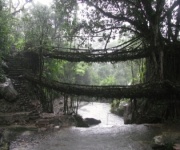
Living root bridges are created from the aerial roots of the Indian rubber fig tree, locally associated with the Khasi and Jaintia tradition of guiding roots across streams and ravines. Young roots are directed along bamboo supports, betel nut trunks, or other temporary structures until they reach the opposite bank. Over many years, the roots grow, thicken, intertwine, and form a load-bearing bridge.
This process requires patience and regular care. Villagers may guide new roots, reinforce weak points, remove unwanted growth, and replace temporary supports as the structure develops. A mature bridge can continue strengthening as the tree grows, although heavy use, storms, floods, and lack of maintenance can still cause damage.
The bridges demonstrate a relationship with the landscape that is practical as well as cultural. They are built from living material, adapted to steep terrain, and maintained through local knowledge passed between generations. Their organic surfaces are uneven, so visitors should walk carefully and avoid climbing on side roots or railings.
The Double Decker Living Root Bridge is especially distinctive because two root bridges are positioned one above the other. The lower bridge is generally easier to cross, while the upper level provides a memorable view of the structure and surrounding forest. The exact appearance changes over time as the roots continue to grow.
The trek from Tyrna to Nongriat
The walk usually takes around two to three hours each way, depending on fitness, weather, crowd levels, and how often a traveller stops. The descent is easier on the lungs than the return climb, but it places considerable strain on the knees. The final climb back to Tyrna is often the most tiring part of the day.
The route contains several thousand steps, though estimates vary because some sections are natural paths and uneven stone stairways rather than uniform steps. Small bridges cross clear streams, and resting points appear along the way. Local vendors may sell water, fruit, snacks, or simple meals, but supplies can be limited outside peak periods.
A gradual pace is more useful than trying to finish quickly. Keep both hands free where possible, use a walking stick if it helps with balance, and pause in shaded areas. During the monsoon, moss and wet leaves can make stones extremely slick. A guide can help with route conditions, local customs, and timing, particularly for first-time visitors or travellers continuing beyond the main bridge.
The trail is not suitable for every traveller. Anyone with serious knee, ankle, heart, or mobility problems should consider the steep return before starting. Parents travelling with children should assess whether the child can manage a long descent and climb safely, rather than relying only on the child’s enthusiasm at the trailhead.
What to see around the bridges
The Double Decker Bridge is the central highlight, but the surrounding area rewards travellers who allow enough time. The natural pools below the bridge are popular for cooling off when water levels and local conditions permit. Swim only where it is considered safe, avoid jumping from rocks, and follow instructions from residents or guides.
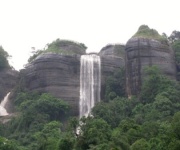
Rainbow Falls lies farther along the trail from Nongriat and is often included by visitors who want a longer day walk. The route can be more demanding, with additional climbs and rougher sections. The waterfall is particularly striking when sunlight meets the spray, although the effect depends on the season and time of day.
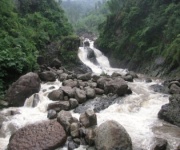
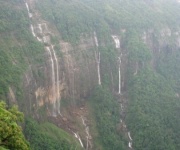
The forest around Nongriat is filled with ferns, moss, orchids, vines, and tall trees. Bird calls and flowing water create much of the atmosphere, while the steep valley walls show why the Khasi Hills receive such heavy rainfall. Photography is rewarding, but wet conditions can damage cameras and phones, so use waterproof covers and secure straps.
Travellers interested in underground landscapes can also explore other attractions in the Cherrapunjee area, although cave visits require separate planning. Before entering any cavern, read this cave safety guide and use appropriate footwear, lighting, and local assistance.
| Experience | Typical time needed | Main considerations |
|---|---|---|
| Tyrna to Nongriat | 2–3 hours one way | Long descent, steps, humid forest |
| Double Decker Bridge | 30–60 minutes | Uneven roots, slippery surfaces |
| Natural pools | 30–90 minutes | Water level and local safety advice |
| Nongriat to Rainbow Falls | 1–2 hours one way | Extra distance and steep sections |
| Return to Tyrna | 2.5–4 hours | Sustained uphill climb |
| Overnight village stay | One night | Simple facilities and limited supplies |
Best season and weather conditions
Nongriat can be visited throughout the year, but each season offers a different experience. The monsoon months bring dramatic streams, full waterfalls, and intensely green vegetation. They also bring slippery steps, stronger currents, leeches, cloud cover, and a greater chance of delays or temporary route difficulties.
The drier months, broadly from October to April, are generally more comfortable for walking. Winter mornings can be cool, while afternoons are pleasant for trekking. Waterfalls may have less volume than during the rainy season, but trails are often easier to manage and visibility can be better.
Weather in the Khasi Hills changes quickly. A clear morning does not guarantee a dry afternoon, so pack rain protection even during the relatively dry season. Check local conditions before leaving, especially if heavy rain has continued for several days. A guide, driver, accommodation host, or tour operator can provide current information about road access and trail safety.
Starting early is useful in every season. It reduces exposure to midday heat, leaves time for rest stops, and provides a better margin for the return climb. It also helps visitors avoid treating the village as a rushed photo stop.
Practical preparation for the walk
Good preparation makes the difference between an enjoyable trek and an uncomfortable one. Carry enough drinking water, but avoid bringing unnecessarily heavy luggage. A small daypack is easier to manage on narrow paths and steep stairs than a large suitcase or overloaded backpack.
Essentials for a comfortable trek
- Wear sturdy shoes with reliable grip; open sandals are unsuitable for wet steps and rocky ground.
- Pack a light rain jacket, quick-drying clothes, and a waterproof cover for electronics.
- Carry drinking water, energy snacks, basic first-aid supplies, and any personal medication.
- Bring cash in small denominations because card payments and mobile connectivity may be unreliable.
- Use insect repellent, sunscreen, and a small towel, especially during warm and humid months.
Dress respectfully when passing through Khasi villages and ask before photographing residents, homes, or private spaces. Keep voices low near houses, do not leave plastic or food waste behind, and avoid taking plants, stones, or pieces of root from the forest.
The bridge is a living structure, not a playground. Walk in small groups when possible, do not overload narrow sections, and keep children close. If the trail or water looks unsafe, turning back is a responsible decision rather than a failure to complete the itinerary.
Building the visit into a Meghalaya holiday
The Nongriat trek works well as a full-day excursion from Sohra, but an overnight stay creates a more relaxed schedule. Travellers staying in Cherrapunjee can combine the trek with nearby viewpoints, waterfalls, caves, and forest attractions over several days. Those who stay in Nongriat should expect basic accommodation, limited electricity or connectivity, and a slower rural rhythm.
A driver can usually wait at Tyrna or arrange a return pickup, but this must be agreed upon in advance. Public transport options may be less convenient for visitors carrying luggage or finishing the trek late. If the itinerary includes Rainbow Falls or a village overnight, allow extra time rather than trying to fit several distant attractions into one day.
The wider Meghalaya trip can include Shillong, Mawlynnong, Dawki, Mawsynram, and other parts of the Khasi and Jaintia Hills. Travel times may appear short on a map but become longer on winding mountain roads. Reviewing the full travel information can help with regional planning, practical details, and choosing attractions that fit the available number of nights.
Respectful tourism supports the communities that maintain the bridges and welcome visitors. Booking local guides, using village accommodation where practical, paying fair prices, and carrying waste back out all help protect the area. The bridges survive because people continue to care for them; tourism should strengthen that care rather than place unnecessary pressure on it.
Nongriat offers a rare combination of adventure, living heritage, and natural beauty. Plan the trek as a substantial mountain walk, allow time to appreciate the village and forest, and travel with the patience required by a place shaped over generations. For transport, accommodation, and multi-day Cherrapunjee holiday arrangements, contact India Beacons Sojourn through Cherrapunjee.net and reserve an itinerary that gives this extraordinary corner of Meghalaya the time it deserves.