





A guide to the rhododendron forests in bloom near Sohra
Hidden in the folds of the Khasi Hills, the forests around Sohra burst into colour each spring as thousands of rhododendron trees come alive with red, pink and white blossoms. The same monsoon-fed soil that gives Cherrapunjee its reputation as one of the wettest places on earth also nurtures some of the densest rhododendron groves in the country. Travellers who time their visit to the bloom window are rewarded with a rare canopy spectacle that turns the misty highland slopes into a moving tapestry of flowers.
The bloom has long drawn botanists and Indian trekkers, but in recent years it has begun appearing on the radar of long-haul travellers looking for a quieter alternative to the crowded Himalayan trails of Himachal and Uttarakhand. Australians in particular find the climate familiar enough to enjoy yet different enough to feel like a real expedition, with cool mornings, light rain and forest underfoot that echo the cool-temperate walks of Tasmania's east coast.
Getting here from Down Under used to feel like a major undertaking, but improved connections through Singapore, Kuala Lumpur and Bangkok now make a stop in Meghalaya far more accessible. Once on the ground, the forests themselves do most of the work, and visitors who allow themselves three or four nights around Sohra tend to walk away with the deepest memories of their entire India trip.
When the canopy catches fire
Rhododendrons in the Khasi Hills follow a different rhythm from those in the eastern Himalayas. The bloom generally opens in late March and runs through early May, with the peak intensity arriving in April when the air is still moist but the heavy monsoon has not yet set in. By June the clouds roll in for good, the trails turn slick, and the petals drop in a slow red rain onto the forest floor.
What makes these forests so visually striking is the way the trees cluster along the ridgelines and the edges of the limestone gorges. Instead of the scattered blooms seen in places like Sikkim, the Khasi rhododendrons often form dense stands that paint whole hillsides in a single colour. Walking through them at sunrise, when the mist is still lifting, feels like crossing the threshold of a painting.
For Australians used to planning bush walks around the school holiday calendar, the timing works neatly. The April peak overlaps with the Easter break in most states, making it a logical choice for families looking to swap a Blue Mountains weekend for something more unusual.
Choosing your route - a side-by-side look
Picking the right walk matters because each trail offers a different relationship with the bloom. Some routes keep you at eye level with the flowers, others push you above the canopy, and a few combine both with caves and cultural sites. The table below compares the most rewarding options so you can match the walk to the kind of day you want.
| Trail | Best feature | Distance | Difficulty | Bloom contact |
|---|---|---|---|---|
| Mawsmai forest path | Easy access, framing trees near limestone caves | 2 km loop | Easy | Canopy-level views |
| Thangkharang Park ridge | Panoramic valley outlook with flowering ridgelines | 3 km return | Moderate | Above-canopy vistas |
| Nongriat root bridge descent | Combines root bridges with side bloom pockets | 5 km return | Strenuous | Mid-slope pockets |
| David Scott Trail | Long ridge walk through mixed forest | 11 km one-way | Moderate to hard | Pockets along ridge |
| Mawphlang sacred grove | Oldest specimens and forest bathing feel | 4 km loop | Easy to moderate | Canopy-level and ground |
Easy walks like Mawsmai and Mawphlang suit photographers with limited time or anyone travelling with younger family members. The Thangkharang ridge rewards those who want a steady climb and a clear view back across the plateau, while Nongriat adds the cultural weight of the living root bridges to the floral spectacle. Longer routes along the David Scott Trail suit serious walkers who want to spend most of the day immersed in the forest.
Trails that wind through flowering giants
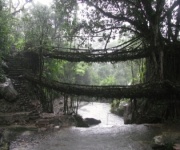
The network of trails around Sohra is varied enough to suit different fitness levels and interests. Mawsmai Cave and the surrounding forest paths offer the gentlest introduction, with rhododendron trees framing the walk in the early hours of the day. A short climb up to Thangkharang Park gives a sweeping view across the valley when the canopy is in full flower, and from there you can connect to a ridge walk that descends toward the famed living root bridges of Nongriat.
More adventurous walkers head east toward Mawphlang, where the sacred grove forest is ringed by older rhododendron specimens. The trails here are older trading paths that once linked villages across the plateau, and you still pass through patches of small hamlets where the locals will happily point out which tree is in bloom that week. The David Scott Trail, although better known for its stone bridge and bamboo groves, also passes through several blooming stands in April, and it pairs well with a day of photography for those who like a longer walk.
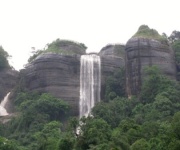
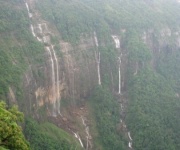
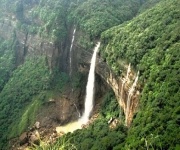
Travellers who want to combine forest time with cultural stops often spend a morning on the shorter trails around Cherrapunjee itself before driving to nearby waterfalls such as Nohkalikai and Seven Sisters. The falls are at their most photogenic in the months leading up to the bloom, and they sit within easy reach of several of the best rhododendron viewpoints.
Flora and fauna that share the canopy
Rhododendrons get the headlines, but the forests around Sohra hold far more than a single genus. The understorey is thick with tree ferns, mosses, and orchids that bloom in their own windows through the year. Bamboo groves tower over the lower slopes, and the scent of wild ginger drifts up from the damp leaf litter during the warmer afternoons.
Wildlife is easier to spot than many visitors expect. Great hornbills cruise the ridges at dawn, leaving their distinctive whoosh of wings behind them, while troops of pig-tailed macaques forage in the upper branches. Lucky walkers might glimpse a Himalayan black bear from a safe distance, although sightings are rare and most groups will only see them as a distant dark shape crossing a clearing. Birders from Australia often remark on how the call of the hornbills reminds them of the channel-billed cuckoo back home, which adds an unexpected layer of familiarity to the trip.
The living root bridges remain the single biggest draw for many visitors, and the rhododendron bloom lines up almost perfectly with the best months to walk down to Nongriat. Combining the two experiences turns a forest walk into something that feels more like a chapter from an old explorer's journal than a day hike.
Packing for the wet season trek
The conditions around Sohra in April sit somewhere between an Australian winter bush walk and a tropical shower, so the kit list mixes layers with serious waterproofs. Trail runners with proper grip work for most of the short walks, although serious walkers heading toward Nongriat will appreciate a stiffer hiking boot for the descent.
- A breathable rain jacket with a sealed hood, ideally one you have already tested on a wet weekend in the Blue Mountains or the Dandenongs
- Quick-dry trekking trousers that handle both mud and the humidity of the lower valleys
- A soft-shell or fleece mid-layer for early starts, when temperatures dip into the low teens
- A dry bag or heavy-duty zip-lock for phone and camera, since the forest microclimate stays damp even when it isn't raining
- A compact head torch for the limestone sections and the early morning walks into the caves
Camera gear deserves special thought. A polarising filter helps cut the glare off the wet leaves, and a telephoto lens comes into its own for hornbill shots along the ridge. Anyone carrying a drone should check the local rules before flying near sacred groves, as several villages around Sohra have asked visitors to keep drones grounded.
Beyond the bloom - extending your Meghalaya wander
The rhododendron forests rarely work as a standalone trip. Most travellers pair them with a few days in Shillong for cafés and markets, then push on to Dawki for the glassy Umngot River or up toward Kaziranga for a chance to see the one-horned rhino. The geography of Meghalaya rewards slow travel, and the highway system around Sohra has improved enough that even a short stay can stretch from forest to river to plateau without long road days.
Pairing the bloom with side trips also stretches the value of the long flight from Australia. Three experiences tend to sit at the top of every itinerary built around Sohra:
- A dawn boat ride on the Umngot River at Dawki, where the water is so clear that boats appear to float on glass
- A half-day in Shillong's Police Bazaar for local Khasi food, freshly brewed coffee and a wander through the small art galleries
- A morning drive out to Mawlynnong, often called the cleanest village in Asia, with a short walk to the nearby living root bridge
For Australians thinking through the broader India leg, the bloom fits neatly before the full heat of the subcontinent sets in. Many Sydney and Melbourne based travellers route through Kolkata or Guwahati and then spend a night in Guwahati before driving up to Shillong, breaking the long journey with a flat-back river cruise on the Brahmaputra. The whole loop can be done in eight or nine nights without rushing, which lines up well with the package lengths offered through cherrapunjee.net.
The region also lends itself to a slow travel style that resonates with Australian preferences. Coffee culture around Shillong has improved markedly, fuel stations serve decent chai, and small family-run resorts around Sohra are increasingly catering to guests who want a forest view from their balcony rather than a generic hotel room. Travellers who like the idea of swapping a Barossa weekend for a Meghalaya one will find the rhythm of days here familiar enough to settle in quickly.
If the rhododendron bloom has been on your list for a while, the simplest way to lock in a trip is to look at the multi-night packages and resort options listed on the cherrapunjee.net homepage, then reach out to the team there for a tailored itinerary that lines up with the peak bloom window in April. The forests are patient, but the colour window is short, and a well-planned few days around Sohra will outlast a hundred generic India itineraries.