




A Guide to the Thangkharang Park and Its Panoramic Views
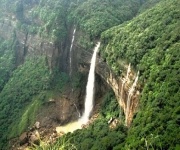
Cherrapunjee, once listed in Guinness records as one of the wettest places on earth, sits perched on the southern edge of Meghalaya's Khasi Hills. Rainfall rushes through the limestone in countless streams, and the plateau is stitched together with lush valleys, dramatic cliffs, and waterfalls that roar louder than Sydney Harbour Bridge traffic on a windy afternoon. Australians with a taste for raw natural scenery will find the Khasi highlands familiar in feel yet wildly distinct in detail, with cloud-shrouded ridges and emerald ravines that few destinations can match.
Thangkharang Park stands as one of the easiest windows into this landscape, a compact stretch of manicured paths, viewing decks, and cultural monuments located about twelve kilometres from the town of Sohra. It draws visitors who want a sweeping introduction to the Khasi experience without committing to a full trek into the deeper gorges. For travellers flying out from Brisbane or Perth and tracing the route north through Guwahati, the park offers a memorable first or final stop on a broader Meghalaya circuit.
The cultural roots of Thangkharang Park
The park takes its name from Thangkharang, a Khasi village that has long watched over the valley below. Local lore ties the area to sacred sites used by ancestral communities, and the grounds still hold religious and ceremonial value for residents from surrounding hamlets. A prominent stone shrine near the upper viewpoints commemorates the region's spiritual heritage, and visitors are asked to treat it with quiet respect rather than as a casual photo backdrop.
Beyond the shrine, the park's design weaves together civic pride and ecological awareness. It was developed as a tribute to Khasi identity, displaying traditional motifs and indigenous plant species along its walking trails. Interpretive signage in English helps international guests grasp the meaning behind the carvings and the relationship between local communities and the land they have tended for generations. Small details, such as the placement of benches aligned with the cardinal directions, hint at older cosmological ideas that still shape how the space is used.
For Australian travellers accustomed to the ANZAC reverent style of remembrance at home, the tone here is gentler, more devotional, tied to the rhythms of forest and rainfall. Walking the park's paths slowly rewards visitors with a clearer sense of why the Khasis call this place sacred, and why ceremonies held here continue to draw villagers from considerable distances.
What you'll encounter on the walking trails
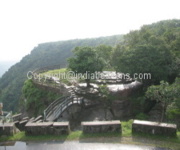
The park unfolds across a ridge that overlooks both the Bangladesh plains to the south and the layered valleys of the Khasi Hills to the north. Wide stone steps lead visitors through terraced gardens, past viewpoints, and toward the famous monolith said to commemorate a Khasi hero. Benches line the upper sections, allowing time to simply sit and absorb the shifting weather patterns that sweep through the plateau.
Birdlife thrives along the wooded edges, and the air carries the wet-earth scent that defines the southern Meghalaya hills. Even a short walk rewards visitors with the chance to spot endemic flora, including orchids, rhododendrons, and tree ferns that thrive in the constant mist. The park is small enough to cover in an hour or two, yet rich enough that photographers often spend much longer, drawn back to the same vantage points as light and cloud continually rearrange the scene.
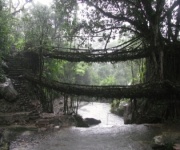
The gentle gradient of the trails makes the park welcoming to families and older travellers, an important point for those crossing half the world to reach Cherrapunjee. Australians planning a multi-day Meghalaya itinerary often use Thangkharang Park as a comfortable starting point before venturing to the more rugged living root bridges and deeper waterfalls further afield. Resting here for a few hours allows the body to adjust to the altitude and humidity before setting out on longer days.
Panoramic views that stretch across borders
The park's signature vantage points face south, where the land drops away in sheer cliffs toward the distant lowlands of Bangladesh. On clear mornings the horizon extends for many kilometres, with rice paddies and small settlements visible far below. The view shifts dramatically through the day, from pastel dawns to bright midday haze, and back to dramatic sunsets that paint the cliffs in shades of copper and gold.
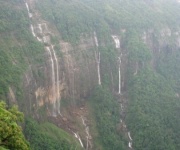
To the north, the panorama covers a different landscape altogether, one of rolling ridges, plunging valleys, and the snaking roads that connect Cherrapunjee to Shillong and beyond. Photographers travel here hoping to capture clouds spilling over the rim of the plateau, a phenomenon locals compare to water pouring from a tilted vessel. The composition rewards both wide-angle landscape shots and tighter telephoto studies of distant hamlets tucked into folds of the hills.
The changing weather is itself a spectacle. Visitors from Melbourne who are used to sudden four-seasons-in-a-day shifts will recognise the pattern, but the intensity here is amplified. Mornings may begin with thick fog, only to clear into brilliant blue by noon, before rain sweeps in again by late afternoon. Each transition offers a fresh version of the view, and patient travellers are rewarded with images no single hour could provide.
When to visit and how to plan the journey
The best time to visit Thangkharang Park is during the cooler, drier months between October and April, when cloud cover is less persistent and viewpoints are more likely to reveal the full sweep of the surrounding valleys. Australian summer holidays, particularly December and January, align neatly with this window, making Cherrapunjee an attractive option for travellers wanting to escape the Australian heat without crossing multiple time zones. The shoulder months of October and March often offer the best balance of clear skies and manageable crowds.
The journey starts with a flight to Guwahati, the main gateway into northeast India. Direct connections operate from major Australian hubs, though many travellers route through Singapore, Kuala Lumpur, or Bangkok. From Guwahati, the road to Cherrapunjee winds through Shillong, the Meghalayan capital, and the drive itself takes roughly six hours including stops. Roads are well-maintained but winding, so motion-sensitive travellers should bring remedies they would also carry on a long drive from Adelaide to the Barossa Valley or across the Nullarbor.
Indian e-visas are available to Australian passport holders, and the application process is straightforward when completed online before departure. Australian travellers should also ensure their travel insurance covers high-altitude and remote-area travel, as the Khasi Hills lie far from major hospital infrastructure. Vaccinations recommended for the region include cover for typhoid and hepatitis A, and a standard travel medical consultation before departure is a sensible step.
Practical tips for a comfortable visit
A few small preparations make a meaningful difference when spending a day at Thangkharang Park, particularly for those used to the dry, sun-baked conditions of much of the Australian outback.
Essentials to pack include:
- A lightweight waterproof jacket or poncho, since rain arrives quickly even in the dry season
- Sturdy walking shoes with good grip, as stone paths can become slippery when wet
- A microfibre towel and spare socks, useful after sudden showers
- Sunscreen and a wide-brim hat, because UV exposure remains strong when cloud cover breaks
- A camera with a wide-angle lens, the better to capture the panoramic scale
Australian dollars convert easily at Indian exchange counters in major cities, but smaller towns often prefer cash. Withdrawing rupees from ATMs in Guwahati or Shillong before heading uphill is wise. Mobile data coverage is reliable in the park itself, and local SIM cards can be purchased at the airport on arrival. A small backpack carrying water, snacks, and a power bank will keep visitors comfortable across a full day of walking and waiting for the perfect light.
Thangkharang Park offers an accessible slice of Cherrapunjee's striking landscape, blending cultural reverence with some of the most expansive views in northeast India. Whether you are tracing the route as part of a longer Indian adventure or building a focused Meghalaya holiday, the park rewards visitors with a sense of scale and atmosphere that lingers long after the flight home to Brisbane or Sydney.
Reach out to India Beacons Sojourn through the contact details listed on the site to start sketching out your dates, package preferences, and any specific sites you want to include alongside the park itself. A well-planned Meghalaya journey turns a single viewpoint into the opening scene of a much longer story.