




A Look at Cherrapunjee’s Remarkable Plant Life
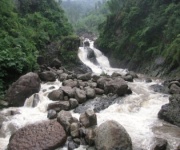
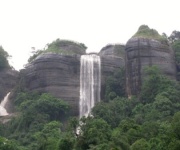
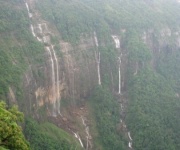
Cherrapunjee, also known as Sohra or Cherrapunji, is famous for dramatic waterfalls, cloud-covered escarpments and some of the heaviest rainfall on Earth. Yet its plant life deserves equal attention. Across the plateau, moisture, sandstone cliffs, forest remnants and village landscapes create a remarkable range of habitats within a relatively compact area.
The flora here is shaped by extremes. Monsoon rain can arrive with extraordinary force, while the drier months bring clearer skies and a softer landscape of grasses, shrubs and evergreen woodland. Plants must cling to wet rock, survive leached soils, or grow rapidly during a short window of favourable conditions.
For visitors from Australia, the region offers a very different botanical experience from the eucalyptus forests around Melbourne, subtropical gardens in Brisbane or the tropical rainforests of Far North Queensland. Cherrapunjee’s vegetation is closely connected to Khasi traditions, living architecture and community-protected forest patches, making a walk here as cultural as it is ecological.
A Plateau Shaped By Rain And Rock
The Cherrapunjee plateau sits in Meghalaya’s Khasi Hills, where elevated terrain meets moist air moving north from the plains of Bangladesh. As this air rises against the hills, it cools and releases intense rain. The result is a landscape of deeply cut valleys, exposed rock, misty ridges and countless streams.
Rain does not produce a single continuous rainforest across the plateau. It supports a mosaic of habitats. Near villages and roads, open grassland and cultivated areas are common. In sheltered gullies, evergreen trees, climbers and ferns form denser vegetation. Along cliff edges, mosses and small flowering plants occupy cracks where soil has accumulated.
The underlying terrain also matters. Water drains quickly from sloping ground, while hollows retain damp leaf litter and support different species. During the wet season, moss spreads across boulders and tree trunks, giving the forest a saturated green appearance. In the drier season, grasses turn muted gold and the structure of the woodland becomes easier to see.
Some of the most important plant communities survive in sacred groves protected by Khasi villages. These forest patches may contain old trees, orchids, ferns and seedlings that are scarce in heavily disturbed areas. Traditional restrictions on cutting vegetation have helped preserve small islands of native biodiversity amid expanding settlement and agriculture.
Trees, Roots And Forest Layers
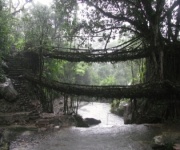
One of the most recognisable plants in the region is the Indian rubber fig, Ficus elastica. Its flexible aerial roots can be guided across streams and gaps, eventually forming the living root bridges for which Meghalaya is renowned. These structures are not constructed in a single season; they develop gradually through cooperation between people, trees and the surrounding landscape.
The forest canopy includes broad-leaved evergreen species adapted to high rainfall and humid conditions. Laurels, oaks, chestnuts and other hill forest trees provide shade, leaf litter and nesting sites. In places where the canopy has been opened, bamboo, cane, wild bananas and vigorous climbers can become prominent.
Beneath the trees, the plant layers are especially varied. Ferns thrive on damp banks, fallen trunks and stream margins, while mosses coat shaded surfaces. Orchids may grow as epiphytes on branches rather than rooting in the ground. Their roots absorb moisture from the humid air and collect nutrients from dust, decaying leaves and rainwater.
The plateau is also associated with the Khasi pitcher plant, Nepenthes khasiana, one of India’s best-known carnivorous plants. It grows in selected sunny, acidic and nutrient-poor habitats, where its pitcher-shaped traps supplement limited soil nutrients by digesting insects. Finding one in the wild requires patience and responsible guidance, since its habitat is localised and vulnerable to disturbance.
Seasonal Colour Across The Plateau
The wet months transform the landscape quickly. New shoots appear, grasses thicken and vines climb over shrubs. Small flowers can be easy to miss beside a waterfall or on a forest track, but close observation reveals begonias, balsams, orchids and other moisture-loving plants. Their colours often stand out against dark rock and vivid moss.
During the drier months, clearer weather makes it easier to identify the structure of the vegetation. Grasslands open views across the valleys, while evergreen trees remain green in protected gullies. Flowering times vary according to altitude, rainfall and exposure, so no single visit guarantees a particular species.
| Habitat | Typical Plant Features | What Visitors May Notice |
|---|---|---|
| Sacred groves | Mature evergreen trees, orchids, ferns and mosses | Dense shade, cool air and layered vegetation |
| Waterfall gullies | Moisture-loving herbs, mosses, liverworts and climbers | Green walls, wet rocks and delicate ground plants |
| Open plateau | Grasses, shrubs and scattered trees | Broad views, seasonal colour and wind-shaped growth |
| Stream margins | Ferns, wild bananas and broad-leaved plants | Lush growth beside clear or fast-flowing water |
| Rocky acidic ground | Specialist shrubs and localised carnivorous plants | Low vegetation in exposed, nutrient-poor sites |
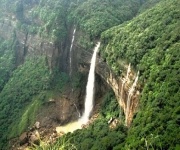
For Australian travellers, the seasonal contrast can feel unusual. In many Australian parks, visitors plan around heat, fire danger or cyclones; in Sohra, rainfall, slippery paths and cloud visibility often shape the day. A waterproof layer is useful even when the morning begins bright, particularly near Nohkalikai Falls, forest trails and exposed viewpoints.
Plants Woven Into Khasi Life
The flora of Cherrapunjee is more than a collection of wild species. Plants provide food, building materials, medicine, fibres, fuel and spiritual meaning. Bamboo and cane are used in household objects and structures, while broad leaves may serve practical purposes in cooking or carrying items. Village knowledge helps identify which plants should be harvested and which should remain untouched.
Living root bridges demonstrate a long-term relationship with trees. Instead of replacing a natural obstacle with concrete or steel, communities have trained roots to create durable crossings. Once mature, a root bridge can strengthen over time, and fallen leaves contribute to the soil that supports additional growth.
Sacred groves express another form of conservation. Cutting trees, removing plants or disturbing wildlife may be prohibited within these areas. The result is a refuge for native vegetation and a living record of older forest conditions. Visitors should follow local instructions, remain on established paths and avoid collecting flowers, seeds, moss or fallen wood.
Photography is welcome when it does not damage the habitat. A close-up lens can reveal the patterns of fern fronds, pitcher plants and epiphytic orchids without requiring visitors to step off the track. A selection of landscape and plant images can be viewed in the Cherrapunjee photo album, which also gives a useful sense of the area’s changing weather and terrain.
Exploring The Flora Responsibly
The best botanical experiences often come from moving slowly. Rather than trying to identify every plant, notice how vegetation changes between a village edge, a stream, a shaded grove and an exposed ridge. A local guide can explain Khasi names, traditional uses and seasonal differences that are difficult to recognise from a field guide alone.
Trails around living root bridges and waterfalls may include steep steps, wet stones and narrow paths. Proper footwear matters more than fashionable clothing, particularly during the monsoon. Australian visitors accustomed to well-marked national park trails should expect some routes in Meghalaya to be more uneven and locally managed.
The region’s popularity creates pressure on fragile habitats. Litter, trampling, plastic waste and unauthorised plant collection can have a disproportionate impact on small forest patches. Choosing a responsible operator, carrying reusable items and respecting village rules helps keep the plateau’s plant communities intact.
Practical Choices For A Plant-Focused Visit
- Travel with sturdy shoes that grip wet stone, plus a lightweight waterproof jacket and a small dry bag.
- Carry a refillable bottle, personal medicines and insect protection rather than relying on single-use purchases.
- Visit sacred groves and living root bridges with a local guide who can explain access rules and plant traditions.
- Use a camera or phone for observation, but never pull moss, flowers, orchids, seeds or pitcher plants from their habitat.
- Allow extra time between attractions because rain, cloud and winding hill roads can slow transfers.
- Plan around the Australian school-holiday calendar if travelling with family, while booking accommodation early during busy periods.
- Keep small purchases in Indian rupees; Australian dollars are useful for budgeting but are not generally accepted by local vendors.
A multi-day stay makes it easier to see the plateau in different conditions. Travellers flying from Sydney, Melbourne or Brisbane will usually need to connect through an Indian gateway before continuing towards Meghalaya, so adding several nights reduces the strain of a long journey. It also allows time for quieter walks, village visits and nearby attractions rather than treating the area as a brief waterfall stop.
Accommodation ranges from practical hotels to scenic resorts, and local meals provide another way to understand the environment. Khasi cuisine may include rice, vegetables, smoked meats and seasonal ingredients, while markets offer opportunities to observe bamboo goods, produce and everyday village commerce. As in Australian farmers’ markets, polite conversation and asking before photographing people or products are appreciated.
Before setting out, check current transport, weather and access information through the Cherrapunjee travel guide. The site includes details about tours, accommodation, attractions and practical arrangements, helping visitors match a plant-focused itinerary with their available time.
A closer look at Cherrapunjee’s vegetation reveals a landscape built through constant interaction between rain, rock, roots and people. From moss-covered ravines to sacred groves and living bridges, each habitat adds a different layer to the plateau’s identity. Book a suitable Meghalaya stay, travel with care and give yourself enough time to experience the flora at walking pace rather than from a vehicle window.