





A Rain Lover’s Guide to Cherrapunjee
Cherrapunjee, officially known as Sohra and often spelled Cherrapunji, is one of Meghalaya’s most atmospheric destinations. Rain arrives here as a defining presence rather than a brief interruption, transforming cliffs, forests, streams, and villages into a constantly changing landscape. Mist gathers over the Khasi Hills, waterfalls swell beside winding roads, and the sound of water follows travellers through the day.
A visit during the monsoon offers a different experience from a standard hill holiday. The skies can shift from bright silver to deep grey within minutes, while clouds drift across valleys and rainwater runs down sandstone walls. Even outside the wettest months, showers can appear suddenly, so the best approach is to plan around flexibility rather than expecting a fixed weather pattern.
Cherrapunjee rewards visitors who enjoy slow travel, natural scenery, and outdoor discovery. With sensible clothing, careful timing, and a willingness to walk in damp conditions, the rain becomes part of the adventure. Waterfalls are fuller, forest paths feel more alive, and the region’s famous living root bridges reveal the close relationship between Khasi communities and their environment.
Why Rain Shapes The Sohra Experience
Sohra’s reputation for extraordinary rainfall comes from its position along the southern escarpment of the Khasi Hills. Moisture-laden clouds from the nearby plains rise against the hills, cool rapidly, and release heavy rain. This geography creates dramatic contrasts: plateaus, deep gorges, limestone formations, forested slopes, and open viewpoints can all appear within a short drive.
Rain also changes the character of familiar attractions. A waterfall that looks delicate during a dry spell may become a broad, roaring curtain during the monsoon. Seasonal streams cross trails, moss brightens old stone, and clouds conceal and reveal the valleys below. The scenery is less predictable, but that unpredictability gives each outing a sense of discovery.
The wettest period generally falls between June and September, although showers can continue before and after the main monsoon. October often brings clearer intervals while retaining green landscapes and active cascades. Winter is usually cooler and drier, making it comfortable for sightseeing, though some waterfalls may be less powerful.
Waterfalls Worth Visiting In Wet Weather
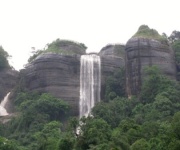
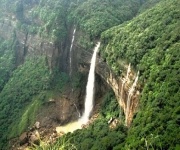
Nohkalikai Falls is one of Cherrapunjee’s signature sights. From the viewpoint, water plunges from a forested plateau into a striking blue-green pool far below. Monsoon clouds can partly veil the gorge, then lift for a few minutes to reveal the full drop. The viewing area is usually easier to enjoy than a long trek, making it a reliable stop when rain is persistent.
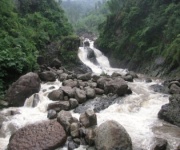
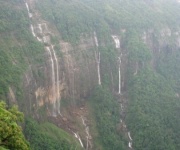
Wah Kaba Falls offers a different perspective, with water descending through steep green hills and rocky terrain. The surrounding viewpoint is especially atmospheric when low cloud moves through the valley. Seven Sisters Falls, also called Nohsngithiang Falls, is most impressive when several streams pour over the escarpment together. In heavy rain, the falls may appear as a wide white veil stretching across the cliff face.
Dainthlen Falls has a strong local legend connected with a giant serpent, while nearby viewpoints and rocky areas provide opportunities for photography. Smaller cascades appear along roads and forest edges during wet months, though visitors should avoid approaching unstable cliff edges or walking into fast-moving water simply for a better view.
Good sightseeing depends on accepting short delays. A downpour may reduce visibility for half an hour, but the same viewpoint can clear soon afterward. Early starts are useful because roads are quieter and there may be more time to revisit a place if clouds block the first view.
Living Root Bridges And Forest Trails
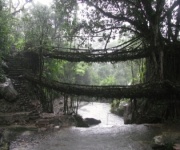
The living root bridges around Cherrapunjee are among Meghalaya’s most remarkable cultural and ecological landmarks. Khasi communities have traditionally guided the roots of rubber fig trees across streams, allowing them to strengthen and form natural bridges over many years. These structures are living systems rather than finished monuments, and their appearance changes as roots grow and the surrounding forest matures.
The Nongriat trail, associated with the famous double-decker living root bridge, involves a demanding descent and an equally strenuous climb back. Hundreds of steps, humid conditions, slippery surfaces, and stream crossings make this excursion unsuitable for rushed itineraries. Rain can make the path slick, so sturdy footwear and a local guide are valuable.
Shorter walks near other villages and forest areas can provide a gentler introduction to the region’s biodiversity. Ferns, orchids, mosses, bamboo, and broad-leaved trees thrive in the wet climate. Insects and small amphibians are more active after rain, while birds may be heard from dense vegetation even when they remain hidden.
Treat the bridges and trails as living heritage. Avoid carving names into roots, stepping outside marked paths, or leaving plastic behind. Local guides bring practical knowledge about weather, stream levels, route conditions, and village customs, adding cultural context to what might otherwise seem like a simple nature walk.
Caves, Cliffs, And Monsoon Viewpoints
Cherrapunjee is part of a limestone-rich landscape, and cave exploration adds another dimension to a rainy-day itinerary. Mawsmai Cave is among the most accessible options, with illuminated sections and narrow passages that can be explored without a technical expedition. The rock formations, low ceilings, and naturally dark chambers create a cool contrast to the wet conditions outside.
Some caves and less-developed passages require greater caution. Water levels can rise quickly underground, surfaces may be extremely slippery, and mobile coverage may be limited. Visitors should use authorized routes and follow local instructions rather than entering unexplored openings. A headlamp, even where lighting is provided, can be useful for footing and visibility.
Rainy weather also enhances viewpoints such as Eco Park and cliff-edge overlooks near the plateau. When visibility opens, the plains of Bangladesh may be visible beyond the escarpment. When clouds close in, the same location becomes a quiet world of pale mist and dripping vegetation. Both conditions are part of the experience.
Photography in Sohra works best with patience. Carry a waterproof cover for cameras and phones, wipe lenses frequently, and use muted light to capture waterfalls, cloud layers, and wet rock. A brief break in the rain can produce the clearest images because the air is freshly washed and the vegetation appears intensely green.
Planning Around Weather And Travel Time
A realistic itinerary should leave space between major stops. Roads can be slow during heavy rain, and a journey that looks short on a map may take longer because of bends, traffic, village activity, or temporary water flow across the road. A two-night stay can cover major viewpoints, caves, and selected waterfalls, while longer packages allow time for living root bridges, forest walks, and nearby attractions.
| Travel Style | Ideal Stay | Suitable Experiences | Weather Strategy |
|---|---|---|---|
| Scenic escape | 2 nights | Nohkalikai, Seven Sisters Falls, local viewpoints | Keep visits flexible and use short walks |
| Waterfall-focused trip | 3 nights | Major cascades, Dainthlen, Wah Kaba, misty viewpoints | Allow repeat visits when visibility changes |
| Nature and culture holiday | 4–5 nights | Root bridges, caves, village areas, forest trails | Reserve full days for longer excursions |
| Slow monsoon journey | 6–7 nights | Sohra and surrounding Meghalaya attractions | Build in rest days and weather buffers |
Transport arrangements matter during the rainy season. A private vehicle with an experienced local driver offers greater flexibility than trying to connect every attraction through irregular public transport. Confirm road conditions before setting out, especially for remote trails and routes near streams. Accommodation in or around Sohra reduces repeated travel and makes early starts easier.
For international visitors, passport, visa, and any applicable regional travel requirements should be checked before departure. Indian travellers should also carry valid identification. Booking inquiries, package details, and itinerary coordination can be handled through the site’s travel contact page, especially when a trip includes several nights and multiple local transfers.
What To Pack For A Wet Hill Holiday
The most important item is footwear with dependable grip. Waterproof hiking shoes are useful for trails, while sandals or lightweight shoes can serve around accommodation. Avoid relying on smooth-soled trainers, which become hazardous on wet steps, cave floors, and muddy paths.
Quick-drying clothing is more practical than heavy cotton. Pack a light waterproof jacket or poncho, spare socks, a small towel, and a waterproof bag for electronics and documents. An umbrella may help in towns and at viewpoints, but it is less convenient on forest trails where both hands may be needed.
A compact first-aid kit should include blister treatment, antiseptic, personal medicines, and basic pain relief. Insect repellent, sunscreen, reusable water bottles, and snacks are also useful during longer walks. Food options can be limited near some attractions, and energy levels fall quickly on steep routes.
Keep a dry change of clothes in the day bag rather than leaving everything in luggage at the hotel. A plastic-free waterproof liner or dry bag protects cameras, chargers, wallets, and travel papers. Pack light enough to move comfortably, but include warm layers because wet evenings on the plateau can feel surprisingly cool.
Responsible Ways To Enjoy The Monsoon
Rain supports Sohra’s forests, streams, agriculture, and tourism economy, yet fragile places can suffer when visitor numbers rise. Responsible travel means respecting village life, using established paths, and keeping noise low near homes and sacred or culturally significant sites. Ask before photographing residents, community spaces, or local ceremonies.
Waste is especially damaging during the wet season because plastic can be carried into streams and valleys. Carry reusable bottles and bags, take all rubbish back with you, and avoid disposable rain gear where possible. Choose accommodation and guides that employ local people and follow environmentally considerate practices.
For broader planning, the destination’s travel information resources can help connect visitors with practical details about attractions, stays, and regional travel. Check current information before departure, since access, weather, and local conditions can change between seasons.
Practical Choices For Rainy Days
- Choose flexible sightseeing days so waterfalls and viewpoints can be revisited after cloud or heavy rain clears.
- Hire a local driver or guide for remote attractions, slippery trails, and routes affected by seasonal water flow.
- Carry waterproof layers, spare socks, secure footwear, and dry storage for phones, cameras, and documents.
- Leave extra time for the Nongriat trail and other steep walks instead of combining them with too many road stops.
- Follow local advice around caves, cliffs, streams, bridges, and temporary closures.
The best memories of Sohra often come from moments that cannot be scheduled precisely: a waterfall appearing through mist, a village path shining after a shower, or sunlight breaking across a valley for a few minutes. Plan the essential details carefully, then leave enough room for weather to shape the day.
Choose a Cherrapunjee stay that matches your preferred pace, from a short waterfall break to a week-long Meghalaya exploration. Review the available vacation packages, prepare for wet trails and changing skies, and contact the local team to arrange a rain-filled journey through Sohra’s waterfalls, caves, forests, and living root bridges.