





A Safety Guide for Solo Trekkers on the Nongriat Trail
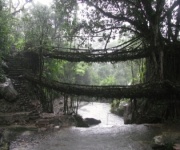
The Nongriat Trail is one of Meghalaya’s most memorable walking routes, leading from Tyrna village into a humid valley of forest, streams, and living root bridges. Its landmark is the Double Decker Living Root Bridge, while Rainbow Falls offers an additional reward for trekkers who continue deeper into the valley. The setting is beautiful, but the route demands preparation.
Solo hikers need to treat the trail as a serious rural trek rather than a simple sightseeing walk. The descent includes thousands of uneven steps, and the return journey is considerably harder because it climbs continuously. Wet weather, poor mobile coverage, slippery surfaces, and limited facilities can quickly turn a relaxed outing into an uncomfortable or unsafe experience.
Good planning makes the difference. Check the forecast, start early, carry sufficient water and food, tell someone where you are going, and be willing to turn back. A careful solo trekker can enjoy Nongriat while respecting the terrain and the communities that maintain this remarkable landscape.
Know the route before setting out
Most visitors begin at Tyrna village, roughly 20 kilometres from Sohra, also known as Cherrapunji. From the trailhead, the path drops through dense vegetation toward Nongriat village. The route is clearly used, but it is not a smooth, engineered walkway throughout. Stone steps, concrete sections, exposed roots, narrow footpaths, and suspension bridges appear along the way.
The first major destination is the Double Decker Living Root Bridge. Depending on pace, weather, fitness, and rest stops, the descent can take several hours. Continuing to Rainbow Falls requires additional walking over terrain that may be wetter and more isolated. Remember that every step downhill must be climbed again on the return, so calculate your turnaround time conservatively.
Do not rely on a phone map alone. Download an offline map before leaving, mark the Tyrna trailhead and your accommodation, and save the location of the bridge area if your mapping application allows it. Ask local residents or your driver about current conditions, stream crossings, and access restrictions. The Cherrapunjee.net team can also help travellers understand the area and arrange a Meghalaya trip with practical local support.
Build a realistic safety margin
An early start is one of the simplest ways to reduce risk. Beginning soon after daylight gives you more time to complete the route, find assistance if needed, and return before evening. Avoid starting a long descent late in the day, even if the weather appears clear. Cloud and rain can arrive quickly in the Khasi Hills, and visibility declines under the forest canopy.
Set a turnaround time before you leave. This should be based on your fitness and the weather, not on the desire to reach every viewpoint. If you have not reached your planned destination by that time, return while you still have energy. Solo trekkers should be especially cautious about pushing onward after fatigue, because a twisted ankle or fall becomes more serious when nobody is nearby.
Tell your hotel, homestay, driver, or a trusted contact your route and expected return time. Include the names of any stops you plan to visit, such as Nongriat village or Rainbow Falls. Arrange a check-in message at a specific hour. If you miss it, your contact should know when to call local accommodation staff or emergency services rather than assuming you are simply delayed.
Choose the right level of independence
Going alone does not mean you must manage every part of the journey without local assistance. A local guide can make navigation easier, explain customs, identify safer routes around water, and help communicate with residents. A guide is particularly valuable after heavy rain, when parts of the trail may be damaged or confusing.
Use the comparison below to choose an approach that matches your experience, weather conditions, and comfort with remote trekking.
| Trekking approach | Advantages | Main concerns | Best suited to |
|---|---|---|---|
| Solo with no guide | Maximum flexibility and privacy | Navigation, emergencies, and local communication are your responsibility | Experienced hikers in stable weather |
| Solo with a local guide | Local knowledge, route support, and greater confidence | Additional cost and less spontaneous pacing | First-time visitors or uncertain conditions |
| Small guided group | Shared support and easier logistics | Fixed pace and less solitude | Travellers who want social reassurance |
| Overnight stay in Nongriat | Removes pressure to complete everything in one day | Requires advance accommodation planning and extra supplies | Trekkers wanting a slower experience |
| Day trek to the bridge only | Shorter objective and simpler planning | Still involves a demanding return climb | Visitors with limited time or moderate fitness |
If you choose to trek independently, remain near other walkers when possible without forcing yourself to match their pace. A quiet trail can become isolating, especially beyond the main bridge. Carry a whistle and keep your phone accessible, but do not assume another group will be available if you need help.
Pack for rain, heat, and uneven ground
Wear shoes with a firm grip and secure ankle support. Hiking shoes or trail shoes are preferable to smooth trainers, sandals, or flip-flops. Mud can cover the steps, and wet rock becomes extremely slippery. Bring a lightweight rain jacket even when the forecast looks favourable, along with a dry bag or waterproof phone pouch.
Carry enough drinking water for the full outing, plus a little extra in case the walk takes longer than expected. Refill only where water quality is known and purification is possible. Pack high-energy food such as nuts, fruit, sandwiches, or energy bars. Small local stalls and village shops may not be open, stocked, or located where you expect them.
A basic personal kit should include blister treatment, antiseptic, bandages, pain relief, any prescription medicine, insect repellent, sunscreen, and hand sanitiser. Add a headlamp, spare battery or power bank, and a whistle. The headlamp matters even if you plan to return in daylight; a delay, injury, or sudden weather change can extend the trek.
Dress for a humid subtropical climate. Lightweight, quick-drying clothing is practical, while a change of socks can greatly improve comfort. Avoid carrying unnecessary weight, but do not remove essential safety equipment simply to make the pack lighter.
Manage water, weather, and wildlife hazards
Rain is the main variable on the Nongriat route. Heavy showers can make steps slick, increase stream levels, and create stronger currents near waterfalls. Never enter fast-flowing water, stand on wet rocks beside a cascade, or swim close to the edge of Rainbow Falls. A beautiful photograph is not worth a preventable fall.
Use three points of contact on steep sections: two feet and one hand, or two hands and one foot. Take short steps, face the slope when necessary, and use railings carefully without treating them as guaranteed protection. Leave space between yourself and other walkers on narrow bridges or stairways. Do not hurry because someone behind you is waiting.
Heat, humidity, and exertion can cause dehydration or exhaustion even when the air feels cool under the trees. Take regular breaks in safe, stable places, eat before you feel weak, and watch for dizziness, headache, nausea, confusion, or unusual tiredness. Stop in shade, drink slowly, and seek help if symptoms do not improve.
The forest is not usually a high-risk wildlife environment, but insects and leeches may be present, especially in wet conditions. Keep food sealed, avoid touching unfamiliar plants or animals, and check socks and clothing during breaks. If you are bitten, stung, or develop a serious allergic reaction, return toward assistance rather than continuing deeper into the valley.
Follow practical solo trekking habits
A safe route also depends on small decisions made before and during the hike. Use these habits as a pre-departure checklist:
- Check the latest weather forecast and ask locally about trail conditions after rain.
- Share your route, start time, planned destination, and return deadline with a trusted person.
- Carry offline maps, a charged phone, a power bank, water, food, first aid, and rain protection.
- Keep valuables secure and carry some cash, since digital payment and mobile service may be unreliable.
- Turn back when fatigue, darkness, rising water, or unsafe footing makes the next section questionable.
Respect Nongriat’s villages and living root bridges by staying on established paths and asking before photographing residents or private areas. Do not leave plastic, food wrappers, or other waste behind. Avoid loud music and treat local homes, shrines, water sources, and community facilities with care.
Emergency planning should be simple and practical. India’s emergency number is 112, while 108 is commonly used for ambulance services in many areas, but connectivity may be inconsistent on the trail. If you are injured, stay visible, conserve your phone battery, and communicate your last known location. A guide, homestay host, driver, or village resident may be able to coordinate help more quickly than a distant contact.
Know when to change your plan
The safest decision may be to shorten the walk, stay overnight, or postpone the trek. Consider changing your plan if there has been sustained rainfall, the forecast shows storms, you feel unwell, or you cannot identify a reliable return route. Conditions at the trailhead can look manageable while the valley below is wet and hazardous.
Solo trekking is most enjoyable when the route matches your ability. If you are not accustomed to long stair descents, begin with the bridge area rather than committing to Rainbow Falls. If your knees or ankles are vulnerable, trekking poles can provide useful support, although they should not replace careful foot placement.
Before leaving Sohra, confirm transport arrangements for the return. Drivers may need a clear pickup time and location, and public transport options can be limited near the trailhead. Keep your accommodation informed if your schedule changes. A few minutes spent arranging transport and communication can prevent a long wait after an exhausting climb.
Allow the Nongriat Trail to be a measured adventure rather than a race. Start early, travel lightly but intelligently, respect the weather, and listen to local advice. When you are ready to explore the living root bridges, arrange a well-supported Cherrapunjee stay or tour through the local travel specialists at Cherrapunjee.net, and make the trail part of a safe, thoughtfully planned Meghalaya journey.