




Laitkynsew village and its living roots
Laitkynsew offers a quieter way to experience the Khasi hills around Cherrapunjee, also known as Sohra or Cherrapunji. The village lies in a landscape of steep slopes, forested valleys, rain-fed streams, betel nut groves, and scattered homes. A visit here is less about checking off a single viewpoint and more about understanding how people, paths, water, and trees belong to the same living environment.
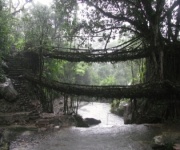
The area is closely associated with Meghalaya’s living root bridges, remarkable footbridges shaped from the aerial roots of Indian rubber trees. These structures take years or decades to become strong enough for regular use, then continue growing and renewing themselves. Around Laitkynsew and the nearby routes leading toward Tyrna and Nongriat, visitors can see how this traditional skill fits into everyday village life.
A guided tour makes the experience easier to appreciate. Local knowledge helps with route conditions, village customs, weather changes, and the difference between a quick photo stop and a meaningful walk. Whether included in a short Cherrapunjee holiday or a longer Meghalaya itinerary, Laitkynsew rewards travelers who leave room for observation.
A quiet Khasi landscape near Sohra
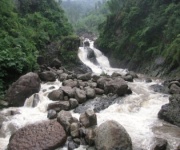
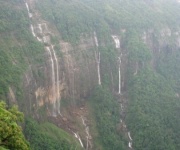
Laitkynsew is surrounded by the distinctive scenery of the southern Khasi Hills. The plateau can appear open and grassy in one direction, then fall abruptly into deep ravines and forested valleys in another. During the monsoon, clouds move quickly across the slopes, streams swell, and the sound of water becomes part of the landscape. In drier months, the paths are often easier to walk, while the valley views can be clearer.
The village atmosphere is an important part of the visit. Small roads and footpaths connect homes, cultivated plots, churches, forest edges, and access points for longer walks. Khasi communities have long adapted to a wet, rugged environment, and visitors may notice practical features such as carefully managed drainage, stone steps, bamboo fencing, and paths worn into the hillside by daily use.
Travelers should allow time to slow down rather than treating Laitkynsew as a roadside attraction. A short walk through the settlement can reveal more about the region than a hurried transfer between waterfalls. It is worth observing how houses sit within the terrain, how farm products are moved, and how villagers use the same routes that visitors follow toward the living root bridges.
How the living roots become bridges
Living root bridges are created from the flexible aerial roots of the Ficus elastica, commonly called the Indian rubber tree. In traditional Khasi practice, young roots are guided across a stream or gorge using supports such as bamboo, areca palm trunks, or wooden frameworks. As the roots grow, they are woven, redirected, and encouraged to join. Over time, the structure becomes a firm natural crossing.
The process requires patience and regular care. A bridge cannot be built in the same way as a concrete span because its strength develops gradually. Villagers may maintain the route by adding new roots, replacing temporary supports, clearing vegetation, and repairing the walking surface. Mature bridges can remain useful for generations, and some become stronger as the roots thicken and interlock.
This is why a living root bridge should be understood as community infrastructure rather than a botanical curiosity. It reflects local knowledge of plant behavior, water movement, materials, and seasonal conditions. The bridge is living, but it is also shaped by human attention. Walking across one connects visitors with a tradition that is practical, ecological, and deeply rooted in Khasi history.
The most famous nearby excursion is the descent from Tyrna toward Nongriat, where travelers can encounter impressive root bridges and forest scenery. Routes associated with Laitkynsew may vary according to local access and the tour plan, so it is sensible to confirm the day’s walking distance and trail conditions before setting out.
Planning the walk and reaching the village
Laitkynsew is generally visited from the Sohra area by road, with the exact journey depending on the starting point and the day’s itinerary. A private vehicle or organized tour provides greater flexibility for combining the village with waterfalls, viewpoints, caves, or nearby forest trails. Public transport can be less convenient when several scattered attractions are included.
Road conditions in Meghalaya change with weather, particularly during heavy rain. Mist may reduce visibility suddenly, and narrow hill roads can become slippery near bends, bridges, and unpaved access routes. Drivers should reduce speed, use headlights when appropriate, and avoid stopping in unsafe locations. Before leaving, review practical advice on driving through mist, especially if the tour involves early departures or evening returns.
The village itself may be easy to reach by vehicle, but a living root bridge excursion usually involves walking. Some routes include steep stairways, uneven stones, mud, stream crossings, and long ascents on the return journey. A person with moderate fitness can manage many walks by taking regular breaks, yet the time required should never be underestimated. A guide can help choose a route that matches the group’s ability and the weather.
| Part of the visit | What to expect | Helpful preparation |
|---|---|---|
| Road journey from Sohra | Curving hill roads, changing visibility, rural settlements | Comfortable clothing, patience, and an experienced driver |
| Village walk | Quiet lanes, homes, cultivated land, and local scenery | Modest dress and respectful photography |
| Root-bridge trail | Steps, forest paths, damp stones, and stream crossings | Good grip footwear and drinking water |
| Monsoon conditions | Heavy rain, slippery ground, swollen streams, and mist | Rain protection and flexible timing |
| Return journey | A tiring climb after the descent | Snacks, rest breaks, and realistic scheduling |
A tour of Laitkynsew works best when the schedule is not overloaded. Combining a demanding root-bridge trek with several distant waterfalls can leave little time to enjoy any of them. A slower plan, particularly for families or older travelers, creates space for village exploration and rest.
What to notice beyond the bridge
The route toward a living root bridge is filled with smaller details that can be easy to miss. Look for moss-covered stones, fern-filled banks, orchids growing on trees, and streams cutting through dark rock. In the wet season, the forest may appear intensely green, while winter and spring often provide more stable walking conditions and softer light for photography.
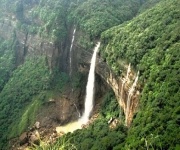
Water is central to the experience. The Khasi Hills receive some of the heaviest rainfall on Earth, and the landscape shows its influence through waterfalls, pools, gullies, and constantly damp vegetation. A stream that looks modest during a dry spell may become forceful after rain. Visitors should follow local instructions and avoid entering fast-flowing water or standing close to unstable edges.
Village life adds another layer to the journey. Depending on the season, travelers may see people carrying produce, tending gardens, or using traditional footpaths between settlements. These encounters should remain unobtrusive. Ask before photographing residents, homes, ceremonies, or private land, and do not assume that a quiet village is an open-air attraction.
Local food can make the day feel more connected to the region. Simple Khasi meals may include rice, seasonal vegetables, pork, fish, or local herbs, depending on the host and location. Food availability along remote trails is limited, so visitors should carry a small snack and avoid relying on cafés near the final destination.
A respectful and comfortable day outdoors
The best footwear for a root-bridge walk is sturdy, closed, and comfortable, with a sole that grips wet stone. Lightweight sandals may be convenient on the road but are unsuitable for steep steps and muddy forest paths. Pack a rain jacket or poncho even when the morning begins clear, as weather can change quickly across the plateau.
A small daypack should contain drinking water, basic medicines, sun protection, insect repellent, tissues, and a waterproof pouch for a phone or camera. Keep the load light because the return climb can be strenuous. Trekking poles can help on slippery sections, particularly for travelers who are less confident on uneven steps.
Environmental care is essential in a place where the attraction is part of a living ecosystem. Carry all packaging back, avoid loud music, and never carve names into roots or trees. Do not pull, swing from, or climb on the bridge structure. The roots may look robust, but careless pressure can damage young growth and create risks for future users.
Weather should guide the final decision to walk. Heavy rain can make a route unsafe even when a bridge remains open in normal conditions. A responsible local guide may recommend delaying the descent, choosing a shorter village walk, or changing the itinerary. Flexibility protects travelers and respects the people who maintain these routes.
Practical choices for a richer visit
A Laitkynsew excursion can be arranged as a day trip from Sohra or included in a longer Meghalaya holiday. Travelers staying for two to seven nights have more opportunity to combine the village with Nohkalikai Falls, Mawsmai Cave, Arwah Cave, forest viewpoints, and other local attractions without rushing between them. The right pace depends on fitness, weather, and interest in walking.
Before booking, clarify whether the package includes transport, a local guide, meals, entry fees, and assistance on the walking trail. Ask how much time is allocated to Laitkynsew itself and whether the itinerary includes the Tyrna–Nongriat route or a different living root bridge location. Clear details help prevent an ambitious trek from being added unexpectedly to a relaxed sightseeing day.
A thoughtful visit should follow a few simple principles:
- Choose secure footwear and carry rain protection in every season.
- Confirm trail length, stair count, weather conditions, and return time with the guide.
- Ask permission before photographing villagers, homes, farms, or religious places.
- Stay on established paths and treat the root bridge as protected community infrastructure.
- Carry personal waste out and use refillable water bottles where practical.
The village is especially rewarding for travelers interested in responsible tourism, rural culture, nature photography, and traditional engineering. It also suits visitors who want to experience Meghalaya beyond famous waterfalls and crowded viewpoints. The living roots are the visual highlight, yet the surrounding forest, streams, and community setting give the visit its deeper character.
A stay in or around Sohra can provide the base for exploring Laitkynsew at a comfortable pace. With India Beacons Sojourn’s Cherrapunjee travel packages, visitors can arrange a multi-day route that balances village walks with caves, waterfalls, scenic drives, and time to rest. Browse the available Cherrapunjee tours and contact the booking team to plan a journey that includes Laitkynsew, its living roots, and the wider landscapes of Meghalaya.