




Sohra Historical Cemetery: echoes of empire in the Khasi Hills
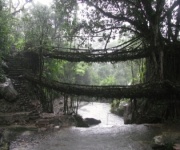
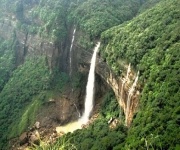
Sohra — known to most travellers as Cherrapunjee — wears two reputations at once. It is the legendary wettest place on earth, celebrated for its roaring waterfalls and the strange lacework of living root bridges. Yet tucked behind the main bazaar, on a gentle rise of land that catches the morning sun, lies a small patch of quiet ground that tells a very different chapter of the region's story. The Sohra Historical Cemetery, sometimes called the Welsh Mission Cemetery, gathers roughly two hundred weathered headstones beneath a canopy of oak and pine. Walking among them, visitors move through a compact slice of nineteenth-century imperial history, where Welsh evangelists, British administrators, and their Khasi neighbours share the same red soil.
The cemetery is rarely the headline reason travellers plan a Cherrapunje trip, but those who make the detour often speak of it longest afterwards. It is a place of mossy angels, eroded inscriptions, and unexpected names — Elizabeth, born in Llandudno; David, late of Aberystwyth; a baby named after the Welsh river Dyfi. Beyond the stone itself, the site offers a window onto how one of the most remote corners of British India was folded into the wider Victorian world, and how the Khasi people quietly reshaped that world in return.
The origins of the Sohra burial ground
The story of the cemetery begins in 1841, when a young Welsh missionary named Thomas Jones walked barefoot into the Khasi Hills with a printing press on his back. Jones had been sent out by the Welsh Calvinistic Methodist Foreign Missionary Society, and he found in the Khasi people a population already primed for change: nineteenth-century Khasi society was fluid, literate in its own oral traditions, and receptive to new ideas. Within a decade, Jones had translated the gospel into Khasi, founded a network of schools, and seen Christianity take root among the local clans. Where missionaries lived, they also died — and so, slowly, a consecrated burial ground took shape on the edge of the mission compound.
The earliest marked grave belongs to a child who died in 1844, only a few years after the mission station was established. By the turn of the twentieth century, the cemetery held more than four hundred graves, though many have since sunk back into the red earth. The plots were laid out in the orderly grid typical of Victorian churchyards, and the headstones themselves were often carved from local sandstone by stonemasons who had learned their trade at the mission workshop. Some of the stones were later replaced by more durable granite shipped in from the quarries of Assam, which is why visitors today find a patchwork of materials and weathering styles across the site.
Welsh missionaries and their lasting legacy
A surprising number of the inscriptions here are in Welsh as well as English, a quirk that makes the cemetery almost unique in South Asia. The bilingual stones were a deliberate choice: Welsh was the mother tongue of most of the missionaries, and they wanted their deaths recorded in the language of their hymns and prayer meetings. Looking closely, you can pick out familiar Welsh place names — Carmarthen, Bangor, Rhyl — engraved on monuments set deep in the monsoon-soaked hills of Meghalaya. The most prominent grave belongs to Thomas Jones himself, who died in Sohra in 1849 and is commemorated with a tall obelisk erected by the grateful communities he helped to educate.
Jones's legacy still shapes Khasi life. The Khasi alphabet he devised is still in daily use, and the Presbyterian tradition he introduced remains the dominant Christian denomination across the Khasi and Jaintia Hills. Many of the surnames carried by Khasi Christians today reflect this missionary imprint, and several clans trace their conversion stories directly back to the Welsh preachers buried in this small hillside plot. The cemetery, then, functions as both a memorial ground and a site of cultural transmission, marking the spot where one language family grafted itself onto another and produced something entirely new.
Walking among the stones: notable graves
Visitors usually enter through a modest iron gate shaded by an old cherry tree, though the original wooden gates were replaced after a 1980s restoration project led by the Meghalaya government and the British Association for Cemeteries in South Asia. Once inside, the eye is drawn to the grandest monuments first: a marble cross erected for an Englishwoman who died during childbirth in 1862; a moss-covered column for a tea planter from the nearby experimental estates; and the poignant family plot of the Lewis family, three generations of missionaries who served the same parish from the 1860s until Indian Independence.
The smaller stones often tell the more intimate stories. There are infants marked simply "in memory of an infant beloved but brief," soldiers from the garrison at Cherrapunjee who died of malaria or cholera, and a handful of graves inscribed with the Khasi script as well as Roman letters. The most photographed feature is a leaning memorial to a Welsh doctor who, according to local legend, saved an entire village from a dysentery outbreak and was buried facing the valley so he could watch over the people he had healed. Whatever the accuracy of the story, the position of the grave does indeed point west toward the Sylhet plains, making it a favourite spot for sunset visitors.
Comparing heritage trails in the East Khasi Hills
The Sohra Historical Cemetery is one of several heritage stops that thoughtful travellers can weave into a broader East Khasi Hills itinerary. Below is a comparison of how the cemetery stacks up against other notable historical and natural sites within an hour's drive of Sohra town.
| Site | Type | Walking time | Best for | Closest to Sohra |
|---|---|---|---|---|
| Sohra Historical Cemetery | Colonial-era burial ground | 45–90 minutes | History, photography, quiet reflection | 1 km from Sohra town centre |
| Nongkhyllem Wildlife Sanctuary | Protected forest reserve | 2–4 hours | Birdwatching, rare orchids | 38 km west of Sohra |
| Mawsmai Cave | Limestone karst cave | 30–45 minutes | Geology, families with children | 6 km south of Sohra |
| David Scott's Trail | 19th-century trade route | 3–5 hours | Trekking, panoramic views | 16 km east of Sohra |
| Ka Kper Mawsiem Ground | Living Khasi cultural site | 1–2 hours | Festivals, traditional religion | 2 km from Sohra bazaar |
Each of these places offers a different lens on the region, but the cemetery is unique in being an indoor-outdoor experience that requires no strenuous walking and rewards visitors who read carefully. Pairing it with Mawsmai Cave in a single morning is a popular option for travellers based in Sohra.
Planning your visit from Australia
Australians reaching the Khasi Hills usually fly from Sydney or Melbourne to Kolkata or Guwahati, with one stop in Singapore or Kuala Lumpur. Carriers including Qantas and AirAsia run the most reliable routes, and the typical Sydney–Guwahati journey takes around 18 hours including the layover. From Guwahati, a pre-arranged vehicle can reach Sohra in roughly five hours along a winding mountain road — many Aussie travellers choose to overnight in Guwahati to break the journey, especially those arriving on a red-eye from Tullamarine.
The best Australian-friendly window is the Meghalaya dry season, which runs from October to April. June and July bring spectacular falls but also landslips that occasionally close the road to Sohra, so travellers booking during the Australian winter should expect unpredictable conditions. Entry to the cemetery is free, though a small donation to the on-site caretakers is appreciated and helps fund ongoing conservation work. For practical resources, transport contacts, and conservation updates, travellers can consult the official guidance page maintained by the local operator.
Local tales and essential tips for visitors
Before stepping through the cemetery gates, it helps to know a few unwritten rules that locals appreciate. Khasi communities treat the dead with deep reverence, and although the cemetery itself is open to the public, visitors are asked to behave as they would in any churchyard back home — no picnics on the grass, no climbing on monuments, no loud phone calls. Most Australians find this second nature, and a friendly "no worries" goes a long way when asking a caretaker to point out a particular grave.
A few practical recommendations for making the most of a visit:
- Wear closed-toe shoes with decent grip; the path is uneven after rain and the grass hides old stone edges.
- Carry a small notebook to copy inscriptions that catch your eye, as many have faded beyond easy reading.
- Visit in the late morning when the sun lifts above the oak canopy, giving the best light for photography.
- Hire a local guide through your homestay if possible; many guides can name every family in the cemetery and tell you which graves hold the most poignant stories.
- Combine the visit with a stop at the nearby Presbyterian church, which shares the same Welsh architectural DNA and is usually open to visitors during weekday afternoons.
- Bring a light jacket even in summer, as Sohra sits at roughly 1,484 metres elevation and mornings can be brisk for visitors used to Australian coastal summers.
The most rewarding visits tend to be unhurried ones. Many travellers spend two to three hours here before continuing on to Arwah or the living root bridges at Nongriat.
The Sohra Historical Cemetery is a quiet, contemplative counterweight to the roar of waterfalls and the thrills of the root bridges. It rewards travellers who come curious and leave reflective, carrying back to the southern hemisphere a story most visitors to Meghalaya never hear. For Australians planning a longer stay in the hills, a Cherrapunje trip package that bundles the cemetery with waterfalls, cave walks, and a stay in a local homestay tends to offer the best balance of heritage and highland scenery. Drop a line to the team at India Beacons Sojourn through the details on the website, and start sketching the dates — the Khasi Hills are waiting, as they have for nearly two centuries.