





Best Picnic Spots Near Cherrapunjee Eco-Park with Shade and Views
Cherrapunjee sits in the East Khasi Hills of Meghalaya, draped in cloud forest and battered by some of the heaviest rainfall on Earth. For travellers flying in from Sydney or Melbourne, the journey is long but rewarding, usually a connection through Singapore or Kuala Lumpur before a short hop into Guwahati and a drive up into the hills. Within a few kilometres of the Cherrapunjee Eco-Park itself, the landscape opens into a network of limestone caves, plunging waterfalls and grassy edges where a quiet picnic comes naturally.
Australian travellers tend to arrive with strong outdoor habits. A day spent hiking, swimming in rock pools and stopping for a packed lunch mirrors what many do on weekends along the Mornington Peninsula or in Tasmania's national parks. The plateaus around Sohra offer that same blend of fresh air, soft light and water sounds, only the backdrop is a misty Khasi hillside rather than a eucalyptus forest.
The Eco-Park itself has a few covered benches, but most visitors quickly wander further to find quieter patches with both shade and a view. The spots gathered below are all within a short drive or a gentle walk, and each one rewards the effort of carrying a basket up into the hills.
Around the Cherrapunjee Eco-Park
The Cherrapunjee Eco-Park is built on a plateau that hangs over the Bangladeshi plains. It has manicured lawns, a few gazebos and panoramic viewpoints, but its shaded corners are limited and the benches fill quickly in high season. Most picnickers use it as a base and then walk a short distance along the ridge to find their own spot.
Just outside the entrance, a trail leads toward the Khoh Ramleh rock formation, where a couple of large boulders form a natural windbreak. Local families often spread mats here because the rocks cut the breeze and the trees overhead keep the drizzle off the food. From this point, the view stretches all the way to the lowlands, hazy and green on most afternoons.
For those who want a proper setup, a few local guides offer to lay out bamboo mats, charcoal grills and umbrellas for a small fee. It is worth asking at the park gate or arranging this through a Meghalaya-specific operator rather than a generic marketplace, since the people who work the Eco-Park know exactly where the rain hits hardest at any given hour.
Mawsmai Cave and its limestone gardens
A short drive from the Eco-Park brings you to the village of Mawsmai, famous for its limestone cave but equally loved by locals for the gardens that surround it. The cave entrance is often busy with groups, so most experienced picnickers walk past it toward the rear of the village, where a few family-run stalls sit among fern-covered rocks.
A flat clearing here, shaded by fig trees and elephant-ear plants, makes an ideal lunch stop. The ground is dry even when the cave is dripping, and you can hear the water flowing through the limestone beneath your feet. Local honey sellers often pass through with Khasi honey and small loaves of rice bread, useful additions to a basket brought from Guwahati.
A short walk uphill from this clearing leads to a small spring surrounded by mossy boulders. It is a good place to refill water bottles, although the spring is best treated with a filter or purification drops, especially for visitors whose stomachs are still adjusting to South Asian travel after the long flight from Brisbane or Perth.
The Seven Sisters Falls overlook
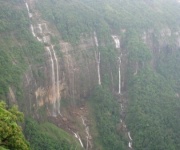
Seven Sisters Falls is one of the most photographed waterfalls in Meghalaya, and the official viewing platform tends to be crowded. A few metres back from the railings, however, there is a row of low stone walls and broad-canopied trees that the local guides use for small group lunches.
The platform itself is exposed to the spray, so picnicking right at the railings is uncomfortable. The shaded area behind it, with a view of all seven streams cutting down the cliff face, gives you the same photograph without the wet hair. On a clear afternoon the light catches the falls in horizontal bands of white and silver, and the sound is loud enough to make conversation easy without shouting.
Travellers often combine this stop with a guided walk further along the ridge. Many of the local operators running these walks are listed on regional sites, and you can read more about how Indian destination services are structured in this overview of inbound travel services, which explains the difference between on-ground agents and online resellers. The walk back from the falls to the Eco-Park is around an hour and follows a relatively flat path.
Arwah Cave and Lumshynna's quiet patches
Arwah Cave is less visited than Mawsmai and sits in a slightly different microclimate. The land above the cave entrance has a few clearings that residents use for family gatherings, and these can be reached by a short walk from the road.
The grass here is thick and well drained, and the trees include some of the older figs in the area, whose roots grip the limestone and provide excellent shade even in the late afternoon. From one corner of the clearing, a glimpse of the valley opens up between trunks, and at dusk the sky often clears enough for stargazing, which is one of the region's quiet surprises for visitors used to bright city skies.
If you stay late, the spot doubles as a place to watch the night arrive. The cloud cover that famously cloaks Cherrapunjee during the day often lifts after sunset, particularly between October and March. Travellers who want to plan a longer evening around this phenomenon can browse the best spots for stargazing on clear nights in Cherrapunjee for ideas on combining a picnic with a few hours of night-sky watching without straying far from the Eco-Park.
Nohkalikai Falls viewing lawns
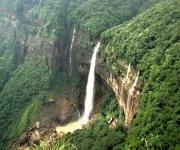
Nohkalikai is the tallest plunge waterfall in India, and the meadow at its head is one of the most cinematic picnic settings in Meghalaya. The viewing lawns are managed by the local community, and a small entry fee supports village projects, including school supplies and trail maintenance.
The lawns are wide and slope gently toward the cliff, so finding a flat spot for a mat is easy. A line of trees along the back provides shade, and a small stall sells tea, pakoras and soft drinks. The cliff edge is fenced, but parents with young children tend to set up well back from it and treat the area more as a place to rest than to roam.
A useful tip is to time the visit for the late morning, when the sun reaches the falls and the spray catches the light. By mid-afternoon the cloud often rolls in, and the falls become a roaring grey curtain. The earlier arrival also avoids the tour buses that pull in from Shillong after lunch, leaving the lawn quieter for travellers who have just driven up from a Guwahati hotel.
Shaded clearings between the Eco-Park and Wei Sawdong
Wei Sawdong is a small set of turquoise pools set in a limestone gorge a little further from the Eco-Park than the main attractions. The walk in is longer and the path can be slippery, so most visitors treat it as a half-day rather than a quick stop, but the pools reward the effort.
Between the Eco-Park and the turn-off to Wei Sawdong, the road passes several forest edges where informal picnic spots have grown up. These are not signposted, and the locals who run the small tea shops along the road will happily point you to one. The best of them sit under a low canopy of wild banana and bamboo, with the sound of a stream running somewhere just out of sight.
A few essentials make these clearings easier to enjoy:
- A thick ground sheet or mat, because the grass holds moisture even when it has not rained
- A light rain jacket that packs small, since showers arrive in ten-minute bursts
- Reusable water bottles with a filter, so you can refill from streams safely
- A small gas stove or a thermos of hot water for tea
- Slip-resistant footwear, as limestone paths are slick
- A plastic bag for wet clothes, useful on the walk back
- Insect repellent, especially near the streams at dusk
Most of these items are easy to pick up in Guwahati, although travellers from Hobart or Adelaide often prefer to bring a few familiar brands from home. Australian customs rules allow reasonable quantities of personal-use toiletries and outdoor gear, including small stoves that have been thoroughly cleaned of fuel residue.
Planning a comfortable day from an Australian perspective
For visitors flying out of Sydney or Melbourne, the route to Cherrapunjee usually means an evening flight to Delhi or Mumbai, a connection to Guwahati, and then a three-hour drive up into the Khasi Hills. The e-visa for Indian destinations is straightforward for Australian passport holders, and most travellers sort it out online before departure.
A few practical habits smooth the way. Carrying a small amount of Indian rupees from the airport, even after withdrawing more from a Guwahati ATM, helps with village-level purchases. Many local stalls in the Cherrapunjee area still prefer cash, and mobile data coverage can be patchy enough that digital payments occasionally fail. A spare set of dry clothes in a waterproof bag is also worth its weight, since the humidity around the falls is intense.
Australian travellers used to the long distances of their own country tend to cope well with the local transport. Shared jeeps run between Sohra and nearby villages, and the drivers know the picnic spots by heart. Confirming the return time before setting out is wise, as services thin out after late afternoon, particularly outside the main tourist months.
Cherrapunjee rewards travellers who slow down, and a shaded picnic a short walk from the Eco-Park is one of the simplest ways to do that. Pack light, choose a clearing that suits the time of day, and let the sound of the falls and the calls of the hill mynas set the pace. Booking a multi-day package through the Cherrapunjee team makes the logistics easier, and the staff can arrange a packed lunch, a local guide, and a vehicle for the short hops between spots. Reach out through the contact details on the website to start planning a quiet, view-filled afternoon in the East Khasi Hills.