






Best Places for Birdwatching in and Around Cherrapunjee
Cherrapunjee, also known as Sohra or Cherrapunji, is famous for dramatic rain, waterfalls, caves, and living root bridges. Its steep valleys and forested ridges also create excellent habitats for birds. A short drive can take you from open grassland and misty viewpoints into subtropical woodland, bamboo thickets, and streamside forest.
Birdwatchers visiting Meghalaya can expect a rewarding mix of resident species, seasonal visitors, and forest birds that are heard before they are seen. The area is especially appealing to photographers and nature lovers who enjoy patient observation rather than a packed list of sightings. Early mornings are often quiet, cool, and alive with bird calls.
Sohra works well as a base because many birding locations can be reached during a half-day outing, while longer excursions lead toward Nongriat, Mawsynram, Shillong, and the southern valleys. With suitable planning, a holiday focused on waterfalls and caves can easily include several productive birdwatching sessions.
The Birdlife Around Sohra
The Cherrapunjee plateau sits within the wider Indo-Burma biodiversity region, a part of the world known for varied habitats and high bird diversity. Broadleaf forest, secondary growth, village gardens, fern-covered slopes, and open ridgelines all occur within a relatively compact landscape. This habitat variety explains why different sites can feel completely different from one another.
Commonly encountered birds may include bulbuls, drongos, sunbirds, minivets, tits, wagtails, and laughingthrushes. Forest edges can produce Blue-winged Minla, Black-crested Bulbul, Mountain Bulbul, Scarlet Minivet, and several barbet species. Oriental Magpie-Robins and White-throated Kingfishers are more likely around settlements, streams, and cultivated areas.
Larger forest birds are less predictable, but the surrounding Meghalaya forests are known for hornbills and pheasants. Great Hornbill, Wreathed Hornbill, and Grey Peacock-Pheasant are possible in suitable forest areas, although sightings require luck, local knowledge, and plenty of patience. A guide familiar with bird calls can greatly improve the experience.
Waterfalls, Cliffs, And Open Ridges
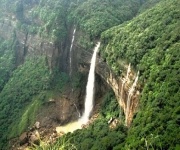
The viewpoints near Nohkalikai Falls, Seven Sisters Falls, and Thangkharang Park combine spectacular scenery with useful birding conditions. The edges of these areas include shrubs, tall grasses, scattered trees, and forest patches where small birds move between cover. Look along the quieter paths rather than staying only at the main viewing platforms.
Thangkharang Park is particularly attractive for a relaxed morning walk. Its forested sections and open viewpoints can produce bulbuls, drongos, leafbirds, and minivets, while the surrounding cliffs provide opportunities to watch birds moving across the valley. Mist may reduce visibility, so pause frequently and listen for calls before scanning the trees.
The roads toward the waterfalls can also be productive. Roadside vegetation attracts sunbirds and flower-feeding species, while streams and damp gullies may hold wagtails, forktails, and kingfishers. Travel slowly, ask the driver to stop at safe pull-offs, and avoid approaching cliff edges in wet weather.
Mawsmai Cave and the nearby forest are better treated as a combined nature outing than as a dedicated birding destination. The cave itself is dark and unsuitable for bird observation, but the woodland, limestone surroundings, and paths outside can offer sightings before or after the cave visit.
Forest Trails And Living Root Bridges
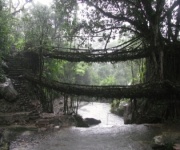
The route toward Nongriat is one of the most memorable nature excursions from Cherrapunjee. The descent passes through humid forest, village landscapes, bamboo, small streams, and shaded slopes. The famous living root bridges are the main attraction, yet the trail also offers opportunities to observe birds that prefer dense cover and moist valleys.
Birding here calls for a slower pace than a standard sightseeing walk. Pause near fruiting trees, listen at bends in the trail, and scan the middle levels of the canopy. Leafbirds, bulbuls, babblers, minivets, and laughingthrushes may appear briefly among the foliage. Sunbirds are more visible where flowering plants grow along clearings and homestead gardens.
Nongriat involves many steps and can become slippery after rain, so it is wise to schedule the walk when the weather forecast is stable. A local guide can help identify calls, locate less obvious trails, and manage timing. Visitors should keep noise low around villages and bridges, leaving the forest calm for both residents and wildlife.
The following locations provide a useful way to match expectations with habitat and walking effort:
| Birding location | Habitat and character | Birds to look for | Time and effort |
|---|---|---|---|
| Thangkharang Park | Forest edge, gardens, viewpoints | Bulbuls, drongos, minivets, leafbirds | Easy morning walk |
| Nohkalikai area | Shrubland, cliffs, damp gullies | Sunbirds, wagtails, kingfishers, passerines | Easy to moderate |
| Mawsmai surroundings | Limestone forest and secondary woodland | Barbets, bulbuls, babblers, drongos | Easy combined outing |
| Nongriat trail | Humid forest, bamboo, streams | Laughingthrushes, minlas, bulbuls, sunbirds | Strenuous full day |
| Mawkdok Dympep Valley | Open slopes and forest margins | Raptors, swifts, swallows, meadow birds | Easy roadside stops |
| Mawphlang forest | Mature woodland and shaded trails | Tits, barbets, minivets, forest specialists | Moderate guided walk |
Mawkdok And The Road Toward Shillong
Mawkdok Dympep Valley is a useful stop for observing birds in open mountain habitat. The deep valley, grassy slopes, and forest margins create a different setting from the dense woodland around Sohra. Swifts and swallows may be seen over the gorge, while raptors can ride rising air currents during clear periods.
The road between Cherrapunjee and Shillong passes through changing elevations and patches of forest. Early departures provide the best chance to stop at quiet viewpoints before traffic increases. Small birds often gather where flowering shrubs, bamboo, or fruiting trees meet the roadside, and broad valley views can make distant flying birds easier to spot.
Mawphlang Sacred Forest, located farther toward Shillong, is one of the strongest additions for travelers who want a more focused forest experience. Its protected woodland supports a cool, shaded environment with mature trees, mosses, orchids, and dense undergrowth. Visits should be made with a local guide, both for cultural reasons and for help locating birds in the canopy.
Travelers extending their route toward Mawsynram or the southern escarpment may find further forest edges, valleys, and village habitats. These areas are best approached as flexible excursions rather than guaranteed birding stops. Weather, road conditions, and local access can change quickly in the Khasi Hills.
When To Go And How To Watch
October through April is generally the most comfortable period for birdwatching around Cherrapunjee. The post-monsoon landscape remains green, trails gradually become easier, and clearer skies improve visibility. November through February brings cooler mornings and comfortable walking conditions, while March and April can be rewarding around flowering trees.
The monsoon from May to September transforms the region into its most dramatic form, with powerful waterfalls and intensely green hills. Birding remains possible, especially between showers, but heavy rain, cloud, leeches, slippery trails, and poor visibility can disrupt outings. Travelers visiting during this season should keep plans flexible and favor short walks near their accommodation.
Birds are most active soon after sunrise, so aim to be outdoors by roughly 5:30 or 6:00 a.m. depending on the season and location. A second productive period begins in the late afternoon, when temperatures soften and some species return to feeding areas. Midday is better suited to caves, viewpoints, meals, and transfers.
Carry binoculars, a field guide or offline birding app, and a small notebook for recording calls and locations. Neutral-colored clothing helps reduce disturbance, while waterproof protection is essential even in drier months. Use playback sparingly, never approach nests, and avoid feeding wild birds.
Planning A Birding-Friendly Meghalaya Holiday
A two-night stay can cover Thangkharang Park, the Nohkalikai area, Mawsmai, and selected roadside viewpoints. This format suits travelers who want to add birdwatching to a wider Cherrapunjee sightseeing trip. Begin one morning with a short forest walk, reserve the middle of the day for attractions, and return to a quiet viewpoint or garden in the afternoon.
With three to five nights, there is time for a full Nongriat excursion and a longer drive toward Mawphlang or Shillong. This allows the itinerary to respond to weather and bird activity rather than forcing every outing into a fixed schedule. A local naturalist can also arrange an early start at less-visited forest edges.
Families and casual birdwatchers may prefer short walks with comfortable access, while experienced birders can devote a full day to trails and forest interiors. Tell your tour operator whether your priority is photography, species variety, easy walks, or rare forest birds. That information helps shape practical transfers and realistic daily plans.
Accommodation in and around Sohra provides a convenient base for early departures. When comparing resorts and hotels, consider road access, breakfast timing, quiet surroundings, covered areas for drying equipment, and transport availability before sunrise. The site's travel information index can help you locate related pages on attractions, stays, routes, and vacation planning.
Pack For A Comfortable Birding Day
Good preparation makes the difference between a rushed sightseeing stop and an enjoyable wildlife outing. Conditions can shift from bright sun to dense mist within minutes, especially near exposed escarpments. Keep equipment light enough for steps and uneven paths, particularly on the route to Nongriat.
Useful items include:
- Compact binoculars, spare batteries, and a waterproof phone or camera pouch
- Light rainwear, quick-drying layers, a hat, and shoes with firm grip
- Drinking water, personal medication, insect repellent, and high-energy snacks
- A small first-aid kit, offline maps, and a notebook for calls and sightings
- A reusable waste bag so trails, forests, and village paths remain clean
A field guide to birds of Northeast India is valuable because several forest species can look similar at a distance. Learning a few common calls before the trip is equally helpful. Guides and drivers who spend time in the area can often point out movement in dense foliage that first-time visitors would miss.
Respect for local communities is part of responsible birdwatching in Meghalaya. Ask before photographing people or entering village paths, follow instructions at sacred forests, and stay on established routes. Quiet observation protects wildlife and makes the experience more welcome for residents.
Make Cherrapunjee Your Birding Base
Cherrapunjee offers a rare combination of accessible sightseeing and rich natural habitat. Waterfalls, caves, root bridges, escarpments, and forest trails can be arranged around early-morning birding without turning the holiday into an exhausting expedition. The result is a flexible Meghalaya journey with room for both famous landmarks and quiet encounters.
Plan your stay around the habitats you most want to explore, allow extra time for changing weather, and arrange transport for dawn departures. Contact India Beacons Sojourn through Cherrapunjee.net to shape a two- to seven-night holiday that combines birdwatching with the landscapes and cultural experiences of Sohra.