





Cherrapunjee’s winter season: clear skies and cool weather
Winter gives Sohra a different rhythm from the rain-soaked hills of the southwest monsoon. Cool, generally clear days make waterfalls easier to reach, open viewpoints more rewarding and the air sharp enough for long walks without summer humidity. At roughly 1,500 metres above sea level, the hill station often enjoys daytime temperatures around 15–22°C, with colder nights between late November and February.
Clear skies are never guaranteed, since fog and brief winter showers can still interrupt a panoramic morning. Even so, the combination of clear skies and cool weather creates comfortable conditions for sightseeing, caves and outdoor adventures. It is also an appealing time for Australian travellers who want to escape the summer heat at home without leaving behind Christmas and New Year.
Why the cool months stand out
Cherrapunjee’s reputation for extraordinary rainfall comes mainly from its exposure to the monsoon across the southern Meghalaya hills. Between November and February, the rain belt shifts away more often, revealing ridges, gorges and waterfalls that disappear during the wettest months. Winter sunshine also highlights the green limestone landscape, although visitors should still expect mist around dawn and cooler conditions after sunset.
The area has a rich cultural background. Sohra is the local Khasi name for Cherrapunji, while Meghalaya became a separate state in 1972. Khasi communities have long shaped the region’s settlements, markets, cuisine and traditions of living bridge construction. Staying in a locally operated hotel or joining a guide-led walk adds useful context that a hurried transit tour rarely provides.
Choosing the right window for your visit
October through March is broadly the clearest and most comfortable period, with November, December and January offering a useful balance of lower rainfall, manageable daytime temperatures and reliable transport. Early and late February can be particularly peaceful, but fog becomes more common and some seasonal attractions may have reduced hours. Checking the local forecast before each excursion helps prevent a cancelled waterfall walk from spoiling the rest of the day.
Avoid scheduling a tightly packed itinerary around Christmas, New Year or major Indian festival dates, when domestic hotels and holiday transport fill quickly. A two-night Sohra stay works well for the principal waterfalls, caves and viewpoints, while three or four nights allow time for a relaxed pace. Longer packages can combine Sohra with Shillong, Umiam and a root bridge excursion without turning every day into a long transfer.
Waterfalls, caves and wide-open views
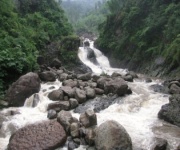
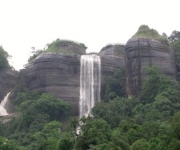
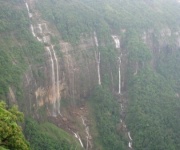
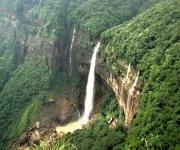
Kynrem Falls, Nohkalikai Falls and the viewpoints near the centre of Cherrapunjee provide the classic winter combination of scenery and accessible walking. Nohkalikai includes a steep staircase of more than 1,000 steps, so grippy footwear matters even when the rocks appear dry. Water flow varies through the season: winter streams may be lighter, but clearer conditions often make the surrounding cliffs and vegetation easier to see.
Arwah Cave and Mawsmai Cave offer a different perspective, with limestone formations, narrow passages and dramatic changes in temperature. Dympep Cave and other sites may have conservation, photography or entry restrictions, and access can change after rain. Foreign travellers should ask their operator whether a No Objection Certificate or protected-area permission is required for particular caves and treks. A hotel reservation does not automatically include these permissions.
Once the standard waterfall-and-cave circuit feels familiar, look to other Cherrapunjee adventures for ideas such as cycling, birdwatching and village experiences. These activities work particularly well in winter because cooler conditions favour longer time outdoors, provided the operator accounts for local access rules and suitable weather.
Root bridges and winter trail conditions
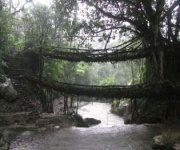
The living root bridges around Nongriat are among Meghalaya’s most distinctive attractions. Khasi communities have traditionally trained fig roots across streams and maintained them as they thickened over decades. The walk to the Double Living Root Bridge passes Tyrna village, the single-span bridge and rainforest trails before reaching the final crossing, with a return to the main road adding several hours.
Winter trekking can be slippery because shaded rock and exposed roots collect moisture from fog or light rain. Local guides know which sections usually remain suitable, while severe weather can make the route unsafe. Wear shoes with strong grip, carry water, keep a rain layer close and avoid continuing if thunder, intense rain or poor visibility develops. Booking a guide through a recognised operator also helps with trail conditions, local permissions and transport back to Sohra.
Packing for changing hill conditions
Dress in layers rather than relying on one heavy jacket. A light thermal or fleece layer works well under a windproof outer shell, while trousers, long sleeves and a warm hat are useful from early morning. Winter sun can feel strong at this altitude, so sunscreen, sunglasses and a brimmed hat are as important as a sweater. Pack a waterproof jacket, not merely an umbrella, because caves and forest paths can be damp.
A small daypack should hold water, a refillable bottle, phone power bank, basic first-aid supplies and a compact rain cover. Trekking poles can help on long descents, but rubber tips should be used on wet rock. Medically necessary medication should travel in its original labelled packaging, accompanied by a copy of prescriptions where practical. Repellent and a plaster for minor cuts are sensible additions because mosquitoes and leeches remain possible in the forest.
Many Australian visitors recognise the need for layers from trips to the Blue Mountains or Victorian Alps, but Cherrapunji’s combination of humidity, limestone and rainforest creates different trail conditions. Carry some Indian rupees for small shops, guides or places where card terminals are unreliable. At larger hotels and restaurants, cards are increasingly accepted, though an ATM may be more convenient than exchanging cash at every stop.
Getting there from Australia
Most Australian travellers begin from Sydney, Melbourne, Brisbane or Perth and connect through Singapore, Kuala Lumpur or an Indian gateway. From Singapore, a flight to Guwahati usually provides the simplest route to Cherrapunjee. The drive from Guwahati’s Lokpriya Gopinath Bordolhi International Airport takes approximately three and a half to four and a half hours depending on road and weather conditions. Shillong Airport offers another option for some itineraries, although flight schedules can be limited.
Treat a Singapore stopover as part of the journey rather than an improvised extra. A family Singapore budget guide offers transferable ways to compare accommodation, meals and activities before adding another destination. If changing airlines or collecting luggage in Singapore, allow a full day and confirm the ticket type. Australian travel agents often compare separate airfares with Indian holiday packages, so request a written quote showing exactly what is included.
Australian passport holders may be eligible for India’s e-Tourist Visa for short tourism visits that meet the official criteria. Applications should be made through the appropriate Indian government channel, with the approval and visa conditions checked before flights are booked. Transit requirements also depend on the route and whether baggage is checked through. Carry the Smart Traveller advice, travel insurance details and the operator’s emergency number, and remember that Meghalaya uses Indian Standard Time without daylight saving.
Plan a package that fits your trip
Cherrapunjee.net offers holiday packages ranging from two to seven nights, with options centred on Sohra or combining it with Shillong and surrounding attractions. A useful request to a travel agent includes the number of nights, room standard, airport transfers, guide fees, meals, permit costs and the amount of walking expected each day. Casual phrases such as “no worries” or “see you in the arvo” may make conversation relaxed, but a clear written itinerary prevents confusion about inclusions.
Ask for a proposed winter departure and hold options while confirming e-Visa eligibility, flight connections and current attraction access. Contact India Beacons Sojourn through Cherrapunjee.net to request a tailored quote and reserve a package that pairs Sohra’s crisp mountain air with comfortable daytime sightseeing.