




Dainthlen Falls: Legend, Landscape, and Local Meaning
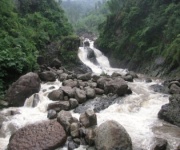
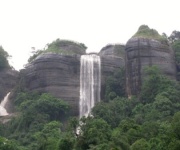
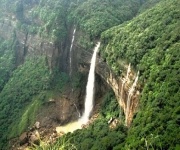
Dainthlen Falls is one of the most memorable natural attractions around Sohra, the destination widely known as Cherrapunji. Water pours over a broad rocky escarpment before descending through the green hills of Meghalaya, creating a dramatic setting that feels especially powerful during and after the monsoon.
The waterfall is valued for more than its scenery. Its name and identity are linked to the Khasi legend of Thlen, a monstrous serpent associated with cruelty, greed, and destructive power. The story gives the landscape a cultural depth that visitors may miss if they treat the falls as only a photography stop.
A visit is therefore best approached with curiosity and respect. The rushing water, forested slopes, weathered rock, and oral traditions together reveal why the Cherrapunji region remains one of northeast India’s most distinctive travel experiences.
The landscape around Dainthlen Falls
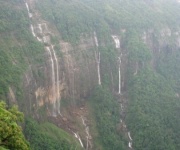
Dainthlen Falls lies a short drive from Sohra, in an area shaped by heavy rainfall, limestone formations, and deep green vegetation. During the wet season, streams swell across the plateau and the falls become broad and forceful. In drier months, the flow may be gentler, allowing the contours of the rock face and surrounding valleys to stand out more clearly.
The setting changes quickly with the weather. Clouds can move over the hills within minutes, sunlight may appear briefly between showers, and mist often softens the distant views. The road journey itself is part of the experience, passing through open uplands, forest patches, village areas, and viewpoints characteristic of the East Khasi Hills.
Visitors should expect a natural environment rather than a formally developed urban attraction. Paths and viewing areas can be uneven, and the condition of the ground varies according to rainfall. The most attractive viewpoint may also be close to slippery edges, so enjoying the scenery requires care.
The serpent in Khasi oral tradition
According to a widely told Khasi legend, a huge serpent called U Thlen lived in a cave or rocky area near the falls. The creature terrorised local communities and represented a threat that ordinary people could not easily overcome. In the story, villagers eventually joined together to defeat it, turning the killing of the serpent into a symbol of collective courage.
Different tellings contain variations in the details. Some focus on the serpent’s enormous size, while others describe the strategy used to lure it out or destroy it. Oral traditions naturally change as they pass between generations, villages, and storytellers, so the legend should be understood as a living cultural narrative rather than a single fixed script.
The waterfall’s name is connected with this story. “Dainthlen” is commonly explained through the presence or defeat of Thlen, making the falls a place where landscape and folklore are inseparable. The rocks and water are not simply a backdrop; they are part of the setting in which the tale continues to be remembered.
What Thlen represents
In Khasi cultural storytelling, Thlen is often associated with harmful desire, selfishness, violence, and the corrupting pursuit of wealth. The serpent is more than a frightening creature in a supernatural tale. It can be read as a warning about the way greed damages individuals and communities.
Some related Khasi stories speak of people who seek the power or wealth connected with Thlen, sometimes through immoral acts. These narratives reinforce the idea that prosperity gained through cruelty carries a moral cost. The legend’s power comes from this ethical dimension, which remains relevant even when the tale is told to modern visitors.
Local interpretations may differ, and guides or residents may explain the story in their own words. Listening to those variations is part of the cultural experience. Rather than searching for one definitive version, travellers can appreciate how the myth expresses ideas about justice, solidarity, temptation, and the responsibility of defeating evil together.
| Aspect | What visitors can expect |
|---|---|
| Setting | A powerful waterfall among the green hills near Sohra |
| Main legend | The defeat of the serpent known as U Thlen or Thlen |
| Cultural theme | Community courage overcoming greed and destructive power |
| Best visual conditions | Monsoon and post-monsoon periods, when water levels are higher |
| Main precautions | Slippery rocks, sudden rain, mist, and exposed viewpoints |
| Ideal visit style | A respectful nature-and-culture stop with time for observation |
Seeing the falls beyond a photograph
The main appeal of Dainthlen Falls is the relationship between movement and scale. Water spreads over the rock face in irregular streams, then gathers momentum as it drops into the valley. From a safe viewing point, the falls can look both graceful and imposing, especially when dark clouds gather over the plateau.
Photography is rewarding in changing light. Wide-angle views capture the escarpment and surrounding greenery, while closer images can show rain-wet rock, spray, and small channels formed by the water. A waterproof cover for a phone or camera is useful because showers can arrive without warning.
Take time to notice the quieter details as well. Moss-covered stones, dense vegetation, distant ridges, and the sound of water create an atmosphere that cannot be captured fully in a quick snapshot. A guide can also explain the local pronunciation of place names, the legend’s variations, and how the falls fit into the wider cultural geography of Sohra.
Pack with the terrain in mind
The best time to visit depends on the experience you want. The monsoon brings the greatest volume and drama, but it also creates slippery surfaces, limited visibility, and difficult road conditions. After the rains, the landscape often remains lush while the weather may be somewhat easier for sightseeing. Winter and the early dry season can offer clearer skies, though the waterfall may have less force.
Wear shoes with firm grip and carry a light rain layer even when the morning appears clear. Avoid climbing onto wet rocks for a closer view, and keep a safe distance from the edge of any drop or channel. Children should remain within sight, and travellers with limited mobility may need to assess the access conditions before setting out.
Useful preparations include:
- Choose sturdy footwear with traction rather than smooth sandals.
- Carry drinking water, a small first-aid kit, and protection for electronic devices.
- Allow extra road time during heavy rain, fog, or poor visibility.
- Follow local signs and guide instructions near slippery or exposed areas.
- Leave food packaging and other waste out of the forest and waterfall surroundings.
A respectful visit also means avoiding loud behaviour around local communities and refraining from treating cultural stories as staged entertainment. Ask before photographing people, homes, or community activities, and listen carefully when a local guide explains the significance of the site.
Adding Dainthlen Falls to a Sohra itinerary
Dainthlen Falls can be combined with several other attractions in and around Cherrapunji. Depending on road conditions and available time, travellers may pair it with nearby viewpoints, caves, rainforest walks, dramatic gorges, or other waterfalls. The exact order should remain flexible because rainfall can affect both driving times and walking conditions.
A multi-day stay is particularly useful for exploring the area at a comfortable pace. Rather than rushing between distant attractions in one day, visitors can give each site enough time for photography, local interpretation, and weather changes. Those arranging a longer holiday can review this seven-night itinerary as a practical framework for experiencing Sohra and the wider Meghalaya region.
Accommodation in and around Cherrapunji ranges from hotels and resorts to smaller guesthouses. Staying locally makes an early departure easier and leaves room for adjusting plans if rain interrupts a scheduled outing. It also allows visitors to experience the cool evenings, rural surroundings, and distinctive hospitality of the Khasi Hills.
Travel with cultural awareness
Dainthlen Falls is best understood as a meeting point between ecology, geology, and memory. The waterfall exists through natural forces, yet its meaning has been shaped by the people who named it and preserved the story of U Thlen. This combination makes the site different from a scenic viewpoint with no cultural context.
A thoughtful traveller does not need specialist knowledge to appreciate the legend. Learning a few details before arriving, listening to local explanations, and recognising that stories may have several versions are enough to create a more meaningful encounter. The mythological significance lies in the values it communicates as much as in the supernatural events it describes.
The site also reminds visitors that Meghalaya’s attractions are connected to living communities. Rain, forest, roads, local customs, and oral history all influence the experience. Protecting the landscape and behaving considerately helps ensure that the falls remain a place of beauty and cultural importance for residents and future travellers.
Include Dainthlen Falls in your Cherrapunji travel plans for a day shaped by rushing water, Khasi folklore, and the green grandeur of Meghalaya. Arrange suitable transport, choose a weather-aware itinerary, and make time to hear the story of U Thlen from a knowledgeable local guide while experiencing the falls with care and respect.