





Exploring the Seven Sisters Falls: A Complete Guide
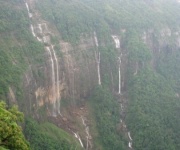
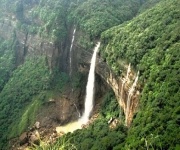
Seven Sisters Falls, also called Nohsngithiang Falls, is one of the most memorable sights around Sohra, the destination widely known as Cherrapunji or Cherrapunjee. The waterfall spills over a broad limestone cliff in several distinct streams, creating the impression of seven white ribbons dropping into the green valleys of Meghalaya.
The falls are especially impressive during the monsoon, when heavy rain feeds the channels and turns the escarpment into a powerful cascade. Mist, dark clouds, dense vegetation, and changing light add to the atmosphere, although the same weather can affect road conditions and visibility.
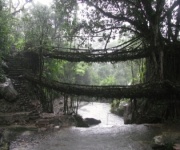
A visit is easy to combine with other Cherrapunji attractions, including Mawsmai Cave, Mawsmai Eco Park, Arwah Cave, and the living root bridges. With the right timing and a little preparation, the viewpoint offers an accessible way to experience the dramatic landscape of the Khasi Hills.
Where Seven Sisters Falls Is Located
Nohsngithiang Falls lies near Mawsmai village in the Sohra region of East Khasi Hills district, Meghalaya. It is roughly four kilometres from the main Cherrapunji town area, making it a convenient stop on a local sightseeing route. The viewpoint is reached by road, with the final approach leading to a designated viewing area near the cliff edge.
The falls face the plains of Bangladesh, although the distant lowlands are often hidden by monsoon cloud. On clear days, the wide valley and layered hills create an expansive panorama. The waterfall itself is commonly described as having a drop of around 315 metres, placing it among India’s tallest waterfalls.
The name Nohsngithiang refers to the seven streams associated with the cascade. The number of visible channels can vary depending on rainfall, rock formations, and seasonal flow. During exceptionally wet periods, the separate ribbons may merge into a more continuous sheet of water.
When To Visit The Waterfall
The monsoon season, generally from June through September, produces the fullest flow. July and August are often excellent months for seeing the falls at their most dramatic, though rain can be intense. Thick mist may partly cover the cliff, so a visit during heavy showers may offer atmosphere rather than a clear panorama.
October and November can provide a useful balance between strong water flow and improved visibility. The surrounding hills remain green, and the rain is usually less persistent than during peak monsoon. Winter, from December to February, is commonly cooler and clearer, but the waterfall may be noticeably thinner.
By late spring, the flow can reduce considerably, particularly after a dry spell. The viewpoint remains worthwhile for its landscape, but visitors expecting a powerful cascade should plan around the wetter months. Early morning can bring softer light and fewer visitors, while late afternoon may offer attractive colour across the valley if the sky is clear.
What To Expect At The Viewpoint
The main appeal is the broad view rather than a close approach to the base. From the viewing area, visitors look across the valley toward the cliff face and watch the water descend in separate channels. There is no need for a strenuous trek to see the waterfall, which makes it suitable for families and travellers with limited time.
Facilities can vary, but the site generally has a parking area and basic visitor amenities nearby. Small local stalls may sell snacks, drinks, or seasonal produce. Carry some cash because digital payment and mobile connectivity may not be equally reliable in every part of the Sohra circuit.
There is usually a fee associated with the viewing area or local access arrangements, and opening conditions may change because of weather or local management. Keep the surroundings clean, stay within marked boundaries, and avoid climbing onto wet rocks. The cliff edge is exposed, and rain can make surfaces slippery even when the waterfall looks calm from a distance.
Planning A Cherrapunji Sightseeing Route
Seven Sisters Falls works well as part of a full-day excursion from Shillong or a shorter Sohra sightseeing circuit. A common route combines the waterfall with Mawsmai Cave and Mawsmai Eco Park, followed by other nearby viewpoints. Travellers staying several nights can devote another day to Nohkalikai Falls, Arwah Cave, Wei Sawdong Falls, or a living root bridge trek.
Road distances in Meghalaya can appear short on a map but take longer than expected because of winding hill roads, village traffic, rain, and occasional repairs. Allow extra time between stops rather than trying to fit too many attractions into one day. A slower itinerary also gives more flexibility if clouds block a viewpoint temporarily.
Those looking for an organised short stay can review this two-night Cherrapunji package, which can help place the falls within a broader local itinerary. A private vehicle with a local driver is often the most practical choice for reaching several attractions in one day, especially during wet weather.
| Planning Detail | Practical Guidance |
|---|---|
| Best season for strong flow | June to September |
| Clearer weather | October to February, depending on conditions |
| Approximate location | Near Mawsmai village, around four kilometres from Sohra |
| Visit duration | About 30 to 60 minutes at the viewpoint |
| Access level | Easy road access with limited walking |
| Nearby attractions | Mawsmai Cave, Mawsmai Eco Park, Nohkalikai Falls, Arwah Cave |
| Weather concern | Heavy rain, mist, slippery surfaces, and reduced visibility |
What To Bring For A Comfortable Visit
Rain protection is essential for much of the year. Pack a lightweight waterproof jacket or poncho, an umbrella for general use, and a bag cover for phones and cameras. Meghalaya weather can change quickly, so even a bright morning does not guarantee a dry afternoon.
Wear shoes with good grip, particularly if you plan to visit caves, parks, or other waterfalls on the same day. Sandals may be comfortable in warm weather but can be unsafe on wet paths. A spare pair of socks is useful during the monsoon, when puddles and spray are difficult to avoid.
A small day bag should include drinking water, personal medicines, sun protection, insect repellent, and a portable charger. Bring cash for entry fees, parking, snacks, and local purchases. Binoculars can be enjoyable on clear days, while a lens cloth helps keep cameras usable in mist and rain.
Smart Preparations Before Leaving
- Check the day’s weather forecast, road conditions, and local access information.
- Start early to improve the chance of clear views and avoid busy periods.
- Carry a waterproof layer even when the morning sky looks bright.
- Keep a safe distance from the cliff edge and follow all local signs.
- Plan food, fuel, and cash in advance because services become limited outside major towns.
Photographing Seven Sisters Falls
The width of the waterfall is one of its defining features, so landscape photography usually works better than a tightly framed shot. Include the surrounding cliff, valley, and vegetation to show the scale of the scene. During the rainy season, a slower shutter speed can soften the moving water, while a faster shutter speed captures individual streams and spray.
Mist can create atmospheric images, but it may also flatten the view. If the falls are partly covered, wait for a few minutes rather than leaving immediately; clouds often move quickly across the escarpment. A lens hood and a microfiber cloth are valuable in drizzle, and a waterproof cover protects equipment during sudden showers.
Avoid leaning over barriers or stepping onto unstable ground for a better angle. The strongest photograph is not worth risking a fall or damaging fragile vegetation. Ask before photographing local people, vendors, or private properties near the route, and avoid flying a drone unless you have confirmed that it is permitted in the area.
Responsible Travel In Sohra
The landscape around Seven Sisters Falls is shaped by intense rainfall, porous limestone, forests, and fragile hill soils. Litter, loud behaviour, and careless movement can quickly affect a viewpoint that receives many visitors. Use designated paths, take all plastic and food packaging with you, and choose refillable water bottles where possible.
Buying snacks or crafts from local vendors can support nearby communities, provided purchases are made respectfully. Travellers should also respect village customs and avoid entering farmland, homes, or sacred spaces without permission. Local advice is particularly important when weather changes cause temporary closures or make a route unsafe.
The wider Sohra area rewards visitors who stay longer than a single photo stop. Spending nights in a locally operated hotel or resort, eating regional food, and hiring local transport helps spread tourism income. For information about the organisation arranging travel services and packages, visit the India Beacons Sojourn team.
A careful visit also means recognising that waterfall conditions are seasonal. Never attempt to reach the base through an unmarked route, and do not enter fast-moving water. Rainfall can raise streams suddenly, even when conditions at the viewpoint appear manageable.
Seven Sisters Falls is best experienced as part of the larger Sohra landscape: high cliffs, forested valleys, limestone caves, village roads, and rain-fed waterfalls. Choose a season that matches your priorities, leave enough time for the journey, and keep your plans flexible when clouds or rain alter the view.
Browse the available Cherrapunjee travel packages, select accommodation and transport that suit your itinerary, and reserve time for Nohsngithiang Falls alongside the region’s other natural landmarks. A well-planned visit can turn a short viewpoint stop into one of the defining experiences of a Meghalaya holiday.