





How To Travel Safely On Cherrapunjee’s Rainy Roads
Cherrapunjee, also known as Sohra or Cherrapunji, is at its most dramatic during the monsoon. Waterfalls surge over cliff edges, mist settles across the Khasi Hills, and the green landscape becomes intensely vivid. The same rainfall that creates these memorable views can make travel slower and road conditions unpredictable.
A successful rainy-season journey depends less on covering every attraction and more on allowing enough time between stops. Roads may be wet, narrow, steep, or temporarily affected by falling rocks and surface runoff. With a flexible route, a capable local driver, and suitable clothing, visitors can enjoy Sohra without turning every transfer into a race against the weather.
The route from Shillong to Cherrapunjee is generally straightforward, but visibility, traffic, and rainfall can change within minutes. Planning for short delays and checking local conditions before leaving your hotel are essential parts of travelling through Meghalaya in the wet season.
Understand The Route Before Leaving
The main road from Shillong to Sohra passes through hilly terrain, forested stretches, villages, and viewpoints. Much of the route is paved, but bends can be sharp and shoulders may be narrow. Drainage channels often carry heavy flows during rain, while water can collect in depressions after a prolonged shower.
Distances on a map can be misleading. A journey that appears short may take considerably longer when the driver slows for fog, slippery surfaces, livestock, pedestrians, or roadside maintenance. Keep sightseeing schedules spacious, particularly when travelling to distant attractions such as Nohkalikai Falls, Mawsmai Cave, Dainthlen Falls, and the living root bridges.
Start important drives early whenever possible. Morning conditions are often easier for navigation, although rain can occur at any hour in the wet season. Leaving early also gives you more daylight if a detour, traffic hold-up, or extended photography stop affects the schedule.
Choose Transport That Suits The Terrain
A private car with an experienced local driver is usually the most comfortable option for exploring Cherrapunjee during the rainy months. Local drivers understand the bends, common waterlogged sections, alternate routes, and areas where visibility drops quickly. They can also adjust the itinerary when a waterfall trail or road becomes unsafe.
A compact vehicle may be adequate for a small group on paved routes, but luggage and steep gradients can make a larger vehicle more practical. Confirm that the vehicle has properly maintained tyres, functional brakes, working wipers, and good headlights before departure. Four-wheel drive is not essential for every sightseeing route, but reliable ground clearance helps on rough approaches and village roads.
Self-driving requires extra caution. Wet mountain roads demand smooth braking, low speeds, and generous following distances. Avoid sudden steering movements, overtaking near blind corners, and stopping directly beneath unstable slopes. Motorcycles can be enjoyable in clear weather, but heavy rain, fog, wet gravel, and limited luggage protection make them a less forgiving choice for long monsoon journeys.
For a structured visit with planned transfers, a four-night Sohra package can simplify transport decisions and leave local operators to manage route timing.
Read The Road Surface And Weather
Rainy-season roads do not all behave in the same way. A broad paved road may remain easy to use during a shower, while a narrow approach to a waterfall can become muddy and uneven. Watch for changes in colour and texture: dark reflective asphalt may be slick, loose stones can reduce tyre grip, and shallow-looking water may conceal potholes.
Fog deserves the same attention as rain. Visibility can fall rapidly around higher viewpoints and exposed ridges. Drivers should use dipped headlights, reduce speed, and avoid stopping in the middle of the carriageway for photographs. Passengers can help by keeping navigation instructions clear and alerting the driver to pedestrians, animals, or vehicles approaching around bends.
The following guide helps set realistic expectations for common sections of a rainy-season trip:
| Road situation | Likely effect | Safer travel response |
|---|---|---|
| Wet paved highway | Longer braking distance and reduced grip | Slow down and leave extra space |
| Fog on bends or viewpoints | Limited visibility | Use dipped headlights and avoid overtaking |
| Muddy village approach | Uneven surface and possible skidding | Use a suitable vehicle and walk short sections if needed |
| Water running across the road | Hidden potholes or loose material | Stop, assess depth, and follow local advice |
| Falling rocks or blocked lane | Sudden delay and danger near slopes | Keep distance from the hillside and wait for clearance |
| Heavy traffic near attractions | Tight parking and pedestrian movement | Arrive early and use marked stopping areas |
Never assume that a small stream across the road is harmless. Fast-moving water can undermine the edge of the road or shift stones beneath the tyres. If the driver considers a crossing unsafe, wait for the flow to reduce or use a different route.
Plan Sightseeing Around Rain
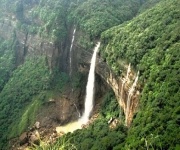
Cherrapunjee has many attractions spread across a wide area, so grouping nearby sites reduces unnecessary driving. Waterfalls and viewpoints are often most impressive during the monsoon, but spray, slippery platforms, and crowded access roads require patience. Keep phones and cameras in waterproof covers, especially when walking near Nohkalikai Falls or other exposed viewpoints.
Caves demand particular care in wet weather. Paths near Mawsmai Cave and other limestone formations can be slick, and water may collect on steps or uneven ground. Wear shoes with firm traction rather than smooth sandals. Walk slowly, hold railings where available, and keep both hands free when descending.
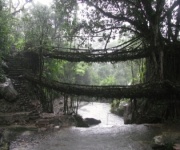
Living root bridges can involve long walks, steep steps, and damp forest trails. Rain makes these routes physically demanding even when the road to the trailhead is open. If you are visiting the Nongriat area, allow substantial time for the descent and return, carry drinking water, and avoid beginning late in the day. A short road delay can become a serious issue when daylight is limited.
Build at least one flexible block into the itinerary. This allows you to replace a distant attraction with a nearby viewpoint, café, village walk, or rest period when rainfall intensifies. A slower day often produces better experiences than trying to force every stop into poor visibility.
Stay Alert For Delays And Closures
Mountain roads can be affected by landslides, fallen branches, rock debris, and drainage overflow. Conditions may change after your driver has checked the route, so ask for an update immediately before departure and again if rain becomes unusually heavy. Hotel staff, local drivers, and tourism personnel often have the most current practical information.
Do not wait beneath steep cuttings or park close to the base of a cliff during a downpour. If traffic has stopped because of debris, remain in a safe area away from the slope and follow instructions from local authorities. Avoid attempting to squeeze past barricades or drive around freshly fallen material; the visible blockage may be smaller than the unstable section above it.
Carry enough food, water, medication, and phone power for an extended transfer. Mobile coverage can vary in hilly areas, and a power bank is useful when a delay lasts several hours. Save your accommodation address and important contact numbers offline so you are not dependent on a continuous data connection.
Travel insurance should cover weather-related delays and outdoor activities where relevant. Keep identification, booking information, and essential medicines in a waterproof pouch. These simple precautions are especially valuable when moving between Shillong, Sohra, and more remote rural attractions.
Pack For Wet Roads And Trails
Clothing should dry quickly and be easy to layer. A dependable rain jacket is more useful than a small umbrella on exposed paths, while a compact umbrella can still help in towns and at sheltered viewpoints. Pack an extra pair of socks and keep one complete change of clothes in a sealed bag.
Footwear is critical. Choose shoes with deep tread and ankle support for damp paths, steps, and cave approaches. Avoid wearing new shoes for the first time on a long trail, since blisters are harder to manage when returning through wet terrain. Sandals with smooth soles offer poor protection on mossy or muddy surfaces.
Protect electronics, travel documents, and cash with waterproof pouches. A quick-drying towel, insect repellent, personal medicines, reusable water bottle, and a small first-aid kit are also practical additions. Keep baggage compact so it can be moved easily if a vehicle must change or a short section must be covered on foot.
Rainy-Season Travel Essentials
- Waterproof outerwear, sealed document bags, and a spare change of clothes
- Grippy walking shoes with secure straps or laces
- Power bank, offline maps, emergency contacts, and a small torch
- Personal medication, basic first aid, drinking water, and light snacks
- Camera protection, insect repellent, and quick-drying travel towels
Use A Flexible Daily Rhythm
A good rainy-season day in Sohra should include spare time. Plan fewer major attractions, then add optional stops if the roads and weather remain favourable. This approach prevents a single delayed transfer from disrupting every later booking.
Allow time for parking and walking. Many viewpoints have limited roadside space, and stopping on a bend can create risks for other vehicles. Use designated parking areas where available, keep clear of entrances, and follow local instructions even when the weather makes a quick stop tempting.
Meal timing also matters. In smaller settlements, food options may be limited outside regular hours. Eat before a long excursion, carry a modest snack, and avoid depending on a restaurant located far from the next attraction. Warm food and a short indoor break can make a major difference after a wet trail.
Book accommodation with practical access rather than choosing solely by view. A property with covered parking, indoor drying space, reliable hot water, and staff who can arrange local transport is valuable during a prolonged spell of rain. Staying near the day’s main sightseeing area can reduce repeated exposure to difficult roads.
Travel Responsibly In Monsoon Conditions
Rain supports the forests, streams, and waterfalls that define the Cherrapunjee landscape, but heavy visitor traffic can damage fragile paths. Stay on marked trails, avoid climbing over safety barriers, and never enter a fast-flowing stream for photographs. Wet rocks can be unstable even when they appear flat and dry.
Carry rubbish back to a suitable disposal point. Plastic wrappers and bottles can block drains, pollute streams, and harm animals. Use refillable containers where safe drinking water is available, and avoid loud behaviour near villages, forest areas, and sacred or culturally important sites.
Respect local guidance when an attraction is temporarily closed. A closure may reflect a recent landslide, dangerous water level, damaged steps, or poor visibility rather than a minor inconvenience. Choosing an alternative stop protects both visitors and the landscape while keeping the journey enjoyable.
Before each excursion, confirm the planned route, expected return time, weather outlook, and emergency contact procedure with your driver or accommodation. Then set out with enough patience to let the hills determine the pace. Reserve your Cherrapunjee stay and transport with a local itinerary provider, and make the rainy season part of the experience rather than an obstacle to overcome.