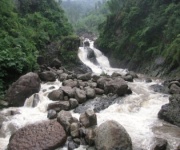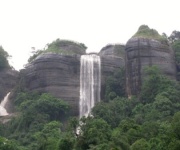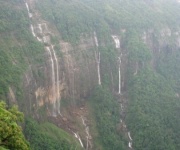






Walking Cherrapunjee's wet trails with confidence and care
Cherrapunjee sits among the cloud-catching hills of Meghalaya, where some of the highest recorded rainfall on Earth spills across limestone plateaus, swollen rivers, and bamboo thickets each monsoon. Travellers flying out of Sydney or Melbourne on a Qantas or Scoot codeshare arrive expecting dramatic waterfalls and lush greenery, yet many underestimate how a single shower can transform a familiar footpath into a skating rink of moss and mud. The reward for that preparation is real: post-rain light turns the valleys luminous, and the air smells of wet earth and eucalyptus that recalls a rainforest walk in the Dandenong Ranges back home.
Knowing how to navigate the slippery trails safely after rain is what separates a memorable trek from a trip to the chemist, and this guide walks through what changes on the footpaths after a downpour, the footwear and poles that keep you steady, the small technique adjustments that save knees, and the local guidance that helps you read conditions in real time. Australian travellers who hike the Overland Track or the Bibbulmun Track in Western Australia already know that slick rock demands respect, and the same mindset applies to Cherrapunjee, where every step is a permanent reminder that you are at the mercy of the weather.
Why rain turns a familiar path into a challenge
Meghalaya's monsoon delivers concentrated bursts rather than gentle soaking rain. Within an hour, a packed-earth trail becomes a shallow stream, lichens swell with moisture and lose their grip on stone, and clay steps near living root bridges turn the colour of wet chocolate. Australian hikers who walked the Larapinta in a dry August will notice immediately that the footing here behaves nothing like the rocky desert tracks of Central Australia. The soils here behave more like the basalt slopes of the Atherton Tablelands in Far North Queensland after a summer storm.
The deeper problem is that trail surfaces look stable when dry but shift when saturated. Laterite slabs become slick, and exposed roots grow a thin coat of algae that is nearly invisible until your boot lands on it. Many falls happen on descents where the gradient multiplies the loss of friction, especially on the steps cut into the path between Nongriat and the double-decker root bridge. Knowing this, even experienced bushwalkers should plan for longer travel times, with buffer zones where the route may need rerouting around flooded sections.
| Footwear type | Sole compound | Traction on wet stone | Drainage speed | Drying time |
|---|---|---|---|---|
| Vibram-soled boot | Mild rubber compound | High | Low | Eight to twelve hours |
| Approach shoe | Climbing rubber | High | Average | Four to six hours |
| Trail runner | Foam and rubber | Average | High | Two to four hours |
| Mesh trail shoe | Light rubber | Average | High | One to three hours |
| Strap sandal | Carbon rubber | Average | Very high | Under one hour |
Gear that anchors you to the slope
Footwear sets the baseline. A sticky rubber sole with a well-defined lug pattern grips mossy stone far better than a smooth walking shoe, and a reinforced toe protects toes when you scuff against hidden roots. Many of the boots sold through Australian Standard-compliant retailers in Brisbane and Adelaide already meet the tread depth required for serious off-track walking, so a familiar pair from home will serve well if it has been resoled recently. The key is to break boots in on a few Sydney Harbour headland walks before departure so the leather softens and the heel locks properly.
Trekking poles are the second anchor. Two poles spread the load across four points of contact, reducing the load on each knee by roughly a quarter on long downhills. Adjust the wrist joint so the forearm is horizontal when the pole tip meets the ground beside your leading foot, then shorten the pole by five centimetres on steep climbs. A pair of poles also lets you probe puddles for depth before committing, which is useful on the clay pans near the Wei Sawdong waterfall trail.
Pack light, pack dry. A 30-litre daypack with a rain cover leaves room for a dry bag containing a warm mid-layer, a headlamp, and a small first-aid kit. Carry a change of socks in a zip-lock, since wet feet blister fast, and tuck a pair of gardening gloves into the side pocket for crossing slick log bridges where bare hands slip on wet bark.
Essential wet-trail kit:
- Sticky rubber boots with clean lugs
- Pair of adjustable trekking poles
- Microfibre towel for face and hands
- Spare socks sealed in a zip-lock
- Compact rain shell and pack cover
Reading the weather and the path ahead
Forecast tools matter more in Meghalaya than almost anywhere in India. Check the regional Doppler feed and the Cherrapunjee Tourism page the evening before a planned walk, and again at sunrise from the resort. Local guides often know that a window of two to four hours usually opens between heavy bands, and they plan the day's longest descent for that gap. The Bureau of Meteorology-style approach of layered forecasts and short-term updates works just as well here as it does for a weekend in the Blue Mountains, where walkers also watch for rapid weather changes.
On the trail itself, read the surfaces as you would at home. A dull green hue on flat rock means algae and very low friction; bright green moss on vertical surfaces means better grip because the surface still sheds water. Standing water deeper than a hand's width suggests a flooded section that may have undermined the path, so backtrack and seek an alternative route. Cairns left by earlier walkers are usually placed on the safest dry line, especially near the bamboo grove above the Mawsmai cave entrance.
Carry a small notebook or use a phone app to log start and end points, water levels, and any treefall. Sharing those notes with your guide and the next day's group helps the whole party stay ahead of changing ground conditions.
Walking technique on damp stone and root
The flat-foot shuffle is the most reliable technique on slick downhills. Place the entire sole flat on the stone rather than rolling from heel to toe, which can snap unexpectedly on a wet edge. Keep your centre of gravity low by bending the knees slightly and leaning the torso a few degrees forward, letting gravity press you into the slope rather than tipping you onto your heels. Trekking poles should land at the same moment as the leading foot, providing three points of contact per step.
On the most exposed descents, sidestep or traverse. Facing directly downhill on a 35-degree wet clay slope is a recipe for a slide, whereas stepping sideways at an angle engages the edge of the lug pattern and gives the rubber a chance to bite. This is the same technique taught in Australian alpine skills courses for scree slopes on Mount Feathertop in Victoria, and it works just as well on the slippery limestone around Cherrapunjee's cave systems.
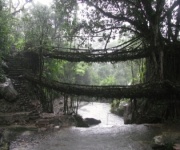
When crossing a living root bridge, move slowly, test each root with your pole first, and avoid stepping on the woven centre where the surface is smoothest. If you plan to explore beyond the well-known bridges, a how to find the secret waterfalls in cherrapunjee guide can point you toward quieter cascades and the quieter paths that lead to them, many of which are even slicker because they see less foot traffic and more leaf litter.
Trail etiquette for wet conditions:
- Step aside for uphill walkers to keep traffic flowing on the stable edge
- Keep voices low so footfall can be heard over rushing streams
- Carry out all rubbish, including fruit peels that attract hornbills and monkeys
- Yield to porters carrying supplies, who always have the right of way
Travelling with guides and local knowledge
A licensed local guide turns an uncertain afternoon into a confident one. Guides read the microclimate in real time, recognise the subtle cues of recent rockfall, and know which bamboo handrails are sound and which have rotted through. Many are trained in basic first aid and carry satellite communicators for the few stretches where mobile signal is unavailable. Visitors from Australia should also note that an Indian e-Visa is required and that a protected area permit is needed for some forest trails, both of which a registered operator can arrange on your behalf before arrival.
For travellers who prefer everything handled in advance, the five-night Cherrapunjee package bundles accommodation, transfers from Guwahati, and guided walks calibrated to the season. Because Australian dollars convert into Indian rupees with a comfortable margin, most travellers find that the package compares favourably with a self-organised trip once guide fees, jeep hire, and resort rates are added together. Domestic connections from Sydney via Singapore or directly into Guwahati make the route straightforward, and the operator can advise on the best arrival times for the weather window.
Finally, take the small wins. A misty morning that hides the valley also means fewer crowds on the steps, and the slow trickle of water along every ridge rewards patience with quiet pools that catch the early light. Pack a sense of humour alongside your poles, and the wet trails of Cherrapunjee will leave you with stories rather than bruises.
Reach out to the Cherrapunjee team through the website to tailor your walking days around the latest weather window, or lock in a multi-day itinerary that bundles transport, guides, and rest days at a comfortable resort. Booking early in the Australian winter gives the best choice of guides and the widest range of departure dates for the autumn post-monsoon season.