





Sunrise Photography at Nohkalikai Falls in Cherrapunjee
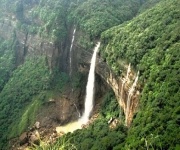
Nohkalikai Falls is one of the most dramatic viewpoints in Meghalaya. Water drops from a forested plateau into a blue-green pool far below, while steep cliffs, drifting cloud, and layers of greenery create a scene that changes from minute to minute. At sunrise, the attraction is less about a bright disk of sun and more about the gradual arrival of light across the gorge.
The viewpoint is near Sohra, also known as Cherrapunjee or Cherrapunji, and can be reached by road from Shillong. Early travel requires planning because the journey takes time, weather can shift quickly, and the best compositions may appear before the landscape feels fully illuminated.
A thoughtful approach will produce stronger photographs than simply arriving with the largest lens. Work with the atmosphere, protect your equipment from Meghalaya’s damp climate, and leave enough time to observe the falls before deciding how to frame them.
Choose The Right Morning
Arrive well before the expected sunrise rather than timing your visit for the exact moment the sun appears. The first useful light often begins earlier, and the sky may develop soft color before the cliffs are visible in detail. Reaching the viewpoint 30 to 45 minutes ahead gives you time to walk carefully, set up a tripod, and find a clear position without rushing.
Sunrise does not necessarily shine directly onto Nohkalikai Falls. The gorge, surrounding slopes, and viewpoint orientation can leave the waterfall in partial shade while the upper clouds catch warm light. This contrast can be very attractive, especially when the pale mist separates the falls from the darker rock.
The season affects both the waterfall and the atmosphere. During and shortly after the monsoon, the volume is impressive and clouds often surround the plateau, but rain can obscure the view. In drier months, the water may be less powerful while visibility, layered cliffs, and reflected color in the pool become easier to capture. Check local weather forecasts, road conditions, and viewpoint access with your accommodation or tour operator before setting out.
Work With Cloud And Changing Light
Cloud cover is often an advantage at sunrise in Sohra. A completely clear sky may produce a bright background with limited texture, while broken cloud can create subtle bands of pink, gold, grey, and blue. Thin cloud also softens the light, allowing you to retain detail in both the white water and darker vegetation.
Watch the scene for several minutes after sunrise. The strongest frame may come when a beam reaches the cliff face, when a cloud opens above the plateau, or when the mist briefly clears around the plunge pool. Photographing only the first glow can cause you to miss the moment when the landscape gains shape and depth.
Keep the histogram visible if your camera provides one. Bright water against dark rock can trick the meter into overexposing the falls or underexposing the surrounding gorge. Slightly protect the highlights, then lift shadows carefully during editing. A natural, moody image usually works better than a heavily brightened frame that loses the character of the early morning.
| Shooting priority | Useful approach | Visual result |
|---|---|---|
| Broad landscape | 16–35mm or an equivalent wide lens, with a low ISO | Shows the gorge, waterfall, sky, and surrounding forest |
| Waterfall detail | 70–200mm or an equivalent telephoto lens | Compresses the cliffs and isolates the falling water |
| Mist and moving cloud | Moderate shutter speed with a stable tripod | Preserves atmosphere while retaining texture |
| Soft water effect | 1/2 to 2 seconds, adjusted to available light | Blurs water without erasing every strand |
| Crisp water structure | 1/125 second or faster when light allows | Freezes spray and reveals separate streams |
| Changing exposure | Bracketing or several manual exposures | Gives flexibility when highlights and shadows differ greatly |
Pack For A Damp Viewpoint
A sturdy tripod is the most useful accessory for sunrise landscape photography at Nohkalikai Falls. Choose one that remains stable on uneven ground and has a quick-release plate fitted before you leave. Extend the thicker leg sections first, keep the center column low, and avoid placing the feet where visitors may accidentally knock them.
A wide-angle lens is useful for the full setting, but it should not be your only option. A standard zoom can create balanced compositions with less empty sky, while a telephoto lens helps isolate the plunge, pool, cliff layers, or a shaft of light. If you carry only one lens, a weather-sealed standard zoom offers a practical compromise.
A neutral density filter can lengthen exposures once the sky becomes brighter, but it is not essential before sunrise. Graduated filters may help balance a bright sky and darker gorge, although modern cameras also make exposure blending straightforward. A polarizing filter can reduce glare from wet leaves and rock, but it may also darken or unevenly affect a wide sky. Rotate it carefully and check the effect through the viewfinder.
Keep microfiber cloths, a rain cover, spare batteries, and sealed pouches in your bag. Moisture can form on a cold lens when you move between an air-conditioned vehicle and humid outdoor air. Let the camera acclimatize gradually inside a closed bag, and wipe condensation only with a clean cloth. Avoid changing lenses unnecessarily when rain or fine spray is present.
Find A Composition With Depth
Begin with the simplest composition: the entire waterfall, the plunge pool, and enough surrounding cliff to show scale. Do not fill every part of the frame with the falling water. The immense vertical walls and small details such as trees, railings, or distant figures help viewers understand the height of the drop.
Try a vertical orientation for the falls. A portrait frame emphasizes the long descent from the plateau to the pool and can include less distracting sky. A horizontal frame works well when cloud, forest, and opposing cliffs form important layers. Take both before committing to one format.
Foreground elements can make the image feel grounded. Wet leaves, grasses, rock textures, or a carefully chosen viewpoint edge may lead the eye toward the waterfall. Keep these elements intentional rather than allowing a random branch or railing to dominate the lower frame. Move a little left or right, if the safe path allows, to simplify the scene.
Use people sparingly for scale and avoid placing anyone in a dangerous position for a photograph. A distant person on an established viewing area can show the proportions of the gorge, while a crowded foreground may distract from the falls. Never climb barriers, approach unstable edges, or ask another visitor to stand somewhere unsafe.
Control Shutter Speed And Focus
Waterfall photography does not have one correct shutter speed. A very long exposure can turn the entire cascade into a blank white ribbon, especially where the morning sky brightens. Start around 1/4 to 1 second and review the texture of the water. Shorten the exposure if individual streams and spray are disappearing; lengthen it when you want a smoother, more dreamlike flow.
Use manual exposure or aperture priority with exposure compensation. A low ISO, often 100 or 200, preserves fine detail and gives you the cleanest files. Apertures around f/8 to f/11 generally provide useful depth of field, although diffraction can soften the image at very small settings. Adjust shutter speed before raising ISO while the camera remains on a tripod.
Focus on a significant area of the landscape rather than the nearest edge. Autofocus may struggle with mist or low contrast, so focus on a visible cliff, tree line, or rock detail and then switch to manual focus. Magnify the live view to check sharpness, and refocus if you change focal length or composition substantially.
Shoot in RAW when possible. This preserves more information in the shadowed vegetation and bright water, giving you room to refine white balance, highlights, and contrast later. Use the two-second timer or a remote release, and turn off image stabilization when the camera is firmly mounted if your lens instructions recommend doing so.
Prepare For The Journey From Sohra
The road from Shillong to the Nohkalikai Falls area passes through a landscape of high rainfall, forest, villages, and changing elevation. Early departures should be arranged with a reliable driver or local tour provider, particularly if you are carrying a tripod and several bags. Build in extra time for slow traffic, wet roads, and brief stops.
The viewpoint may have local opening hours, entry arrangements, or temporary restrictions that change with weather and maintenance. Confirm current access before leaving your hotel. Comfortable footwear with dependable grip is important, even when the walk from the parking area is short. Keep valuables secure and bring a light waterproof layer rather than relying on an umbrella while handling a camera.
Sohra is also a place to experience local craft and community life, not just a sequence of scenic stops. If your itinerary includes time in town, you can explore local handloom weaving to learn about regional textiles and find a meaningful reminder of Meghalaya. Buy directly from makers or reputable local outlets when possible, and ask before photographing people or their work.
Respect the viewpoint by staying behind barriers, carrying out packaging, and keeping noise low during the early hours. Do not enter restricted areas, throw objects into the gorge, or fly a drone without explicit permission. The landscape is shared with residents, guides, and other travelers, and responsible behavior protects both the place and future access.
Use This Sunrise Field Checklist
A short checklist prevents small oversights from spoiling a carefully planned morning:
- Charge every battery and carry at least one spare in a dry pouch.
- Pack a tripod, remote release or timer, lens cloths, and rain protection.
- Bring both a wide or standard lens and a telephoto lens if your kit allows.
- Check sunrise time, cloud cover, road conditions, and viewpoint access the evening before.
- Leave room in your schedule for changing light after the official sunrise time.
Before pressing the shutter, remove lens caps, check the histogram, and inspect the edges of the frame for branches, railings, or accidental distractions. Take a test exposure, zoom in to confirm focus, and then make small changes rather than constantly rebuilding the composition.
After the main sequence, photograph details: water breaking into spray, cloud passing over the plateau, wet foliage catching side light, and the blue pool beneath the falls. These smaller images add variety to a gallery and often express the atmosphere of the morning more effectively than a single wide view.
A sunrise visit to Nohkalikai Falls becomes most rewarding when photography remains connected to the place. Reserve a suitable stay in Sohra, arrange transport early, and plan enough time for weather delays and nearby attractions. Contact Cherrapunjee.net to organize a Meghalaya tour package that includes the falls, comfortable accommodation, and the local guidance needed to reach the viewpoint ready for the best light.