





A Budget-Friendly 3-Day Trip to Cherrapunjee
Planning a budget-friendly 3-day trip to Cherrapunjee is realistic when the focus is a compact sightseeing loop rather than attempting every waterfall, cave and distant bridge. Cherrapunjee, also called Sohra or Cherrapunji, sits at about 1,500 metres in Meghalaya’s East Khasi Hills, roughly 20–25 kilometres from Shillong. A sensible plan uses Sohra as the main base, spends one day on major attractions, reserves another for walking and living root bridges, and allows for weather-related changes.
For Australian visitors, the largest savings usually come from avoiding internal flights and choosing shared transport, family-run accommodation and local meals. Flights from Sydney, Melbourne or Brisbane generally reach Kolkata or Guwahati with at least one stop, so the best itinerary usually includes a rest night in one of those gateway cities. Spending three nights instead of two may reduce fatigue, but for a short holiday, two nights in Sohra plus a carefully chosen arrival night can provide excellent value without rushing.
Set a daily budget and choose your base
A practical shoestring daily budget is around ₹1,800–₹3,000 per person, excluding international flights, shopping and premium activities. That estimate assumes a shared room, simple meals, public transport or a shared taxi, and a few modest entry charges. Build in a contingency of about 15 percent because weather closures, extra vehicle seats and last-minute guide fees can change the total.
Translate the rupee budget into Australian dollars before departure rather than relying on a guessed exchange rate. As a general benchmark, ₹1,800–₹3,000 is approximately A$32–A$54 when one Australian dollar is around ₹55–₹57. Check your card’s foreign transaction fee, and choose to be charged in rupees rather than Australian dollars. Cards are useful at established hotels and restaurants, while smaller stalls and transport operators often work best with cash.
Deciding between Shillong and Sohra affects both cost and travel time. Sohra places waterfalls and caves closer to the accommodation, while Shillong has a larger selection of budget hotels, hostels, restaurants and pharmacies. Staying near Sohra’s main market and viewpoints saves daily vehicle costs; staying in Shillong is more flexible if bad weather requires a change of plans. For the shortest itinerary, one night on arrival followed by two nights in Sohra usually works well.
Flights, transfers and permits for Australian visitors
Most travellers fly into Guwahati, which is about 100 kilometres from Shillong. A shared taxi or upper-class bus can continue to Shillong, followed by a local shared jeep or taxi to Sohra. Allow roughly three to four hours for the road journey, plus time for the final hill section. Kolkata is another option, with a train to Shillong and then road transport to Cherrapunjee, but it requires an additional overnight stay.
Many Australian passport holders qualify for India’s tourist e-Visa, provided the application is made through the authorised system before travel. Eligibility and rules can change, so verify the passport, arrival date and permitted activities on India’s official immigration service and the Australian Government’s Smartraveller advice. Ordinary visits to the main tourist sites do not generally require a special permit, although remote treks or restricted areas may have additional requirements. Carry your passport, visa approval and insurance details in both digital and printed form.
Avoid planning to rent a car merely because Australian and Indian drivers both use the left side of the road. Road conditions, overtaking habits, livestock and landslide risk make local shared transport the safer choice. Keep ₹500–₹1,000 available for taxis and small payments, and save the local emergency number, 112, in your phone. A delayed flight or blocked road should never prompt an attempt to complete a full day of sightseeing at speed.
Shape three days around caves, waterfalls and root bridges
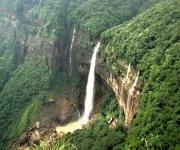
On the first full day, explore the Sohra circuit. Start with Arwah Cave, where stairs descend through a limestone passage with viewing platforms, and continue to Dympep Viewpoint for views across the hills and waterfalls. Nohkalikai is the area’s best-known waterfall, but its lower pool often dries or becomes unsafe after heavy rain. View it from the designated paths rather than assuming swimming is possible.
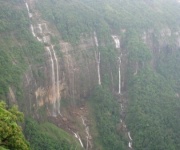
Make the second day a viewpoint and village day, combining Seven Sisters, Nohsngithiang and nearby trails where access and local guidance allow. Start early because cloud can obscure the valley by late morning. Small parking or entry charges may apply at individual stops. Shnongpdeng and other activity sites have their own access rules, so confirm whether swimming, caving or adventure activities are open and supervised before setting out.
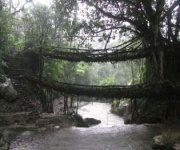
Use the third day for the living root bridges around Nongriat or Nongthar. These bridges are grown from intertwined roots rather than built from cut timber, and reaching the more remote examples can involve several hours of steep, slippery walking. A local guide is valuable because some routes are difficult to identify and may close after rain. Visitors with limited mobility should ask about a closer, more accessible bridge and spend additional time in Sohra instead.
Keep each day flexible and use current information from guides, hotel staff and park personnel. For an additional perspective on travel in the region, Kos4life travel guides may provide useful observations about routes and experiences. Weather can change access quickly, so leave enough room to replace an outdoor attraction with a cave, a market visit or a rest rather than adding extra stops to an already crowded itinerary.
Save on food, stays and local experiences
Look for family-run guesthouses and homestays in Sohra that offer breakfast or dinner as an optional package. A basic room may cost roughly ₹900–₹1,800 per night, but prices vary by season and group size. Check whether the quoted rate includes taxes, hot water, transport and meals. Cherrapunji.net’s multi-night packages can be compared with independent accommodation, especially when the main goal is a short, inexpensive stay rather than extensive sightseeing.
Eat where food is cooked in front of you, such as small eateries around Shillong’s Local Market, Police Bazaar and Bara Bazaar. Rice, dal, noodles, vegetables, momo and local bread are often more affordable than restaurant meals. Many tourists with Australian vegetarian preferences will find vegetarian options, although Khali dishes may include pork and other meats, so ask before ordering. Unlike a routine checkout at Coles or Woolworths, many market stalls prefer cash and have limited card facilities.
Bring a local guide for the root-bridge trek or any unfamiliar cave route, and agree on the price before starting. Entry fees, parking charges and guide services may be separate. Tipping is optional, while cash may still be needed for tea stalls, washrooms, boat operators or small parking attendants. Carry reusable water bottles and a filtered refill if available, but avoid drinking untreated stream water.
Pack smart and prepare for monsoon surprises
Meghalaya’s main monsoon generally runs from May to September, with the heaviest rain affecting trails, roads and viewpoints. October to March usually offers clearer conditions, although mornings can be cold and holiday periods fill local accommodation quickly. Even outside the monsoon, sudden rain is possible, so waterproof clothing and sensible footwear belong in every day bag.
A short packing checklist covers the practical details that make a low-cost trip safer and less stressful:
- Book flexible transport and accommodation where possible, as heavy rain can cause delays or temporary closures.
- Carry a Type D or Type M plug adapter because Australian Type I plugs do not fit most Indian sockets, even though both systems commonly use 230 volts and 50 hertz.
- Pack a lightweight rain jacket, waterproof phone pouch, compact umbrella and shoes with grip, as cave floors, paths and rocks become slippery quickly.
- Keep about ₹1,000–₹2,000 in small banknotes for stalls, guides and fuel, while retaining a card and an online payment method as backup.
- Download offline maps, save your passport and insurance copies, and keep a basic first-aid kit, water bottle and personal medication accessible.
After rain, do not swim in waterfalls or cross flooded trails, even if other visitors are doing so. Flash flow, hidden currents and unstable rock can develop quickly in East Khasi Hills streams. Leech socks may be useful on longer forest walks, while insect repellent and any prescribed personal medication should remain accessible rather than packed deep inside a checked bag.
Confirm the details and book with confidence
A three-day visit may be sold as three days and two nights, while others include three nights and four days of activities. Cherrapunji.net offers packages ranging from two to seven nights, so confirm exactly how many sightseeing days are included. Ask whether the quote covers airport or railway transfers, accommodation, meals, guide services, entry charges and monsoon-related alternatives.
For a live quote, send your preferred arrival date, group size, accommodation preferences and Australian-dollar budget through contact the Cherrapunji team. Request a written breakdown showing the base price, included transport, extra activity charges and any seasonal supplement. If a flight arrives late, retain enough flexibility for the first Cherrapunjee visit rather than cramming the itinerary into fewer days.
Start with a simple two-night Sohra package, keep one activity flexible and add a third night only if the slower pace is worth the additional cost. Send your dates and budget to the booking team, and request the lowest-cost option that includes reliable transfers and a suitably located stay.