





How to Plan a Multi-Generational Trip to Cherrapunjee
Multi-generational travel has become one of the fastest-growing segments of Australian holidays, with grandparents, parents and children often flying together for milestone celebrations such as significant birthdays, retirements, or the winter school break. Cherrapunjee, perched on the southern edge of the Khasi Hills in Meghalaya, is a particularly good fit for this kind of family reunion because it delivers dramatic scenery, gentle walking options and a cool climate year-round. The living root bridges, thundering waterfalls and limestone caves create shared memories that span generations in a way that beach resorts rarely manage.
From Sydney, Melbourne or Brisbane, reaching Cherrapunjee requires a long-haul commitment that makes the journey itself part of the adventure. Most families route through Changi, and a growing number stop a couple of nights in Singapore to break up the trip and let younger children recover before pushing on to Guwahati. The rewards on the other side are considerable, and a well-paced itinerary will keep energy levels up from toddlers through to retirees who might otherwise find an active itinerary a bit much.
Planning a successful multi-generational trip to Cherrapunjee is really about layering choices so that nobody feels left out or exhausted. Picking the right season, choosing a base that caters for different needs, and selecting activities that can be tweaked for mobility or stamina all make the difference between a holiday that becomes a treasured story and one that leaves relatives politely avoiding each other at the next family barbie.
Choosing the Right Season for Three Generations
Cherrapunjee's reputation as one of the wettest places on earth is well deserved, and the monsoon that rolls in from June through September transforms the plateau into a slippery, misty world that is beautiful but tiring for older walkers and very young kids. Travellers from Sydney or Perth who are used to dry summers will find the rain both exhilarating and exhausting, so most multi-generational groups choose the dry window between October and May. Within that window, March and April are particularly kind, with warm days, cool nights and the waterfalls still running strongly after the rains.
December and January bring cooler temperatures that suit elderly travellers who feel the cold less when it sits in the mid-teens, but the mornings can be foggy and some of the longer excursions get cancelled if visibility drops. February offers a sweet spot with manageable crowds and the jingkiamed flowers starting to bloom across the hills. Booking accommodation and drivers well ahead for these peak months is essential because Indian domestic tourism spikes around the holidays and the best rooms go early.
Picking Accommodation That Works for Everyone
Hotels and resorts across Cherrapunjee and the wider Sohra area range from boutique hilltop stays to mid-range chains, and the right choice for a multi-generational group is rarely the cheapest. Look for properties that offer interconnected rooms or family suites so that grandparents can be close without sacrificing privacy, and check that bathrooms have grab rails or at least non-slip surfaces. Ground-floor rooms are a blessing for anyone with stiff knees, and a few properties around Cherrapunjee and Mawsmai village specifically advertise accessibility-friendly layouts. A reliable hot shower matters more than most brochures admit, especially for older travellers and small children acclimatising to the altitude.
The view should also pull its weight. A balcony that looks out over the Bangladeshi plains at sunrise, or a window that frames the Seven Sisters waterfall, turns quiet mornings into a shared ritual. Ask the operator whether the property offers early dinners for younger kids and flexible meal timings for grandparents who prefer to eat at six rather than eight. Many of the better resorts now provide these arrangements without fuss, particularly those used to hosting Indian family groups where three generations under one roof is the norm.
Activities That Span Generations
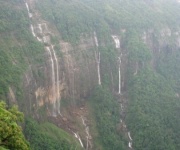
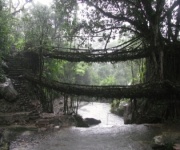
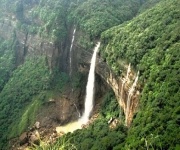
Cherrapunjee's headline sights are unusually forgiving when it comes to mixed-age groups. The viewing platforms at Nohkalikai Falls and Seven Sisters are accessible from the road, which means grandparents who do not want to walk far can still take in the spectacle while more adventurous family members scramble down to the base. The living root bridges at Nongriat are a longer commitment, with roughly 3,500 steps each way, but they can be tailored. Some groups send the fittest members down with a guide while the rest of the family enjoys a leisurely walk around the surrounding village and a long lunch with the local community.
Mawsmai Cave is a reliable crowd-pleaser because it has short, well-lit sections that anyone can manage, with optional deeper passages for the more adventurous. The boat ride on the Umngot River at Dawki is another easy win, with calm water and photo opportunities that suit every age group. Build in at least one slow day per week where the only plan is a short walk to a nearby waterfall, a chai stop, and an afternoon of cards or reading on the verandah. Australians travelling this far tend to want constant activity, but a true rest day is what keeps a multi-generational trip on the rails.
Flights, Visas and the Long Haul From Australia
The route from Australia to Cherrapunjee is long but well trodden. Qantas, Singapore Airlines and Jetstar fly direct or one-stop from Sydney, Melbourne, Brisbane and Perth to Singapore or Kuala Lumpur, and from there connections to Guwahati run daily with IndiGo, Air India and a handful of regional carriers. Many Australian families use the stopover to recover, and a quick evening out, perhaps at one of the rooftop bars in Singapore, helps adults reset before the final leg. The flight from Singapore to Guwahati is around four and a half hours, and the road transfer from Guwahati to Cherrapunjee takes roughly three to four hours depending on traffic and weather.
Australian passport holders need an Indian e-visa, which can be applied for online and is usually approved within 72 hours. Meghalaya is a restricted-area state, so travellers also need an inner line permit, which most hotels and tour operators arrange as part of the booking. Carry printed copies of everything, because mobile networks in the hills can be patchy and showing a PDF on a phone is not always reliable. Travel insurance that specifically covers trekking and adventure activities is worth the extra dollars, particularly for older travellers.
Working With a Local Operator for a Tailored Itinerary
DIY travel to Cherrapunjee is possible but harder than it looks, and for a multi-generational group the small logistics gaps can quickly become big headaches. Local operators know which roads are closed after heavy rain, which waterfalls have safe access in a given month, and which resorts will quietly move a booking to make space for an extra relative at short notice. They can also stage luggage transfers so the bus does not get overloaded with eskies, prams and the various bags that come with travelling as a wider family unit.
Choosing the right company matters more than chasing the lowest quote. Look for an operator that handles its own ground arrangements rather than acting as a middleman, and that has explicit experience with Australian and other international family groups. The case for working directly with a local team is laid out in the top reasons to choose a local tour operator for cherrapunjee, and the points there apply equally to first-time visitors and seasoned India travellers. India Beacons Sojourn, which runs cherrapunjee.net, builds itineraries that explicitly account for different paces within a single group.
Practical Recommendations for a Smooth Trip
- Book domestic Indian flights and Cherrapunjee hotels at least four months ahead for travel between December and February.
- Request interconnected rooms or a family suite at the time of booking, and confirm ground-floor access if anyone in the group has mobility concerns.
- Carry a small medical kit with rehydration salts, motion-sickness tablets, blister plasters, and any prescription medication in original packaging.
- Plan one slow day for every three active days, and keep at least one backup activity in mind for rainy afternoons.
- Download offline maps for Meghalaya and save hotel addresses in Hindi as well as English for taxi drivers.
- Pack layers rather than a single heavy coat, because mornings and evenings on the plateau are often ten degrees cooler than midday in the valleys.
- Confirm whether the inner line permit is arranged by your operator or needs to be sourced separately, and carry two printed copies per traveller.
Ready to start sketching the trip? Cherrapunjee.net and the India Beacons Sojourn team put together multi-day packages from two to seven nights, with itineraries that can be tuned for grandparents travelling with toddlers, teenagers or adult children. Get in touch through the contact details on the website to ask about specific dates, room configurations and accessibility requirements, and the team will put together a tailored quote that brings the whole family together in the Khasi Hills.