





A Thoughtful Guide To Khasi Village Etiquette In Meghalaya
Visiting a Khasi village near Cherrapunjee, also known as Sohra or Cherrapunji, offers a closer look at Meghalaya’s landscapes, traditions, and community life. The experience can include conversations with residents, walks through betel nut groves, visits to living root bridges, and time spent near homes that have remained connected to the hills for generations.
Good manners matter in these settings. A village is not a staged attraction; it is someone’s home, workplace, place of worship, and ancestral landscape. Learning a few local customs before arriving helps travellers behave with courtesy while gaining a more genuine understanding of Khasi culture.
Respect begins before the journey, with careful planning and realistic expectations. Ask your tour operator about village access, local guides, photography rules, religious observances, and appropriate clothing. In remote parts of Meghalaya, customs can vary between communities, so local guidance should always take priority over general travel advice.
Prepare Before Entering A Village
Many Khasi villages welcome visitors, especially when tourism supports local guides, homestays, drivers, restaurants, and craft sellers. Still, access may be informal or controlled by village institutions, landowners, or community representatives. Travellers should avoid walking into side paths, courtyards, farms, or forest areas without checking whether entry is permitted.
A local guide is valuable for more than navigation. Guides can explain which areas are private, identify culturally significant sites, translate conversations, and clarify whether a ceremony or gathering may be observed. They also help visitors understand practical matters such as parking, village contributions, guide fees, and the best route during monsoon weather.
Dress modestly and comfortably for the terrain. Lightweight trousers, longer shorts, shirts that cover the shoulders, and sturdy walking shoes are suitable choices. A rain jacket is useful throughout the year, while a hat and water bottle help on exposed paths. Avoid clothing with offensive slogans or anything likely to be unsuitable when entering a church, home, memorial site, or sacred natural area.
Greet People With Patience And Courtesy
A simple greeting, smile, and respectful “hello” are usually enough when meeting residents. Khasi is the principal local language in many parts of the region, while English is widely used in tourism and education. Learning a few words or asking your guide for a suitable greeting can be appreciated, but pronunciation should be attempted humbly rather than performed for entertainment.
Give people time to respond. Rural life often follows a slower rhythm than a sightseeing itinerary, and a resident may be working, caring for children, carrying produce, or attending to household responsibilities. Do not assume that someone who looks toward a camera or tour group wants to talk or be photographed.
When invited into a home, wait for the host to indicate where to sit. Remove muddy footwear if requested, especially during the rainy season. Accepting a small refreshment can be a warm gesture, but visitors should not feel obliged to finish food if they have dietary restrictions. Explain these needs politely before accepting a meal.
Treat Homes, Churches, And Sacred Places Carefully
Khasi society includes different religious traditions, including Christianity and indigenous beliefs. Churches and village cemeteries may be important community spaces, while forests, stones, springs, and other natural features can hold cultural or spiritual significance. Never climb on memorials, touch ritual objects, enter a restricted grove, or collect stones, plants, flowers, or other natural materials.
Keep your voice low near places of worship and avoid interrupting services, prayers, funerals, or community meetings. If a church or sacred site is open to visitors, ask whether photography is allowed before taking pictures. A guide or local resident can explain where visitors may stand and whether particular areas are reserved for worshippers.
Some villages have rules concerning alcohol, smoking, loud music, and public behaviour. Follow posted instructions and accept local decisions without debate. A respectful traveller does not treat unfamiliar customs as curiosities to challenge or imitate. Observing quietly is often the best way to show appreciation.
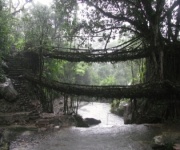
The same principle applies to living root bridges and ancient paths. These structures are maintained by communities over long periods, so avoid swinging from roots, carving names, leaving ribbons, or blocking the crossing for photographs. Stay on established trails and follow instructions about group size, slippery sections, and private land.
| Situation | Considerate behaviour | Avoid |
|---|---|---|
| Entering a village lane | Ask your guide where visitors may walk | Opening gates or entering courtyards |
| Meeting residents | Offer a polite greeting and allow personal space | Staring, following, or demanding conversation |
| Visiting a home | Wait for an invitation and follow house rules | Sitting down or exploring rooms without permission |
| Taking photographs | Ask first, especially for people and ceremonies | Photographing children or worship without consent |
| Visiting caves and forests | Stay on marked routes and leave natural features untouched | Removing fossils, plants, stones, or littering |
| Buying local products | Agree on the price respectfully and pay fairly | Haggling aggressively or mocking a price |
Ask Before Taking Photographs
The dramatic scenery around Sohra makes photography tempting, but beautiful surroundings do not remove the need for consent. Always ask before photographing a person, a family, a home interior, a market stall, a religious service, or a community event. A nod or verbal agreement should be clear, and hesitation should be treated as a refusal.
Children deserve particular care. Ask a parent or guardian before taking their picture, and do not offer sweets, money, or gifts in exchange for a photograph. Avoid directing residents into poses or asking them to repeat a daily activity for a better image. A person’s privacy is more important than a travel photograph.
Before sharing images online, consider whether the caption is accurate and respectful. Do not label ordinary village life as primitive, untouched, or exotic. If a guide or resident gives a name for a place, person, or ceremony, check the spelling and meaning before publishing it. Travel images can influence how communities are perceived long after a visit ends.
For visual ideas about Meghalaya’s scenery and cultural landscapes, travellers can browse the Cherrapunjee photo album before planning their route. Use such images for inspiration, not as evidence that every viewpoint or village is freely accessible.
Support The Community Without Intruding
Purchasing from local producers can make a visit more beneficial when the exchange is fair and unforced. Look for village-made baskets, textiles, honey, spices, bamboo products, or locally prepared food where available. Ask whether an item is made locally, and pay the agreed price without treating a small village shop like an auction.
Responsible spending also includes paying guides and drivers on time and respecting their knowledge. A guide’s fee covers preparation, route-finding, interpretation, and responsibility for group safety. If a community requests a small maintenance or entry contribution, ask what it supports and keep a receipt where one is provided.
Avoid distributing pens, sweets, clothing, or money directly to children. This can encourage children to approach tourists and may create unequal expectations within the village. If you want to contribute, ask your accommodation, tour operator, or guide about an established community initiative, school support programme, conservation fund, or local cooperative.
Food is another opportunity to show consideration. Tell hosts or restaurants about allergies and dietary requirements early. Do not criticise unfamiliar ingredients, eating practices, or preparation methods. If you cannot accept an offering, a warm explanation is kinder than a dismissive gesture.
Leave Natural And Cultural Sites Undisturbed
The caves, waterfalls, forests, and limestone formations around Cherrapunjee are vulnerable to careless tourism. Stay on marked trails, use designated viewpoints, and take all wrappers, bottles, tissues, and packaging back with you. Toilets may be limited on village walks, so plan ahead and never pollute streams or waterfalls.
Caves require particular caution. Touching formations can damage them, and removing fossils or cave material is both unethical and potentially illegal. The guide to Arwah Cave fossils explains why these underground landscapes deserve careful treatment. Visitors should never chip rock, collect specimens, write on cave walls, or move objects to create a photograph.
Noise can disturb wildlife and residents alike. Keep speakers turned off, avoid shouting across valleys, and do not feed monkeys, birds, or other animals. Flash photography may also be inappropriate in some caves or around wildlife. A quiet visit allows travellers to notice bird calls, water, and the character of the landscape without overwhelming it.
Weather can alter a route quickly. Heavy rain may make steps, bridges, and narrow paths dangerous, while fog can reduce visibility. Follow a guide’s decision to turn back or change plans. Respecting local judgement is part of cultural etiquette because residents understand seasonal conditions that online maps and fixed itineraries may not show.
Practical Habits For A Respectful Visit
Small choices often shape the quality of a village visit more than elaborate gestures. Carry reusable water and shopping bags, keep cash for small purchases, and ask before using drones. Drone flights may be restricted near homes, churches, forests, borders, wildlife areas, or other sensitive locations, so obtain permission rather than assuming an open sky means unrestricted use.
Be mindful of traffic and village routines. Do not park across narrow lanes, block access to a home, or leave a vehicle running beside a school or market. When walking in a group, keep voices moderate and leave room for residents carrying goods or travelling between homes. Large groups should divide into smaller units when a path or space is limited.
The following habits are especially useful when preparing for a culturally sensitive trip:
- Ask permission before photographing people, homes, ceremonies, churches, and private property.
- Hire a registered or locally recommended guide for village walks, caves, and community-managed attractions.
- Dress modestly, follow requests about footwear, and observe restrictions on alcohol or smoking.
- Buy locally where possible, pay agreed prices fairly, and avoid giving money or gifts directly to children.
- Carry out all waste, remain on marked paths, and leave roots, fossils, plants, stones, and wildlife undisturbed.
Respect also means responding well when corrected. A resident may point out that a path is private, a photograph is unwelcome, or a certain action is unsuitable. Thank them, apologise briefly if necessary, and change your behaviour without turning the moment into an argument. That response protects the dignity of the community and keeps the encounter positive.
A visit to a Khasi village becomes more meaningful when travellers arrive as guests rather than spectators. Plan a village experience through a responsible local operator, ask about appropriate access and customs, and allow enough time for conversation, walking, and unexpected moments. Contact Cherrapunjee.net to explore suitable Meghalaya tours and arrange a journey that supports local communities while treating their homes, traditions, and landscapes with care.