





How to Spend a Relaxed Weekend in Cherrapunjee Without Trekking
Cherrapunjee rewards visitors who come for more than the walk to the highest hanging bridge in India. Sohra, as the town is usually called locally, sits on a limestone plateau in Meghalaya's East Khasi Hills, and around it lies a network of waterfalls, caves, viewpoints and shaded village paths that can be enjoyed in a single afternoon without touching a trekking pole. The town's reputation grew out of expeditions and trail walks, yet the same scenery works beautifully for anyone whose idea of a weekend involves a slow breakfast, a short stroll and a long cup of tea while the rain comes down. Learn more about Essential Tips For First Time Travelers To Dubai From India.
That is easier to arrange than most people expect, because the distances are small and the main sights cluster within a few kilometres of the centre. The trick is choosing the right footwear and knowing which viewpoints reward a half-hour detour and which ones demand a full-day hike. This guide builds a relaxed two or three day shape around Cherrapunjee, with flexible outings that the weather can shorten or extend.
Getting there takes a bit of planning. Most Australian travellers fly into Guwahati and continue on to Shillong's Umroi airport, roughly 100 kilometres from Sohra, then cover the last 70 kilometres or so of hill road. Others drive up from Guwahati through Shillong, pausing at roadside markets, viewpoints and the Welsh Falls along the way. Because this usually forms part of a longer Indian itinerary, the same attention to documents, insurance and onward tickets that people apply to first-time travel to Dubai from India applies here as well: an approved e-visa for Australian passport holders, printed accommodation confirmations, and a roaming data plan that works outside the big cities.
Weather shapes everything. Meghalaya records the highest rainfall in India, and the monsoon months from June to August turn waterfalls into roaring, muddy cascades and paths into slippery staircases. March to May and September to October bring clear skies, comfortable daytime temperatures and flowing water. If you travel in the monsoon, come with an open mind and a waterproof layer; the crowds thin out, the air stays green, and the caves remain cool and uncrowded.
Getting there and settling in
Hill roads in the East Khasi Hills are narrow and busier than they look on a map, so most visitors arrange a car through their guesthouse or resort rather than hailing transport on the street. The drive from Umroi airport takes around two hours, winding past tea plantations and small Khasi villages, with plenty of stops for photographs. If you are heading straight to Sohra, your driver will handle the potholes and the livestock on the road for the most part. If you prefer to stop in Shillong first, budget an extra night there so the return journey to the airport is not rushed.
Most of the town sits along one main road, with guesthouses and small resorts clustered near the centre and around Laitlum a few kilometres below Sohra. Staying for two nights lets you spread the outings across separate mornings instead of cramming everything into one long day. If you would rather skip the logistics, the two-night Sohra package bundles airport transfers, a waterfall outing and a guided cave visit, which is a sensible starting point for a first visit.
Pack a head torch or a strong handheld light for the caves, a light jumper for evenings at 1,500 metres, mosquito repellent, and shoes with grip, because wet limestone is unforgiving. Carry some Indian rupees in cash: ATMs are scarce outside Shillong, and roadside tea stalls, drivers and small guides rarely take cards. A power bank helps when the signal drops. Keep a photocopy of your passport and visa handy, since guides at managed cave sites often ask to see them before entry.
Waterfalls you can reach with barely any climbing
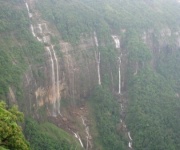
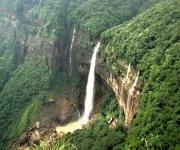
Nohkalikai Falls, the town's signature sight, pours from a cliff near the upper edge of the plateau at almost 1,425 metres. The famous viewpoint sits at the bottom of a long flight of steps, and while the descent is impressive, it is also hard on knees and takes longer than visitors expect. Plenty of people watch the water from the upper platform instead, where you still get the full height and volume of the drop without committing to the climb.
Double Decker Falls sits close by and can be reached on a short paved path, giving you two named falls in the same outing. Elephant Falls, with its series of tiered basins, is about 300 steps down to the lower pool; the upper viewpoint is perfectly worthwhile on its own, and the steps down can become a short, gentle stroll when the rock is dry. Kynrem Falls, one of the highest in the state, sits about twenty minutes along a good path through forest and is a favourite picnic spot.
Shadok Falls, near Tyrna, has a wider, more rural feel and suits a slow morning with tea afterwards. Boat Rock Falls, tucked into a side valley, is a modest detour that adds variety rather than drama. As Australians tend to say, the point is the walk, not the summit, and this set of falls gives you that with far less effort than a trail in the Blue Mountains or a hike in the Grampians would demand.
Caves, root bridges and village heritage
Mawsmai Cave is the easiest and most rewarding cave stop: a short walk from the road leads to a lit limestone chamber full of narrow passages, flowstone and shafts of daylight, and a guide is usually required. Krem Cave, one of the longest cave systems in South Asia, is bigger and darker, with bat colonies in the deeper chambers and sections that need a torch. Arwah Cave involves several hundred steps, so it is better left for another trip unless you feel like a workout.
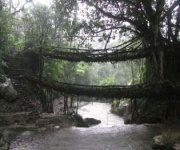
The living root bridges are Cherrapunjee's most photographed feature, and the best-known one at Nongriat is reached by a long descent through the forest. For a relaxed weekend, skip that walk and visit the villages themselves. Nongriat and Tyrna are where the bridge builders live, and you can sit with them, hear how betel vines are trained and knotted together with fig roots over decades, and look at the finished double-decker span from the village side. Understanding the craft in person tells you more in half an hour than a full-day trek does.
Pair the village visit with Laitlum Caves nearby, where the limestone formations sit in a quiet grove, or with the short climb to the Tyrna viewpoint, which is manageable for most visitors. The Khasi communities here speak English alongside Khasi, guides are used to international travellers, and the hospitality is genuinely warm. Lunch at a roadside shack of fried rice, noodles or local pork is part of the experience, not a detour from it.
Pacing the weekend like an Australian road trip
Australian weekend culture revolves around short escapes that fit inside Friday evening to Sunday afternoon, and Sohra works well in that pattern from Umroi airport. Australians also tend to reserve the word trek for multi-day routes and say trail or walk for a day's outing, so a gentle trail here feels like home territory. One useful piece of local driving advice: Australians already drive on the left, so the winding roads around Sohra require no adjustment in lane discipline, only patience and a steady hand.
Carry a few more rupees than you think you need and expect to pay cash for guides, entry permits and tea, because village businesses rarely run card machines. Tipping is not a fixed habit in Australia, and the same restraint works in Meghalaya, though leaving a small amount for a guide who spends an hour explaining root bridges is appreciated. You will hear local expressions worth recognising, such as arvo for the afternoon and no worries for a casual reassurance. Just do not lean on the other classic, she'll be right, when a mountain road disappears into fog at dusk.
Mobile coverage is patchy beyond the main road, so download your maps offline before leaving Shillong. Australians rely heavily on reviews and photos when choosing where to eat and sleep, and that habit pays off here: recent feedback on resorts, guides and road conditions is more reliable than older travel writing. Schedule Shillong in December and January if you can, since Australian school holidays align with Meghalaya's clearest post-monsoon weeks.
The options below are ordered by effort, so you can mix and match across a short stay and still keep each day unhurried.
| Sight | Time needed | Effort on foot | Best time of day |
|---|---|---|---|
| Nohkalikai upper viewpoint | 30–45 min | Very easy, flat approach | Morning for clear light |
| Double Decker Falls | 20–30 min | Easy, short paved path | Combine with Nohkalikai |
| Elephant Falls | 45–60 min | Optional steps down to basin | Late morning |
| Kynrem Falls | 45–60 min | Easy forest path | Picnic midday |
| Mawsmai Cave | 30–45 min | Very easy, guided | Early, before crowds |
| Krem Cave | 60–90 min | Easy inside, torch needed | Afternoon, cooler |
| Tyrna village and root bridges | 60–90 min | Very easy at village level | Morning with tea |
| Shadok Falls | 90–120 min | Easy, rural lane and path | Combine with Tyrna |
| Arwah Cave | 90–120 min | Hundreds of steps | Only on a clear day |
Lock in your relaxed Sohra escape
The team behind cherrapunjee.net, operated by India Beacons Sojourn, handles bookings from two-night breaks through to week-long itineraries that pair Sohra with Shillong, Mawlynnong and the wider East Khasi Hills. Their guides cover the details that Australian visitors ask about most: visa and permission requirements for foreigners, how cave and park entry works, the history of the Khasi people and the living root bridges, what to bring for monsoon weather, and how to read the local rainfall patterns. Accommodation ranges from simple guesthouses on the main road to resorts with valley views.
A comfortable shape for the weekend looks like this. On the first afternoon, settle in, walk to Double Decker and Nohkalikai, and eat a late dinner near the centre. On the second, spend the morning at Mawsmai Cave and the later hours at Kynrem Falls or the Tyrna village for tea with the bridge builders. On the third, add Shadok Falls on the way back toward Shillong, or stay a night longer in the hills if the flights allow. Monsoon travellers can swap in more caves and village time for exposed paths.
Send a booking enquiry with your dates, group size, budget and flight details, and ask the team to build a car and guide schedule around the weather rather than the other way round. Whether you are coming for a couple of nights between longer Indian routes or planning a dedicated Meghalaya trip, a well-paced plan leaves room for tea, long lunches and short walks, which is exactly how this part of the country is best enjoyed.