





How To Visit Rainbow Falls In Cherrapunjee
Rainbow Falls is one of the most rewarding day hikes around Cherrapunjee, also known as Sohra or Cherrapunji. The waterfall lies beyond Nongriat village, deep in the forested hills of Meghalaya, and is reached on foot rather than by road. Its appeal comes from the journey as much as the destination: stone steps, dense vegetation, streams, suspension bridges, and the famous living root bridge all form part of the experience.
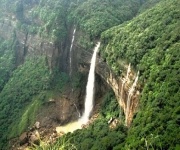
The waterfall is named for the rainbows that can appear in its spray when sunlight reaches the plunge pool. The effect is especially beautiful during the wetter months, although heavy rain can make the trail slippery and the water too turbulent for swimming. A visit requires reasonable fitness, careful timing, and enough time to return before darkness.
Most travellers approach Rainbow Falls from Tyrna village, the usual starting point for the Nongriat trek. The route can be completed in a long day by active hikers, while staying overnight in Nongriat creates a less hurried experience. Planning transport, food, footwear, and weather conditions in advance will make the hike considerably more comfortable.
Choose The Right Route And Base
Tyrna is the practical gateway to the trail. From the village, visitors descend a long flight of concrete and stone steps toward Nongriat. The descent can feel manageable at first, but the return climb is demanding because it comes after several hours of walking. There is no vehicle access to Rainbow Falls, so everyone must cover the final route on foot.
The usual itinerary includes the Nongriat Double Decker Living Root Bridge before continuing toward Rainbow Falls. From the bridge area, the path follows the river and crosses smaller bridges and forest sections. Rainbow Falls is farther upstream, and the trail includes uneven ground, exposed steps, and sections that become muddy after rain.
Staying overnight in Nongriat is a useful option for travellers who want time for photography, swimming when conditions are safe, or a slower exploration of the surrounding pools. A day trip is possible, but it involves an early start and a strict return schedule. Travellers staying in Cherrapunjee can arrange a taxi to Tyrna and return transport in advance, since finding a vehicle after the hike may be difficult.
Plan The Trek From Tyrna
Begin as early as practical, especially if travelling to Tyrna from a resort or hotel in Cherrapunjee. The drive to the trailhead takes time, and delays are common on hilly roads. Starting early also provides cooler walking conditions and more daylight for the return ascent. A local guide can help with route-finding, river conditions, village etiquette, and changes caused by weather or trail damage.
The walk from Tyrna to Nongriat commonly takes around two to three hours, depending on pace and rest stops. Reaching Rainbow Falls can require another one and a half to two hours each way from Nongriat. Allow roughly six to eight hours for a return excursion from the trailhead, with additional time if you stop at the root bridge, take photographs, or swim.
Distances and timings vary because the route is affected by rain, maintenance, fitness, and the number of breaks taken. Do not judge the difficulty solely by the distance shown on a map. The repeated steps place strain on knees during the descent and on the thighs and calves during the climb back to Tyrna.
Understand Timing, Weather, And Conditions
The best months depend on the experience you want. The monsoon and post-monsoon period brings powerful waterfalls, lush forest, and a greater possibility of rainbows, but the trail is slick and streams can rise quickly. From October through April, conditions are often more comfortable for walking, although the falls may have less force and the surrounding scenery can feel different from the peak rainy season.
Avoid starting late in the afternoon. Mist can reduce visibility, wet steps become harder to negotiate, and the forest grows dark well before the road journey back to Cherrapunjee is complete. Check the local forecast on the morning of the hike and ask residents or guides whether recent rain has made the river crossings unsafe.
| Planning Detail | Practical Guidance |
|---|---|
| Trailhead | Tyrna village, reached by road from Cherrapunjee |
| Main route | Tyrna to Nongriat, then onward to Rainbow Falls |
| Typical effort | A strenuous full-day hike with a long return climb |
| Best start | Early morning, after checking weather and trail conditions |
| Helpful support | Local guide, prearranged taxi, and overnight stay if preferred |
| Water and food | Carry drinking water and packed snacks; supplies are limited on the trail |
| Swimming | Only when water is calm and local advice confirms it is safe |
| Essential footwear | Grippy trekking shoes or secure sandals with reliable soles |
A rainbow is never guaranteed because it depends on sunlight, spray, and viewing angle. Clear intervals after rain can create excellent conditions, but a cloudy day may still offer a memorable waterfall and a more atmospheric forest walk.
Pack For A Wet Mountain Trail
Wear lightweight clothing that dries quickly and choose footwear with strong traction. Flip-flops and smooth-soled trainers are poor choices for the steep steps and slippery rocks. Trekking poles can help with balance, especially on the descent, though they should not be used to disturb plants, bridge structures, or village property.
Carry a small backpack rather than a heavy trekking pack. Useful items include a refillable water bottle, energy-rich snacks, a compact rain jacket, a waterproof phone pouch, basic first aid, insect repellent, sunscreen, and a small towel. A dry change of clothing is valuable if you wade through shallow water or encounter persistent rain.
Pack all rubbish back to the road or use designated disposal points where available. Avoid collecting plants, carving names into living roots, or playing loud music near homes and forest areas. The route passes through communities that depend on the landscape, and respectful behaviour helps preserve the trail for future visitors.
Before leaving, confirm transport arrangements and download useful offline information. The site’s Cherrapunjee travel resources can help place the waterfall trek alongside accommodation, attractions, and other regional travel details when building a Meghalaya itinerary.
Walk Safely Around Rainbow Falls
The final approach can be more rugged than the earlier route. Follow established paths and listen to local guidance, particularly where the trail runs beside the river. Rocks near the waterfall are often wet, algae-covered, and unstable. A slip can lead to serious injury even when the water looks shallow.
Swimming should be treated as conditional rather than automatic. The plunge pool may look inviting, but currents, submerged rocks, sudden increases in water level, and powerful flow near the base of the falls create genuine risks. Never enter during heavy rain, when the water is brown or fast-moving, or when local guides advise against it. Keep children close and avoid standing directly beneath falling water.
Stay with your group and allow slower walkers to set a realistic pace. Take breaks in safe, stable areas instead of stopping on narrow steps or bridge approaches. If someone becomes exhausted, injured, or unwell, notify a guide or nearby residents quickly rather than attempting to push on to the waterfall.
Combine The Falls With Nongriat
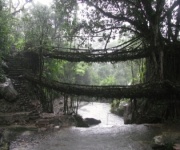
The Double Decker Living Root Bridge is the landmark most often combined with Rainbow Falls. These bridges are shaped over years or decades by guiding the roots of rubber fig trees across streams. They are living structures rather than conventional constructions, and their presence reflects the long relationship between Khasi communities and the surrounding forest.
Nongriat also offers a chance to slow down and appreciate details that can be missed on a rushed walk: moss-covered rocks, small cascades, bird calls, betel nut palms, and changing views through the canopy. The trail is not simply a route to a waterfall; it is a cultural and ecological journey through a settled mountain landscape.
If time allows, spend a night in a basic homestay or guesthouse in Nongriat. Facilities are simple, and mobile connectivity may be limited, but the overnight stay makes it easier to visit the falls early and avoid a race against daylight. Carry cash, as remote villages may not accept digital payments reliably.
Choose A Comfortable Cherrapunjee Itinerary
Travellers with one available day should focus on the Tyrna–Nongriat route and begin early. Those with two days can stay near Nongriat or return to Cherrapunjee after exploring the root bridge, depending on energy levels and transport. A longer Meghalaya holiday can include Nohkalikai Falls, Mawsmai Cave, Arwah Cave, Dainthlen Falls, and scenic viewpoints around Sohra.
Accommodation in Cherrapunjee ranges from hotels and resorts to smaller guesthouses. Select a base that makes the morning drive to Tyrna convenient, and ask the property to help arrange a dependable driver. It is wise to confirm pickup time, waiting arrangements, and the return fare before beginning the hike.
For a smoother trip, keep the day flexible. Rain may require replacing the waterfall walk with a nearby attraction, while a clear forecast may justify an early start and a longer stay at Nongriat. A well-planned package or locally arranged itinerary can also combine transport, accommodation, sightseeing, and guide support without compressing too many activities into one day.
Use these practical priorities when preparing for the trek:
- Start early from Cherrapunjee and arrange a return taxi before reaching Tyrna.
- Hire a local guide when visiting for the first time or travelling during wet conditions.
- Wear shoes with firm grip and carry rain protection, water, snacks, and a first-aid kit.
- Check river levels before swimming and stay away from fast water or slippery cliff edges.
- Consider an overnight stay in Nongriat if you want a more relaxed visit to the falls and root bridge.
Rainbow Falls rewards visitors who treat the journey with patience. The steep return climb is part of the challenge, but the forest scenery, living root bridge, clear pools, and shifting light make the effort worthwhile. Plan your Cherrapunjee holiday around an early start, reliable local support, and enough time to enjoy the route rather than rushing through it. Explore available Meghalaya travel packages and arrange your stay and transport through Cherrapunjee.net before setting out for this memorable waterfall trek.