





A four-night Cherrapunjee itinerary for first-time travellers
Cherrapunjee, written as Sohra in local Khasi and occasionally as Cherrapunji on older maps, sits on the southern edge of Meghalaya's East Khasi Hills. The town once held the world record for the highest annual rainfall, a figure recorded between 1860 and 1861, and its misty cliffs and rolling green plateau still draw visitors who want something different from the beaches of Bali or Phuket. For Australian travellers planning their first journey into India's northeast, four nights provides enough breathing room to absorb the landscapes without rushing through the region's most photographed corners.
The route below assumes you are flying in via Guwahati in Assam, the closest major airport, and continuing overland through Shillong. It is built for those who enjoy walking, want to spend unhurried evenings around a fire, and appreciate local food cooked with freshly foraged greens. Each day pairs a signature sight with a quieter experience, so the trip feels layered rather than checklist-driven.
Before you begin, it is worth noting that Meghalaya lies in a different monsoon rhythm from the rest of India. The wet months, roughly June through September, coincide with the Australian ski season, which means many travellers from Sydney or Brisbane find the shoulder months of October, November, March and April the easiest to plan around. Pack layers regardless, because the plateau cools quickly after sunset and a damp chill can settle in even at lower altitudes.
Reaching Cherrapunjee and settling in
Most journeys begin with a flight into Lokpriya Gopinath Bordoloi International Airport in Guwahati, served by regular connections from Delhi, Mumbai and Bengaluru. From Sydney or Melbourne there are no direct services, so the typical routing includes a stop in Singapore, Kuala Lumpur or Bangkok before transferring to an Indian carrier for the domestic leg. Total travel time usually lands somewhere between eighteen and twenty-two hours door-to-door, comparable to other long-haul getaways Australians book each year.
Allow the first evening for rest rather than sightseeing. The road from Guwahati climbs through hills dotted with pine and bamboo, crossing the Umiam lake viewpoint before winding into Shillong, and finally dropping into Sohra. If you arrive tired, a comfortable resort with valley views will do more for your trip than a forced dash to a waterfall in fading light. For travellers who want the logistics handled in advance, packages such as the short Sohra starter itinerary cover the essentials of arrival and the first major stops, leaving room to add nights on either side as energy allows.
A quick orientation helps. The plateau is roughly fifty kilometres end-to-end, and most attractions are within a forty-minute drive of the town centre. Mobile data works in patches, with Jio and Airtel offering the most consistent coverage, and local SIMs can be arranged at the Guwahati airport before you leave Assam. Australian travellers should also register their trip with Smartraveller, the federal government's travel advisory service, which is the standard pre-departure habit before heading to South or Southeast Asia.
Waterfalls, caves and limestone country
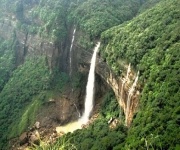
The second day is built around water. Start early, since the morning light falls softly across the cliffs and the crowds at Nohkalikai Falls, India's tallest plunge at around 340 metres, are noticeably thinner before nine. The viewing platform juts out over the gorge, and the spray drifts sideways when the wind picks up, so a light rain jacket earns its place in any daypack. From the same ridge, the smaller but equally photogenic Wei Sawdong sits a short walk away and rewards visitors with a quiet pool at its base.
After lunch, head down toward Mawsmai Cave, a short limestone grotto managed by local guides. The pathways are lit and the ceilings drop low in places, so comfortable shoes matter more than torches. A short drive further brings you to the Arwah Cave, which carries fossilised remains visible in the limestone and offers a more archaeological perspective on the same geology. Together, these three stops give you a layered sense of why Cherrapunjee is sometimes called the wettest place on earth, even if that record now belongs to Mawsynram further west.
By late afternoon, return to the resort for chai and a hot meal. The Khasi kitchen leans on pork, smoked fish, fermented soybean and a wide range of leafy greens that grow abundantly in the mist. Travellers from Melbourne and Sydney who are used to plant-forward dining will find the local thali surprisingly familiar, though the addition of bamboo shoot pickles and river fish adds a regional accent worth trying. Evenings tend to settle into a slow, dim quiet as the cloud cover closes in, which is part of the appeal.
Living root bridges and jungle walks
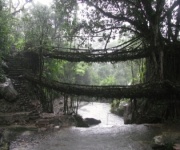
Day three belongs to the living root bridges, the headline attraction that draws most international visitors. The most accessible example, the Umshiang double-decker root bridge near Nongriat village, requires a descent of around 3,500 steps each way through terraced fields and bamboo groves. Australian travellers with a regular walking habit, even weekend hikes in the Blue Mountains or around Daylesford, generally cope well, but anyone with knee issues should consider the single-decker option or the new steel alternative that the village built to reduce pressure on the original.
Plan an early start to make the most of daylight. Local guides wait at the trailhead and charge a modest fee, and their knowledge of the forest, the seasonal stream levels and the village protocols is well worth the cost. Once at the bridge, spend time simply sitting, watching the water, and listening. The roots are still alive, growing thicker with each monsoon, and there is something quietly powerful about standing on something shaped over generations rather than poured from cement.
On the way back, ask your driver to stop at the Thangkharang Park, where a stone platform looks across the Bangladesh plains. The view is one of the few places in Meghalaya where you can stand and see another country without crossing a border post. Finish with a long soak, a simple Khasi dinner, and an early night, since the following day asks for a different kind of energy.
Villages, food and Khasi culture
The fourth day shifts the focus from landscape to people. Begin in the morning at Mawlynnong, often labelled Asia's cleanest village, where the community has built bamboo dustbins, signposted walking trails and small viewing platforms that overlook the surrounding jungle. The standard of cleanliness here is genuinely high, and the welcome is warm, particularly if you purchase a small handicraft or snack from a roadside stall. It is also a useful reminder that the region values communal care in a way that fits comfortably with Australian sensibilities around shared public space.
From Mawlynnong, drive on to the Bangladesh border viewpoint at Dawki. The Umngot river here is famously clear, and short boat rides glide over stones visible several metres below. The colour of the water shifts throughout the day, depending on the angle of the sun and the cloud cover above. Photography tends to be best before noon, when the surface reflects cleanly rather than catching the glare of midday haze. Most boats return within forty minutes, after which lunch is usually taken at a riverside shack serving fresh trout, another local favourite.
The afternoon is best kept light. Many visitors use the time to visit a local weaving cooperative, walk through a betel nut grove, or simply browse small markets for souvenirs such as honey, pineapples or hand-stitched shawls. The relaxed pace helps you ease out of travel mode and into the rhythm of the hills. For Australian readers used to coastal weekends, the closest comparison might be a slow Margaret River afternoon: warm people, good produce, and a sense that the day does not need to be packed.
Final views and a slow departure
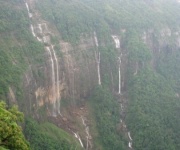
The last day is short and gentle. After a relaxed breakfast, drive to the Seven Sisters Falls viewpoint, which looks across a chain of seven segmented cascades spilling into the valley. The walk to the platform is brief, and the surrounding cliffs are at their most dramatic in late morning light. A short detour to the Eco Park, perched on a ridge with views back toward the plains, makes a natural finale for any first-time visit.
Check-out times at most local resorts fall around noon, which leaves enough room for a late lunch in Sohra town. Try the local pork curry with steamed rice, or a simple plate of doh khlieh, a Khasi salad made with pork, onions, ginger and chilli that Australians accustomed to bold Asian flavours tend to enjoy. Stock up on Meghalaya coffee from a roadside roastery if your suitcase has room, since the beans grown in surrounding villages have built a quiet reputation among coffee drinkers in places like Hobart and Adelaide.
From Sohra, the drive back to Guwahati airport takes around four to five hours, so aim for a late afternoon flight to Delhi or onward to Mumbai, where connections to Australia are most plentiful. Most travellers plan a buffer night in either city to break the journey, particularly those heading back to Perth where direct options remain limited. Once home, the climate contrast between Meghalaya's monsoon humidity and an Australian summer will feel sharper than expected, so a quiet first day back helps the body readjust.
Pre-departure checklist for Australian travellers
- Apply for an eVisitor visa or traditional paper visa well before departure, as Indian processing can take longer than the automated systems used for short trips to New Zealand.
- Carry a paper copy of your passport photo page, your visa confirmation and your Smartraveller registration; mobile networks in Meghalaya are patchy and screenshots are not always reliable.
- Pack quick-dry layers, a light rain shell and closed walking shoes that grip wet rock, since the trails near the living root bridges are steep and slippery.
- Budget in Indian rupees rather than relying solely on Australian debit cards, as ATMs in Sohra town are limited and many smaller homestays prefer cash.
- Pre-book the Guwahati-to-Cherrapunjee transfer during monsoon months, as landslides occasionally close the route and last-minute taxis are harder to find.
- Carry a small first-aid kit with rehydration salts, since the combination of altitude change, unfamiliar food and humid air can unsettle even experienced travellers.
A first trip to Cherrapunjee rewards patience more than pace. Four nights is long enough to feel the rhythm of the hills, walk at least one living root bridge, and share a meal with the people who call this plateau home. When you are ready to lock in dates and arrange the transfers, the booking team at India Beacons Sojourn can tailor the package to your arrival city, group size and preferred level of comfort. Send a message through the contact page with your travel window, and they will send back a tailored itinerary and a clear quote in Australian dollars.