




Cherrapunji’s Best Photo Spots for Changing Weather Light
Cherrapunji, officially known as Sohra, is one of Meghalaya’s most rewarding destinations for photographers who enjoy conditions that refuse to stay still. Sunlight can break through a wall of cloud, rain can turn a valley silver, and mist can soften a familiar viewpoint within minutes. These shifts create expressive landscape images rather than predictable postcard scenes.
For travellers from Australia, Sohra offers a striking change from the sharp coastal light of Sydney, the dry inland clarity around Adelaide, or Melbourne’s famously changeable skies. The strongest images often come from allowing extra time for the weather to move, rather than rushing between attractions. A flexible itinerary, weather-resistant gear and a willingness to wait will make a significant difference.
Why Sohra Creates Unmatched Light
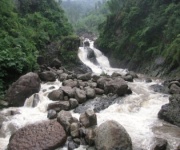
Sohra sits on a high plateau shaped by monsoon winds, deep gorges and dense subtropical vegetation. Rainfall is famously heavy, yet the most photogenic conditions are often found between showers. Wet rock reflects a brighter sky, leaves become saturated green, and thin cloud creates a giant natural diffuser over the landscape.
The phrase “mismatched weather light” describes the visual tension particularly well: a bright patch may illuminate one ridge while the next remains blue-grey under rain. This contrast gives depth to wide photographs and produces layered backgrounds without heavy editing. Use a polarising filter carefully, since removing every reflection from wet foliage can make the scene look less alive.
| Photo spot | Most useful light | Weather advantage | Strongest composition |
|---|---|---|---|
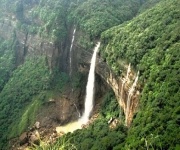
| Nohkalikai Falls | Late morning breaks in cloud | Mist and spray add scale | Vertical fall with layered gorge |
| Seven Sisters Falls | Soft overcast or post-rain light | Water volume is strongest after rain | Wide landscape with foreground rock |
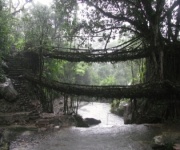
| Living root bridges | Filtered morning light | Damp forest tones stay rich | Textured bridge leading into greenery |
| Mawsmai Cave | Cloudy or rainy periods | A reliable shelter from showers | Textures, silhouettes and details |
| Sohra viewpoints | Sunrise or late afternoon | Moving cloud reveals distant layers | Ridge lines beneath dramatic sky |
Cloud cover can also be an advantage for people who usually photograph in Australia’s intense midday sun. Instead of harsh shadows and blown highlights, you may find gentle tonal transitions across cliffs and forests. Keep checking the direction of the light, though: a brief opening behind you may transform a dull view into a luminous one.
Living Root Bridges In Filtered Green
The living root bridges near Sohra are among Meghalaya’s most distinctive subjects. Made by guiding the roots of rubber fig trees across streams and gaps, they appear organic, engineered and ancient at the same time. Their tangled surfaces respond beautifully to soft, damp light.
The single and double-decker bridges around Nongriat require a substantial walk, including many steps. Start early to reach the forest before crowds increase and before afternoon showers make the paths slippery. A small tripod can be useful for longer exposures, but a fast shutter speed is often better for capturing droplets, moving leaves and people crossing the bridge.
Look beyond the full structure. Photograph the root fibres at close range, frame the bridge through broad leaves, or use a person for scale without making them the central subject. The green colour can become overwhelming, so include brown trunks, dark water or a grey rock to create visual balance.
Ask before photographing local residents, guides or children. A friendly greeting and a short explanation of your project are more respectful than silently pointing a camera. This approach is particularly important in villages where tourism is part of daily life rather than a staged performance.
Nohkalikai And Seven Sisters Falls
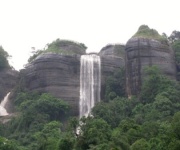
Nohkalikai Falls is the highest plunge waterfall in India and one of Sohra’s essential viewpoints. During wet conditions, water drops into the blue-green pool below while vapour rises through the gorge. The best scenes often appear when the rain has eased but cloud still hangs around the cliffs.
A wide-angle lens can capture the waterfall and surrounding escarpment, but leave room around the main subject. The mist and empty space help communicate the scale of the landscape. A telephoto lens is useful when cloud briefly reveals distant ridges or when you want to isolate streams running down the rock face.
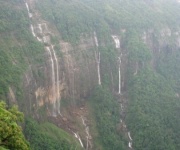
Seven Sisters Falls, also known as Nohsngithiang Falls, is usually most impressive during the monsoon and immediately afterwards. Several streams descend beside one another, creating a broad pattern across the limestone wall. Overcast conditions prevent the white water from becoming excessively bright, while a late afternoon opening can place warm light on the upper cliff.
Use viewing platforms and marked areas rather than moving towards unstable edges. Waterfall viewpoints can be slick after rain, and the same weather that improves the photograph can reduce visibility or make rock surfaces dangerous. A rain cover for your camera is more practical than repeatedly packing equipment away.
Caves, Cliffs And Small Details
Mawsmai Cave provides a useful change of scale. Its narrow passages, limestone formations and small openings create opportunities for photographs that rely on texture rather than distance. When the weather outside is intense, the cave also offers a practical shelter while preserving the day’s photographic momentum.
A wide lens can exaggerate the shape of the passage, but a standard lens often produces more natural images. Look for reflected light on damp walls, silhouettes near an opening and repeating patterns in the limestone. Keep your ISO under control where possible, and brace the camera against a stable surface if tripods are restricted or impractical.
The surrounding cliffs and forest tracks deserve equal attention. Moss, ferns, exposed roots, rain channels and small streams can tell the story of Sohra more clearly than a single panoramic view. After rainfall, examine the ground for reflections and use a low viewpoint to turn puddles into foreground elements.
This is also where an Australian habit of relying on a forecast app needs adjustment. Weather information is useful, but local cloud can form rapidly over the plateau. Build pauses into the day, carry a dry layer and treat changing visibility as part of the photographic experience rather than a failed plan.
Roads, Viewpoints And Village Life
The roads between Sohra’s attractions are full of potential frames. Curving lanes, bamboo fences, bright umbrellas, roadside stalls and ridges disappearing into cloud create a strong sense of place. Stop only where the vehicle can pull completely clear of traffic, and never assume a quiet road will remain empty.
Early morning is usually calmer, with softer contrast and fewer visitors at popular viewpoints. Late afternoon can bring warm highlights to wet grass and village roofs, although heavy cloud may close in quickly. If the sky looks flat, turn towards the details: a red jacket against green vegetation or a motorbike reflected in wet asphalt can provide the colour and human scale a landscape needs.
Travellers flying from Brisbane, Sydney or Melbourne will often connect through Guwahati or another Indian gateway before continuing by road. Allow more time than a map may suggest, since winding hill roads, rain and village traffic affect journey times. Australian school-holiday periods can also increase demand for flights and accommodation, so booking early is sensible during June–July and December–January travel windows.
Sohra’s local markets are excellent for observing colour and texture, especially fresh produce, woven items and everyday household goods. Photograph products and stallholders with permission, and buy something when you spend time at a small stall. That simple exchange supports the local tourism economy more directly than treating the market as a collection of anonymous backdrops.
Pack For Rain, Movement And Respect
The right equipment should support quick decisions rather than create a heavy burden on steep paths. A weather-sealed camera body is helpful, but careful packing matters just as much. Place silica gel in your bag, carry a microfibre cloth and use separate waterproof pouches for batteries, cards and personal documents.
Useful preparation for a changing-light photography day includes:
- A lightweight rain cover for the camera and backpack
- Two spare batteries, since cool damp conditions can reduce battery life
- A polarising filter, used gently on foliage and wet rock
- Grippy walking shoes with reliable soles
- A dry bag or resealable pouch for phones and travel documents
- A compact torch for caves, forest paths and late returns
- Neutral clothing that dries quickly and protects against insects
Sunscreen remains important even when the sky is cloudy. Australians are accustomed to using high-SPF protection under strong ultraviolet conditions, and the same habit is valuable in Meghalaya. Pack a hat, refillable water bottle and a modest layer for cooler, windy viewpoints.
Follow signs, listen to guides and avoid climbing over barriers for a better angle. Drones require particular care: Indian aviation rules and local restrictions may prohibit flights near crowds, protected areas, airports or sensitive sites. Check current Directorate General of Civil Aviation requirements before packing a drone, and obtain any permissions in writing rather than relying on assumptions.
Australian passport holders should check the current Indian visa or e-Visa requirements through official government channels before departure. Keep digital and printed copies of bookings, passport details and insurance information, especially when travelling between towns with unreliable mobile coverage.
Build A Light-Focused Itinerary
A two-night stay can cover major viewpoints, caves and a short forest walk, but three or more nights create a much better chance of seeing varied conditions. One day may be bright and clear, another wrapped in mist, and the contrast between them is part of the destination’s appeal.
Organise the itinerary around weather flexibility instead of fixed photographic promises. Reserve the clearest morning for distant waterfalls and viewpoints, use rainy periods for Mawsmai Cave or close-up forest work, and keep one afternoon open for returning to a location when the light improves.
For a compact first visit from Guwahati, the two-night Cherrapunji package can provide a practical framework for seeing key attractions without managing every transfer independently. Confirm what is included, such as transport, accommodation, meals and local sightseeing, before finalising the booking.
A local driver or guide can also help identify temporary viewpoints, road closures and safe stopping places that may not appear on international mapping apps. Their knowledge is especially valuable during heavy rain, when a route that looks short on paper can take considerably longer.
Choose Your Weather Window
There is no single perfect season for landscape photography in Sohra. The monsoon delivers powerful waterfalls, saturated foliage and dramatic cloud, while the drier months can offer clearer ridge lines and easier walking. If you prefer rich greens and atmospheric scenes, accept the possibility of wet paths and reduced visibility. If you want broader views, choose a period with a better chance of stable skies, while still allowing for sudden changes.
A useful working rhythm is to shoot the grand view when the light opens, then spend the next shower photographing details under shelter. Review the histogram rather than trusting the rear screen, protect highlights in pale cloud and make a second exposure when the scene contains both bright sky and dark forest.
Sohra rewards photographers who leave room for surprise. Plan the route, respect local rules, protect your equipment and allow the landscape time to change. Contact Cherrapunjee.net to arrange a suitable stay and turn shifting rain, mist and sunlight into the defining elements of your Meghalaya photographs.