





The best river swimming holes in Cherrapunjee
Cherrapunjee, also known as Sohra or Cherrapunji, is famous for rain-fed waterfalls, forested ravines, limestone caves, and clear mountain streams. Between the monsoon torrents, many waterways settle into cool natural pools where visitors can wade, rest, and sometimes swim beneath cliffs or beside living root bridges.
The phrase “swimming hole” needs a little care in Meghalaya. A pool that looks calm in the morning can become dangerous after rain upstream, while rocks covered with algae may be much more slippery than they appear. Several popular waterfall basins are better suited to dipping your feet than to full swimming.
The most rewarding water experiences combine a scenic walk, time spent with a local guide, and respect for village customs. Travellers arranging several days in the region can use the Cherrapunjee travel guide to connect river excursions with caves, viewpoints, waterfalls, and nearby accommodation.
Where to find natural pools around Sohra
The most dependable swimming and wading areas are generally found along streams below waterfalls, particularly in the Nongriat and southern Sohra landscapes. These waterways run through dense subtropical forest, so the journey can be as memorable as the water itself. Expect stone steps, narrow footpaths, bamboo bridges, and sections where a guide is useful.
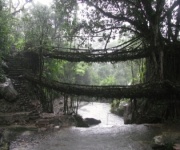
Nongriat is the best-known area for combining a natural pool with a cultural and ecological attraction. The route leads through rainforest to the living root bridges, with the Umshiang River flowing through the valley below. Water levels and currents change throughout the year, so travellers should ask residents or guides which pools are safe on the day of their visit.
Other water spots are associated with waterfall viewpoints rather than established bathing areas. Wei Sawdong, Kynrem, Nohkalikai, and nearby cascades all have dramatic basins, but a beautiful view does not automatically mean safe swimming access. Barriers, local warnings, steep cliffs, and strong outflow should be taken seriously.
Nongriat and the Umshiang River
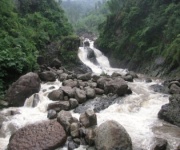
The natural pools around Nongriat are among the most atmospheric places to cool off near Cherrapunjee. The river passes beneath the famous Double-Decker Living Root Bridge, and quieter stretches farther along the valley can offer clear, shallow water for careful wading. In dry weather, some visitors swim in wider pools where the current is gentle.
Reaching Nongriat requires a strenuous descent of hundreds of steps from Tyrna village, followed by an equally demanding climb on the return. The heat and humidity can make the route tiring even when the distance seems modest. Carry drinking water, allow plenty of time, and avoid treating the hike as a quick stop between other attractions.
The riverbed is uneven, with rounded stones, submerged ledges, and slippery roots. Swim only where local residents or your guide indicate that conditions are suitable. Do not jump from bridges or rocks, and keep away from narrow channels where the current accelerates. After heavy rain, the safest decision is usually to admire the river from the bank.
Wei Sawdong and waterfall pools
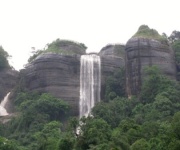
Wei Sawdong Falls, reached by a steep route through forest, is known for its striking tiered appearance and turquoise-looking water. The pools at the base can appear inviting in photographs, especially during bright weather, but their depth, rock conditions, and current vary. Visitors should confirm locally whether bathing is permitted before entering.
The approach itself can be more hazardous than expected. Wet steps and exposed rocks become slick during the rainy season, and the spray around the falls reduces visibility. A fall near the edge can have serious consequences, so photography should be done from stable ground rather than from wet ledges.
For many travellers, the best experience at Wei Sawdong is a short, safe paddle at a calm edge rather than a long swim. Wear footwear with firm grip, keep valuables in a waterproof pouch, and never enter a pool alone. If the flow is strong or the water is cloudy with sediment, postpone the swim.
| Water spot | Best experience | Access and conditions | Swimming outlook |
|---|---|---|---|
| Nongriat, Umshiang River | Wading or a cool dip near the living root bridges | Long stairway trek; conditions vary after rain | Possible only in calm, locally approved pools |
| Wei Sawdong Falls | Viewing the tiered cascades and paddling at a safe edge | Steep, slippery approach | Limited; avoid the main plunge areas |
| Nohkalikai area | Waterfall scenery and forest viewpoints | Shorter tourist access, but steep terrain near edges | Generally better for viewing than swimming |
| Kynrem Falls area | Scenic river and waterfall photography | Access can be seasonal and uneven | Check locally before entering any pool |
| Smaller village streams | Quiet wading away from busy viewpoints | Location and access depend on local guidance | Often the gentlest option in dry conditions |
Nohkalikai and Kynrem waterfall basins
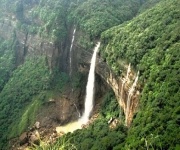
Nohkalikai Falls is one of the defining sights of Sohra, dropping from a high cliff into a deep blue-green basin. The viewpoint offers an unforgettable perspective, but the main plunge pool is not a casual swimming location. Its depth, falling water, cliff environment, and possible turbulence make it unsuitable for visitors looking for an easy bathing stop.
Small streams and pools may be found in the wider landscape below the plateau, but reaching them is not the same as walking to the main viewpoint. Trails can be unmarked, and watercourses may pass through private or community-managed land. A local guide can distinguish a legitimate access route from a risky descent.
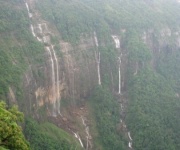
Kynrem Falls, near the Thangkharang area, has several cascades and a forested setting. During the drier months, lower sections may be calmer, although the water can still become powerful after rainfall. Treat the falls as a sightseeing destination first, and consider swimming only when residents confirm that a particular lower pool is safe and accessible.
Choosing a calm place to swim
The best river swimming holes in Cherrapunjee are not necessarily the largest or most dramatic. A shallow pool with a broad gravel edge is usually safer than a deep basin under a waterfall. Look for slow-moving water, clear visibility, easy exit points, and no overhead cliffs or unstable rocks.
Water clarity can be misleading. Pale blue or green water may reflect minerals, depth, or sunlight rather than cleanliness, and clear water can still conceal sharp stones. Avoid pools downstream from active construction, heavy runoff, or large groups washing equipment. Never drink untreated stream water, even when it looks pristine.
Timing also matters. Early morning often brings quieter trails and calmer conditions, while afternoon storms can raise water levels quickly. The heaviest rainfall commonly makes swimming unsuitable, even if the weather at your hotel seems clear. Ask about rain in the hills above the pool, not just the sky directly overhead.
Safety, etiquette, and what to bring
Swimming in a remote Meghalaya stream is a wilderness activity rather than a supervised beach outing. There may be no lifeguard, changing room, phone signal, or quick medical access. Travellers with limited swimming ability should remain in shallow water, stay close to companions, and avoid crossing a river simply to reach a more attractive pool.
Local communities have strong connections with their forests, rivers, and sacred landscapes. Follow signs, respect restricted areas, dress modestly when near villages, and ask before photographing residents. Do not leave soap, food packaging, or plastic near the water. A quieter visit protects both the landscape and the experience for people who live there.
Useful items for a river outing include quick-drying clothes, a small towel, grippy sandals or trail shoes, a dry bag, drinking water, and basic first-aid supplies. A walking pole can help on steep approaches. Keep electronics secured, bring cash for local fees where applicable, and avoid carrying more than you can manage on a long trail.
A practical plan for a water-focused day
A sensible itinerary begins with a weather and river-condition check at the hotel, resort, or village where you are staying. If rain has been persistent, replace a swimming plan with viewpoints, caves, or a guided forest walk. This keeps the day enjoyable without forcing access to a hazardous river.
For Nongriat, start early enough to complete the descent, spend time at the root bridges, and return before darkness. Build in rest breaks rather than rushing the staircase. If you want a swim, make it a flexible part of the day, not the sole reason for undertaking the trek.
For shorter excursions, pair a waterfall viewpoint with a nearby stream where entry is locally accepted. A guide can help identify a safe access point, explain current conditions, and prevent accidental trespass. The most memorable day may involve only a few minutes in the water surrounded by forest, followed by a slow walk back through Sohra’s misty hills.
Recommendations for a safer river visit
- Check rainfall, upstream conditions, and local advice before entering any pool.
- Choose shallow, slow-moving water with clear exit points instead of a waterfall plunge basin.
- Wear footwear with dependable grip and carry essentials in a waterproof bag.
- Never swim alone, dive from rocks, or cross a river during rising water.
- Leave no rubbish and follow village rules, signs, and guide instructions.
A Cherrapunjee holiday can be planned around gentle river dips, living root bridges, waterfalls, caves, and viewpoints without treating every pool as a guaranteed swimming site. Contact the Cherrapunjee travel team to discuss a multi-day itinerary suited to the season, your walking ability, and the latest local conditions, then reserve a package that gives these remarkable waterways the time and care they deserve.