




The Best Routes for a Cycling Tour of Cherrapunjee
Cherrapunjee, also known as Sohra or Cherrapunji, is a superb destination for cyclists who enjoy dramatic scenery, quiet village roads and demanding climbs. The plateau in Meghalaya rises sharply from the plains, with misty escarpments, deep valleys, waterfalls and forest tracks appearing around almost every bend. A cycling tour here is less about covering huge distances and more about making steady progress through a landscape that changes quickly.
For travellers from Australia, Sohra offers a very different riding experience from a coastal Queensland cycleway or a Blue Mountains road trip. Traffic is generally lighter outside the main town, yet the weather, gradients, road surfaces and roadside activity require careful planning. With the right route, a local support vehicle and a sensible pace, riders can enjoy a memorable Meghalaya holiday without treating every climb as a race.
Shillong To Sohra Along The Scenic Plateau
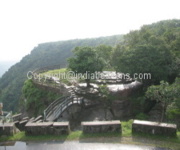
The classic approach begins in Shillong and follows the road south towards Sohra, usually covering about 55 to 65 kilometres depending on the chosen start point and detours. This is the most rewarding route for strong recreational cyclists because it combines long, gradual sections with memorable viewpoints, including the Mawkdok-Dympep Valley overlook. The road passes pine forest, open grassland, market settlements and dramatic escarpment scenery before reaching Cherrapunjee.
Starting from Shillong gives the ride a genuine point-to-point feel, but the elevation profile should be taken seriously. Shillong is already high, and the road includes rolling sections rather than one continuous downhill or uphill run. A support vehicle is useful for luggage, spare wheels and riders who decide to shorten the day. Cyclists arriving from Brisbane, Melbourne or Perth should allow time to settle in before attempting this route; the humid conditions and unfamiliar gradients can make a first ride feel harder than the distance suggests.
The Mawkdok viewpoint is an excellent planned stop, although riders should stay well back from exposed edges and avoid blocking the narrow roadside. Villages along the route provide opportunities to buy water, fruit and simple snacks, but supplies are not as predictable as they would be on a well-serviced Australian rail trail. Begin early, especially during the warmer months, and aim to reach Sohra before afternoon cloud thickens.
Waterfalls And Viewpoints Around Sohra
A shorter circuit around the main attractions is ideal for cyclists who want scenery without committing to a full intercity ride. From central Sohra, riders can visit Nohkalikai Falls, Seven Sisters Falls viewpoints and the surrounding plateau roads. Distances are manageable, but the route includes repeated rises, rough shoulders and sections where pedestrians, taxis and local traffic share limited road space.
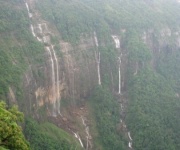
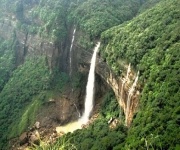
Nohkalikai Falls is one of the region’s essential stops. The viewpoint sits near the road and can be reached by bicycle, although the final approach may be busy during weekends and Indian holiday periods. Seven Sisters Falls is seasonal in appearance: during the monsoon, water streams down the cliff face in spectacular white ribbons, while in drier months the view can be more subdued. The changing weather is part of the appeal, but it also means visibility may disappear within minutes.
A practical loop can include Nohkalikai, Sohra’s town centre and selected roadside viewpoints rather than trying to visit every attraction in one day. Cyclists should lock bikes in visible places and ask permission before leaving them near shops or entrances. Lightweight rain protection is essential, even when the morning begins under clear skies. A proper waterproof jacket is more useful than a flimsy poncho that catches on handlebars or branches.
Mawsmai, Arwah And The Forest Roads
The roads towards Mawsmai Cave and Arwah Cave create a compact adventure ride close to Sohra. Mawsmai is easier to combine with other attractions because the entrance is close to the main road and the surrounding area is well visited. Arwah Cave requires a walk through forest and uneven ground, so bicycles should be left securely with a guide, at a guesthouse or with a member of the support team.
These routes are best suited to hybrid bikes, mountain bikes or sturdy touring bicycles with wider tyres. A lightweight road bike can manage the paved sections, but potholes, gravel, drainage channels and muddy edges make narrow tyres less forgiving. The cave trails themselves are not cycling routes, and forcing a bicycle beyond the road only creates risk and damages the surrounding environment.
Cyclists who enjoy quiet roads can extend the ride through nearby villages and agricultural areas, provided they have a local guide or a reliable offline map. Meghalaya’s settlements are dispersed, and a road that looks obvious on a phone may become a rough track or end at private land. Travel respectfully through village areas: slow down near homes, ask before photographing people and avoid loud music. These small courtesies matter greatly in a region where community life is closely connected to the landscape.
The Nongriat Detour On Foot
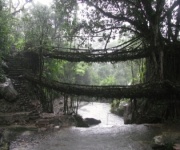
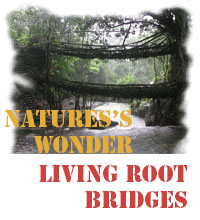
The famous living root bridges near Nongriat deserve a place in a cycling itinerary, but they should be treated as a walking excursion rather than a ride. Cyclists can travel by road towards Tyrna, leave their bicycles at secure accommodation or with an agreed local contact, and then descend the long staircase to the bridges. The return climb is strenuous, particularly after rain, and may take several hours depending on stops and fitness.
The route to the Double Decker Living Root Bridge involves hundreds of steps, humid forest and slippery surfaces. Good walking shoes, drinking water and a small daypack are more valuable here than cycling equipment. Riders who are accustomed to weekend hikes around the Dandenong Ranges or the Glass House Mountains may find the heat and stair pattern unfamiliar, so a conservative pace is wise.
Nongriat works best as a full-day side trip rather than an item squeezed between two long cycling stages. A local guide can help with directions, river crossings and timing, while also explaining how the living root bridges are cultivated over many years. The bridges are living community infrastructure, not disposable tourist attractions. Avoid climbing on fragile sections, leaving rubbish or treating nearby homes as photo props.
Planning Distance, Weather And Support
Sohra is famous for intense rainfall, and weather can transform a comfortable ride into a slow, technical day. The monsoon period brings powerful waterfalls and vivid green forest, yet roads may be slick, drains can overflow and visibility may be poor. October to April is generally more suitable for cycling, although showers and cool cloud can still occur. Check local conditions before departure rather than relying on a forecast downloaded several days earlier.
Cyclists should carry two water bottles, basic repair tools, spare tubes, a power bank, sun protection and a compact first-aid kit. A rear light and reflective layer are sensible for misty roads, even when riding during daylight. Mobile coverage can vary, and cash remains useful for small purchases, entrance fees and village services. Australian visitors should also check travel insurance wording carefully, because some policies treat guided cycling, mountain roads or bicycle transport differently from ordinary sightseeing.
Accommodation in Sohra ranges from resorts and hotels to simple homestays and guesthouses. Travellers watching costs can compare budget guesthouses with package options before deciding where to base themselves. A place that provides breakfast early, secure bicycle storage and help arranging transport may be more valuable than a slightly cheaper room far from the main road.
Practical Choices For A Smoother Ride
- Choose a hybrid or mountain bike with reliable brakes, wider tyres and low climbing gears.
- Ride the Shillong-to-Sohra road early, with a support vehicle for luggage and emergency transport.
- Keep the Nongriat visit as a walking day and arrange secure bicycle storage in advance.
- Carry rain protection, offline maps, cash, repair supplies and enough water for isolated sections.
- Book accommodation close to the attractions you plan to visit, especially during Indian holiday periods.
- Use a local guide for village roads, cave approaches and routes that are unclear on mapping apps.
- Allow extra time for photographs, weather delays, road repairs and spontaneous viewpoint stops.
Choosing A Cycling Package In Meghalaya
A two- or three-night stay can cover the main Sohra viewpoints and one forest excursion, while a longer holiday allows a more relaxed ride from Shillong, a Nongriat walk and time in nearby Meghalaya destinations. Multi-day packages are useful for Australian travellers who prefer one booking to coordinate transfers, accommodation and sightseeing. This style often suits couples, families and small riding groups who want a holiday with cycling included rather than a fully competitive cycling camp.
The best itinerary matches the group’s actual fitness. A rider comfortable with the flat roads around Adelaide may still need to adapt to steep rolling terrain, while someone used to the climbs near Hobart may enjoy the challenge but struggle with humidity. Share recent riding distances with the tour operator and ask for realistic daily elevations, road conditions and vehicle support. Clear information before arrival prevents an ambitious itinerary from becoming an exhausting one.
Timing also matters for the Australian market. School holiday travel from Sydney, Brisbane and Melbourne can increase demand for flights, resorts and family-friendly packages, while the Indian festive calendar can make popular attractions busier. Some travellers like to add a few recovery days, using an easy “arvo” for a café visit or viewpoint rather than filling every hour. Breakfast arrangements, airport transfers and bicycle transport should be confirmed in writing, especially when travelling with boxed or hired bikes.
Start with a route that leaves room for the landscape rather than trying to tick off every waterfall and cave. Contact a Cherrapunjee travel specialist to match your riding ability with the right accommodation, guide and vehicle support, then set out for Sohra prepared for mist, climbing and extraordinary views.