





Best waterfalls to visit after heavy rainfall in Cherrapunjee
Cherrapunjee, known locally as Sohra, holds the distinction of being one of the wettest inhabited places on Earth. Located in the East Khasi Hills of Meghalaya, this small town receives an annual rainfall that dwarfs any Australian capital city. When the southwest monsoon sweeps toward the Khasi Hills, it releases its cargo in spectacular fashion. The resulting deluge transforms the landscape into a network of roaring cascades and mist-shrouded gorges that reward travellers who time their visit to coincide with the wet season.
For Australians accustomed to the dry continent, the sheer volume of water in Meghalaya is almost incomprehensible. While Sydney receives around 1200mm in a good year, Cherrapunjee regularly logs more than 11,000mm. After a heavy spell, the limestone cliffs weep from every crevice. Streams that trickle in February become white-water torrents by July. The living root bridges glisten with spray, ferns unfurl in the humidity, and the landscape becomes unrecognisable from the dry season version in older guidebooks.
Australians planning a trip to the subcontinent often overlook Meghalaya in favour of the Golden Triangle. Yet for nature lovers seeking something off the beaten track, Cherrapunjee offers an experience unavailable elsewhere. The region sits at a similar latitude to Cairns, but its altitude of nearly 1500 metres keeps temperatures pleasant even when humidity rises. Direct flights operate from several Australian gateways to Delhi or Kolkata, from where a connecting service to Guwahati opens the door to Meghalaya.
This guide explores the waterfalls that should be on every visitor's list when the rains have done their work. It covers the iconic cascades that draw photographers, the hidden drops that reward the curious explorer, and the practical considerations involved in visiting during or immediately after heavy rainfall. From visa requirements for Indian entry to the biosecurity regulations enforced upon your return, all the essentials are addressed below. By the end, you will understand why so many travellers describe a monsoon visit here as one of the most transformative journeys of their lives.
The monsoon magic of Meghalaya's Khasi Hills
The waterfalls of Cherrapunjee are not merely larger during the monsoon; they become entirely different creations. In the dry months, many celebrated cascades reduce to wisps sliding down black rock faces, beautiful but lacking raw power. When the southwest monsoon arrives in earnest by mid-June, the hydrology of the region transforms within hours. Underground rivers that carved the famous limestone caves of Mawsmai and Krem Mawmluh suddenly overflow. The plateau's surface drainage doubles and triples in volume, creating a landscape where water seems to fall from everywhere at once.
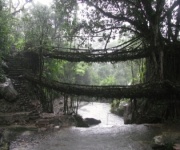
What makes this phenomenon particularly fascinating is the geological context. The Khasi Hills consist largely of limestone and sandstone formations carved by water over millions of years. The famous living root bridges of Nongriat and Umshiang are themselves products of this relationship between vegetation and running water. When heavy rainfall saturates the hills, the root structures channel cascades that would otherwise wash away man-made crossings. Travellers walking the double-decker root bridge trek during or after a major downpour witness a side of these bio-engineered marvels that most guidebooks fail to describe.
Australian visitors should prepare for conditions that differ markedly from home. The Bureau of Meteorology in Sydney tracks cyclones and East Coast Lows, but the rainfall intensity in Meghalaya operates on a different scale entirely. A single day can deliver what Wollongong or the Gold Coast might receive in a month. Humidity regularly exceeds ninety per cent, and visibility can drop to a few metres during the heaviest bursts. Yet this is precisely why photographers from around the world make pilgrimages here during the wet months.
Iconic cascades you cannot miss
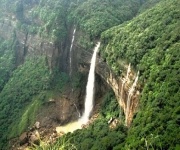
Nohkalikai Falls is the unrivalled star of Cherrapunjee's waterfall circuit. Plunging 340 metres from a sheer cliff edge into a turquoise pool below, it ranks as the tallest plunge waterfall in India. After heavy rainfall, the falls become a solid white ribbon that seems to hang motionless in the air before crashing into the gorge. The viewing platform, a short drive from town, offers an unobstructed panorama particularly dramatic during morning hours when mist rises. Photographers should bring a wide-angle lens and a fast shutter speed to capture detail in the falling column.
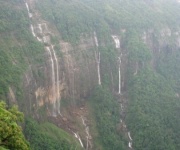
The Seven Sisters Falls, known locally as Noh Sawan heh, present a different spectacle entirely. This series of seven parallel cascades spills over a broad limestone escarpment near Mawsmai village. After prolonged rain, the individual streams merge into a single roaring sheet that can be heard from several kilometres away. The viewpoint is reached by a short walk through a forest path that becomes a cascade itself during heavy rain, with water running ankle-deep along the trail. Waterproof hiking boots are essential, and visitors should heed local advice regarding the safety of the viewing area.
Nohsngithiang Falls, sometimes called the Mawsmai Falls, offers another iconic vantage point. Fed by the same watershed that supplies the Seven Sisters, this cascade is best viewed from the valley floor where spray creates a permanent rainbow on sunny post-rain afternoons. The approach involves descending hundreds of steps, so visitors with mobility concerns should plan accordingly. For those who make the descent, the reward is a close-up view of the base where water has carved a deep pool over centuries. Local guides warn against swimming during the wet season, as undertows are powerful and unpredictable.
Hidden waterfalls for the adventurous traveller
Beyond the celebrated trio, Cherrapunjee hides numerous smaller cascades that reward the traveller willing to venture off the main circuits. Dainthlen Falls, located a few kilometres from town, features a dramatic cave behind the falling water where, according to local legend, a fearsome serpent was once vanquished. After heavy rain, the cave becomes inaccessible due to the force of the flow, but surrounding cliffs offer spectacular viewing opportunities. The walk to Dainthlen is relatively gentle and suitable for families, though the final approach can be muddy.
Kynrem Falls, situated within the Thangkharang Park area, provides a quieter alternative to busier sites. The falls drop in successive steps over a series of rock shelves, creating a natural staircase of water. During the post-monsoon weeks of October and November, when the heaviest rains have ended but rivers remain full, Kynrem is at its photographic best. The surrounding park also contains viewpoints overlooking the Bangladesh plains far below. It is an ideal spot for visitors seeking reflection away from the crowds that gather at the more famous viewpoints.
For the truly adventurous, Wei Sawdong offers an unforgettable experience. Located deeper in the jungle, this three-tiered waterfall requires a longer trek through primary forest. The trail crosses several streams that swell dramatically after rain, so a local guide is essential. The reward is a series of natural swimming holes, though bathing is only advisable in the lower pools during periods of lighter flow. Many Australian travellers, accustomed to the marked trails of Kosciuszko National Park or the Blue Mountains, find the unmarked paths of Meghalaya both challenging and exhilarating.
Timing your trip around the rains
Choosing when to visit Cherrapunjee involves balancing water volume against weather extremes. The heaviest rainfall occurs between June and August, when monthly totals can exceed 3000mm. During this peak period, landslides occasionally affect the highway connecting Guwahati to Shillong and onwards to Cherrapunjee. Travellers should monitor local conditions and allow buffer days in their itinerary. The post-monsoon period of October and November offers a compromise: rivers remain full from previous months' downpours, but rain is less constant and visibility improves dramatically.
Safety considerations are paramount when visiting waterfalls after heavy rain. The Australian Government's Smartraveller website advises travellers to monitor local weather alerts and heed warnings from local authorities regarding landslides and flash flooding. Paths that are perfectly safe in February can become treacherous rivers in July. Sturdy footwear, rainproof clothing, and a reliable head torch are non-negotiable. Visitors should also carry oral rehydration salts, as the combination of heat and humidity can lead to rapid dehydration. Most tour operators, including the team behind about us, provide detailed briefings on these matters.
It is also worth considering the perspective of returning home. Australia's biosecurity laws are among the strictest in the world, administered by the Department of Agriculture, Fisheries and Forestry. Travellers must declare any food, plant material, or soil traces on clothing and footwear. Muddy boots from Meghalaya's trails should be thoroughly cleaned and dried before packing to avoid any risk of contamination. Coffee connoisseurs from Melbourne's specialty scene should note that while Indian coffee is widely available, returning with green beans or roasted product requires declaration and may face restrictions.
Travelling from Australia to the Abode of Clouds
Getting from Australia to Cherrapunjee requires some planning but is straightforward. Most travellers depart from Sydney, Melbourne, or Brisbane on flights to Delhi or Kolkata, with journey durations ranging from 11 to 16 hours depending on routing. From Kolkata, a short domestic flight to Guwahati takes about 90 minutes, followed by a scenic drive of roughly four hours into the Khasi Hills. The final stretch winds through villages and forest, often shrouded in cloud during monsoon months. Total travel time typically ranges from 24 to 30 hours door-to-door.
Indian visa requirements for Australian citizens have evolved in recent years. Most short-term visitors now use the e-Visa system, which allows applications online and grants stays of up to 90 days for tourism purposes. The application requires a digital photograph and a scanned copy of the biographical page of your passport. Processing usually takes 72 hours, though applications during peak seasons may take longer. Travellers should ensure their passport has at least six months' validity remaining and two blank pages. It is also wise to carry printed copies of all documentation, as digital systems occasionally experience downtime in remote regions.
Once in Meghalaya, the infrastructure for visitors has improved significantly. Homestays and eco-resorts offer comfortable bases for exploring the waterfalls, and local guides possess intimate knowledge of trail conditions and weather patterns. For travellers seeking a structured experience, the Cherrapunji 2N/3D package provides a thoughtfully designed introduction to the region's highlights. This itinerary balances the iconic waterfalls with cultural experiences such as visits to Khasi villages and the living root bridges, ensuring that visitors return home with a comprehensive understanding of why Meghalaya is called the Abode of Clouds.
The waterfalls of Cherrapunjee wait for no one. The rains will fall, the rivers will swell, and the cascades will perform their thunderous display once more. Australian travellers seeking an adventure that stands apart from the beach holidays of Bali or the cultural circuits of Southeast Asia will find nothing quite like the Khasi Hills in full flow. Whether you choose to time your visit for the post-monsoon clarity of November or embrace the full drama of an August downpour, the experience remains etched in memory long after the journey home. Begin planning your monsoon escape to Cherrapunjee today and discover why this corner of Meghalaya captivates all who make the journey.