





The Best Waterfalls to Visit Near Sohra
Sohra, widely known as Cherrapunji or Cherrapunjee, is surrounded by some of Meghalaya’s most dramatic landscapes. Rain moves across the Khasi Hills, gathers in forested ravines, and drops over limestone cliffs into mist-filled valleys. The result is a remarkable concentration of waterfalls within a manageable distance of town.
Some falls are easy to reach from the road, while others involve slippery paths, steep stairways, or a full day of walking. Their appearance also changes greatly with the weather. A quiet cascade in the dry season may become a broad, thundering curtain during the monsoon, while winter usually offers clearer views and more comfortable walking conditions.
A well-planned Sohra holiday can combine major viewpoints with short waterfall walks, cave visits, living root bridges, and village stops. The most rewarding itinerary leaves enough time to enjoy each place rather than rushing through every viewpoint in a single day.
Nohkalikai Falls And Its Forested Gorge
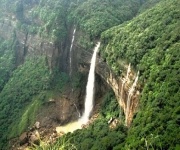
Nohkalikai Falls is the landmark waterfall of Sohra and one of the most impressive sights in Northeast India. Water plunges from a high green plateau into a vivid blue pool far below, creating a scene that is especially striking when viewed from the main observation area. At approximately 340 metres, it is commonly described as India’s tallest plunge waterfall.
The viewpoint is easy to include in a Cherrapunji sightseeing route, and several platforms provide different perspectives across the gorge. In wet weather, clouds and spray often soften the far cliffs, while clear days reveal layers of forest and rock stretching into the valley. The waterfall can become extremely powerful during heavy rain, although cloud cover may partially obscure the view.
Nohkalikai is associated with a local Khasi legend that gives the falls their name. Visitors will find small shops and facilities near the viewing area, but it is still wise to carry water, a light rain jacket, and footwear with good grip. The edge of the gorge should be treated carefully, particularly when the stone surfaces are wet.
The Seven Sisters And Mawsmai Falls
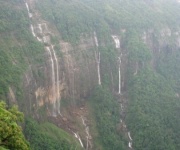
Nohsngithiang Falls, popularly called Seven Sisters Falls, spreads across a tall cliff in several separate streams. The name refers to the seven visible channels that descend the limestone escarpment, representing the seven sister states of Northeast India. It is one of the most memorable waterfall viewpoints near Sohra because the full panorama shows the scale of the surrounding plateau.
The falls are most dramatic during and shortly after the monsoon. In drier months, some channels may become thin or disappear, but the immense cliff and open valley remain attractive. Late afternoon light can create beautiful changes in colour across the rock face, though mist frequently moves through the gorge. The viewpoint is close to the road, making it practical for families and travellers with limited walking time.
Mawsmai Falls is found near Mawsmai Cave and is usually experienced as part of the same local sightseeing circuit. It is smaller than Nohkalikai or Seven Sisters, but its forest setting gives it a more intimate character. The short approach passes through lush vegetation, and the flow is strongest during the rainy season. Combining the waterfall with Mawsmai Cave creates an efficient half-day excursion.
Dainthlen And Wei Sawdong
Dainthlen Falls lies along the route between Sohra and the plateau’s scenic attractions. Water runs over a broad rock formation before dropping into a deep valley, and the open setting makes it easy to appreciate the surrounding Khasi landscape. The waterfall is linked to the legend of Thlen, a giant serpent said to have terrorised local communities before being defeated by a heroic figure.
Unlike the enclosed atmosphere of some forest cascades, Dainthlen offers wide views and a sense of space. Its flow varies considerably by season. During the rains, several channels may spread over the rock face, while the dry season reveals more of the sculpted surface. The access area can be muddy, so sandals or shoes with firm traction are preferable.
Wei Sawdong is a more secluded three-tier waterfall reached by a steep descent through greenery. Its pools and layered cascades have made it increasingly popular, but the walk still feels more adventurous than a roadside viewpoint. The route includes uneven steps and narrow sections, so visitors should allow extra time and avoid carrying unnecessary luggage.
The lower levels are particularly scenic, with clear water collecting between dark rocks and dense vegetation framing the falls. Swimming conditions can change after rain, and currents should be assessed locally before entering the water. A guide or local driver can help with the approach, especially when weather affects the condition of the trail.
Longer Waterfall Excursions From Sohra
Travellers who have more than a day for local sightseeing can explore waterfalls beyond the immediate Sohra circuit. Wah Kaba Falls is a convenient stop along the Shillong–Sohra road and drops through a steep valley surrounded by green hills. Its viewpoint is accessible compared with the longer treks in the region, although rain can make the path slick.
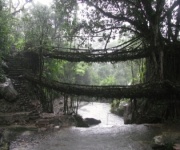
The Nongriat area offers a different kind of waterfall experience. Reaching the famous Double Decker Living Root Bridge requires a substantial descent and ascent through forest steps, followed by additional walking for pools and cascades in the valley. Rainbow Falls, reached beyond the bridge, is a rewarding extension for fit hikers. Clearer water is more likely outside the peak monsoon, while the forest is at its most luxuriant during the rains.
Krang Suri Falls, near Jowai, is farther from Sohra and works best as a separate day excursion rather than a quick stop. Its turquoise pools, smooth rock shelves, and forested surroundings make it one of Meghalaya’s most photogenic waterfall destinations. The longer drive is worthwhile for travellers who want to see a contrasting landscape beyond the Sohra plateau.
| Waterfall | Best feature | Access level | Most suitable season |
|---|---|---|---|
| Nohkalikai | Tall plunge into a blue pool | Easy viewpoint access | Monsoon to early winter |
| Seven Sisters | Wide seven-stream cliff view | Easy roadside viewpoint | Monsoon and post-monsoon |
| Mawsmai | Forest cascade near the cave | Short walk | Monsoon |
| Dainthlen | Open valley and legendary setting | Easy to moderate | Monsoon to winter |
| Wei Sawdong | Three-tier pools and secluded forest | Steep walk | Post-monsoon to spring |
| Rainbow Falls | Remote trek through Nongriat | Demanding hike | Autumn to spring |
| Krang Suri | Clear pools and broad rock shelves | Moderate access, long drive | Winter and spring |
Choosing The Right Season And Route
The monsoon, generally from June to September, produces the strongest waterfall displays around Sohra. Roads and paths may become slippery, visibility can change quickly, and heavy rain occasionally disrupts travel. The scenery is exceptionally green, but visitors should build flexibility into each day and avoid assuming that every viewpoint will remain clear.
October through April is usually more comfortable for walking. October and November often retain good water flow after the rains, while December to February tends to bring clearer skies and cooler conditions. By late spring, smaller falls may weaken, although major cascades can still remain attractive.
A practical first day might include Nohkalikai, Mawsmai Cave, Seven Sisters, and Dainthlen. A second day can focus on Wei Sawdong or another less accessible cascade. Those planning the Nongriat trek should reserve a full day, since the steps are demanding and the return climb takes longer than many visitors expect.
Travellers staying several nights can use Sohra as a base and vary the pace according to the weather. A four-night Sohra package can provide a useful framework for combining waterfall circuits with caves, viewpoints, forests, and nearby villages without changing accommodation every night.
What To Carry For Waterfall Visits
Rain protection is essential even when the morning begins with bright sunshine. A lightweight waterproof jacket is more useful than a large umbrella on forest paths, where branches and uneven ground make umbrellas difficult to handle. A dry bag or waterproof cover will protect phones, cameras, documents, and spare clothing.
Good footwear makes a significant difference. Choose shoes with a firm sole and reliable grip, particularly for Wei Sawdong, Nongriat, and paths around smaller cascades. A spare pair of socks, quick-drying clothing, insect repellent, sunscreen, drinking water, and a small first-aid kit are also sensible additions.
Photography conditions vary widely. Mist can create atmospheric images at Nohkalikai and Seven Sisters, while clear mornings may offer better visibility across the valleys. Visitors interested in planning compositions and viewpoints can browse the destination’s waterfall photo album before travelling.
Respect for the landscape is equally important. Keep away from unstable edges, follow local signs, avoid leaving plastic near pools, and do not use soap or other chemicals in natural water. Some paths pass through villages or community-managed areas, so local instructions and access rules should be followed.
Waterfall Stops Worth Prioritising
The best choice depends on available time, fitness, weather, and interest in viewpoints or hiking. These priorities work well for most visitors:
- Choose Nohkalikai for the defining Sohra panorama and the region’s most famous plunge waterfall.
- Visit Seven Sisters during the rainy or post-monsoon season for the strongest chance of seeing all seven streams.
- Add Mawsmai and Dainthlen to a short sightseeing circuit because both fit easily into a road-based day.
- Reserve a full day for Nongriat and Rainbow Falls if you enjoy steep trails, forest scenery, and living root bridges.
- Select Wei Sawdong or Krang Suri for a more adventurous outing focused on pools, tiers, and close-up views.
The most memorable itinerary usually balances famous locations with one less crowded stop. A major viewpoint explains the scale of the Khasi plateau, while a forest waterfall provides the sound, spray, and close connection with nature that travellers often hope to find in Meghalaya.
Plan your Sohra stay around the season, allow extra time for rain-affected roads, and arrange reliable local transport for the more remote routes. With the right schedule, the waterfalls near Cherrapunji become more than brief photo stops—they form the natural rhythm of a rewarding Meghalaya holiday. Contact India Beacons Sojourn to arrange a Sohra tour or vacation package suited to your dates and preferred pace.