




The Most Challenging Treks in Cherrapunjee for Adventure Seekers
Cherrapunjee, also known as Sohra or Cherrapunji, is famous for rain, waterfalls, limestone caves, and forest-covered valleys. Its spectacular scenery comes with demanding terrain: steep stairways, slippery rocks, humid conditions, stream crossings, and long descents into isolated gorges. For experienced hikers, these trails offer a far richer adventure than viewpoints reached by road.
The hardest walks around Sohra are rarely technical mountaineering routes. Their difficulty comes from endurance, elevation change, uneven surfaces, and the need to remain self-sufficient in remote areas. A trail that appears short on a map may take several hours because of thousands of steps or a slow climb through wet jungle.
Fitness, weather awareness, suitable footwear, and a local guide can make a major difference. Travelers arranging a multi-day Meghalaya holiday can combine one demanding trek with easier waterfalls, caves, and village visits, giving the body time to recover while keeping the itinerary varied.
What Makes Sohra Treks Difficult
The plateau around Cherrapunjee drops sharply toward deep valleys. Many routes begin on a ridge and descend for a long distance before reaching a river, bridge, waterfall, or settlement. The return journey then requires climbing every step again, often after several hours of walking in heat and moisture.
Rain changes trail conditions quickly. Moss-covered stones become slick, soil turns muddy, and small streams can swell after heavy showers. Even during a relatively dry period, dripping forest paths may remain wet. Visibility can also deteriorate around cliffs and waterfalls, making navigation more difficult for visitors unfamiliar with the area.
Fitness for these hikes should be measured by stair-climbing and sustained walking rather than speed on flat ground. Training with hills, lunges, step-ups, and a loaded daypack helps prepare the legs for the repeated descent-and-ascent pattern found on the most demanding routes.
Nongriat and the Double-Decker Root Bridge
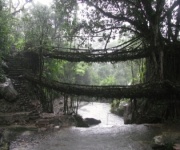
The trail to Nongriat is one of the best-known challenging hikes near Cherrapunjee. Starting from Tyrna village, hikers descend a long series of concrete and stone steps through dense vegetation. The living root bridge is formed from the roots of rubber fig trees, trained and strengthened by Khasi communities over generations.
Reaching the Nongriat Double-Decker Living Root Bridge requires endurance, though the descent is manageable for active travelers who allow enough time. The return climb is the real test. Humidity, tired legs, and the temptation to hurry can make the final ascent exhausting, so frequent water breaks and a steady pace are essential.
The trail continues beyond the bridge toward natural pools and smaller cascades. Visitors with strong stamina may extend the walk toward Rainbow Falls, but this turns a substantial excursion into a full-day undertaking. Local guides can advise whether river levels, recent rainfall, and daylight make the extension sensible.
Rainbow Falls and the Deep Valley Route
Rainbow Falls lies farther beyond Nongriat and is reached by continuing along a rugged valley trail. The path crosses forested slopes, narrow ledges, bridges, and rocky sections beside streams. The waterfall is especially striking when sunlight creates a rainbow through the spray, although cloudy weather can hide the effect.
This route demands more than the initial walk to the root bridge because hikers must handle additional distance after already completing the steep descent from Tyrna. The return route includes the long climb back to the plateau. Travelers should begin early, carry food, and set a firm turnaround time rather than relying on the waterfall visit alone to determine the schedule.
Water levels deserve close attention. A crossing that appears simple in the morning may become unsafe after intense rain upstream. Avoid standing on wet boulders near strong currents for photographs, and never treat a swollen stream as a minor obstacle. A guide familiar with seasonal conditions can identify safer crossing points and alternative routes.
Caves, Forests, and Rocky Ravines
The Cherrapunjee region is a rewarding destination for caving enthusiasts, with limestone formations, underground streams, and narrow passages around locations such as Mawsmai and Krem Phyllut. Publicly accessible caves may involve shorter walks, but exploring deeper or less-developed systems requires specialist supervision, proper equipment, and an understanding of underground hazards.
Cave trekking is physically demanding in a different way from the Nongriat route. Crawling, crouching, scrambling over rocks, and moving through shallow water can strain knees and shoulders. Darkness, slippery surfaces, low ceilings, and confusing passages make independent exploration dangerous, especially during the wet season.
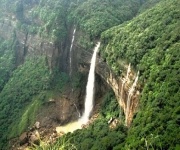
Forest trails near waterfalls such as Nohkalikai and Dainthlen may also include steep approaches, rough steps, and muddy viewpoints. Some paths are relatively brief but still deserve caution because exposed edges and slick rocks can cause serious injuries. Stay on established routes and follow local instructions around cliff tops, pools, and cave entrances.
| Trek or route | Main challenge | Typical time needed | Best suited to |
|---|---|---|---|
| Tyrna to Nongriat | Thousands of steps and steep return climb | 5–7 hours return | Fit travelers with hiking experience |
| Nongriat to Rainbow Falls | Extra distance, stream crossings, rugged valley trail | 8–10 hours return from Tyrna | Strong hikers starting early |
| Mawsmai cave area | Slippery rocks, low passages, uneven ground | 1–2 hours | Beginners with a guide or organized visit |
| Deeper limestone cave routes | Darkness, water, scrambling, route-finding | Varies by cave | Experienced groups with specialists |
| Forest and waterfall approaches | Mud, slick stone, steep sections | 2–5 hours | Travelers comfortable on uneven terrain |
| David Scott Trail sections | Long ridge-and-valley walking, changing weather | Half-day to full-day | Experienced hikers with local support |
Choosing the Right Season and Route
The monsoon creates the lushest landscapes around Sohra, and waterfalls are often at their most powerful. It also produces the most demanding trekking conditions. Persistent rain can obscure views, flood streams, loosen soil, and make root bridges and stone steps slippery. Visitors who prioritize safety may prefer the post-monsoon and cooler months, when many trails remain green but conditions are generally easier to manage.
Dry weather does not guarantee a simple hike. The sun can feel intense on exposed steps, while humidity remains high in the valleys. Start early, especially for Rainbow Falls or any route requiring a return to Tyrna before dark. Check recent rainfall rather than relying solely on a seasonal assumption, since local weather can shift rapidly.
A guide is particularly valuable for remote trails, cave excursions, river crossings, and routes with multiple branches. Guides can also help visitors interact respectfully with villages and understand local customs surrounding living root bridges and community-managed areas. Travelers arranging transport, accommodation, or a guided itinerary can use the booking contact page to plan a route that matches their available time and fitness.
Essential Preparation for a Demanding Hike
Good preparation reduces the chance that a memorable trek becomes an avoidable emergency. Pack lightly, but carry enough water, food, rain protection, first-aid supplies, and communication essentials. Mobile coverage may be unreliable in valleys, so share the day’s route with accommodation staff or a trusted travel companion before setting out.
Wear shoes with firm grip and secure ankle support. Open sandals are unsuitable for steep, muddy, or rocky trails, while ordinary smooth-soled trainers can become hazardous on wet stone. Trekking poles may help with balance on descents, although they should never be used to test unstable ground near fast-flowing water.
Useful items for the most challenging routes include:
- Two to three litres of water, with extra capacity for hot or extended hikes
- High-energy snacks, a packed meal, and a small waterproof first-aid kit
- Quick-drying clothing, a lightweight rain jacket, and spare socks
- Grip-focused hiking shoes, trekking poles, and a waterproof phone pouch
- Headlamp, power bank, offline maps, and emergency contact details
Protect the landscape as carefully as your own safety. Carry every wrapper back, avoid damaging living root bridges, do not enter restricted caves, and keep noise low near villages and forest habitats. Responsible trekking preserves the character of the area and supports the communities that maintain many of its paths.
Building a Safer Adventure Itinerary
Adventure seekers should avoid packing several exhausting excursions into consecutive days. A sensible Cherrapunjee itinerary might pair the Nongriat trek with a relaxed day visiting local viewpoints, followed by a cave or waterfall excursion suited to current energy levels. This approach allows time for weather delays and prevents fatigue from affecting judgment.
Accommodation in or around Sohra can serve as a practical base, but transport arrangements need attention because trailheads may be separated by winding roads. Confirm pickup times, road conditions, and the expected duration of each walk. For a seven-night holiday, travelers can include a full recovery day; shorter two- or three-night packages require more selective planning.
Altitude is not the principal concern in Cherrapunjee, yet exertion can still become serious in heat and humidity. Stop before exhaustion, drink regularly, and turn back when conditions deteriorate. Reaching a waterfall is never more important than returning safely before darkness or rising water makes the trail hazardous.
The strongest treks in Cherrapunjee reward patience rather than speed. The living root bridges reveal generations of environmental knowledge, deep valleys show the scale of Meghalaya’s landscape, and cave routes expose a quieter side of the plateau. With realistic timing, local guidance, and proper equipment, even a demanding route can become the defining experience of a Sohra journey.
Choose a trek that matches your preparation, arrange dependable local support, and reserve enough time to enjoy the landscape without rushing. A carefully planned Cherrapunjee adventure can place the region’s waterfalls, forests, caves, and living root bridges at the center of an unforgettable Meghalaya vacation.