




The Most Photogenic Living Root Bridges In Cherrapunjee
Cherrapunjee, also known as Sohra or Cherrapunji, is one of Meghalaya’s most rewarding destinations for landscape photography. Its living root bridges combine rainforest, flowing water and remarkable local knowledge in a single frame. These structures are grown from the aerial roots of rubber fig trees, guided over streams and strengthened across generations.
For Australian travellers, the appeal is easy to understand: this is an experience far removed from a standard lookout or city attraction. You may be used to dramatic coastal walks around the Great Ocean Road, rainforest tracks in Queensland or the Blue Mountains near Sydney, but Meghalaya’s bridges feel alive in a different way. They are part forest, part footpath and part community heritage.
The best images come from allowing enough time for the walk rather than rushing between viewpoints. Some bridges require steep descents and long climbs, while others can be reached more easily from nearby villages. Weather, fitness, footwear and the season all shape the experience, so choosing the right bridge is as important as carrying the right camera.
Nongriat Double Decker Bridge
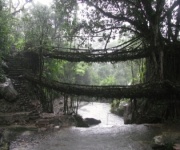
The Nongriat Double Decker Living Root Bridge is the signature experience for visitors based in Cherrapunjee. Two root bridges sit one above the other across a forested stream, creating a layered subject that looks especially striking when photographed from the steps, the riverbank or the surrounding greenery. Moss, wet stone and filtered light give the scene a rich, atmospheric quality.
Reaching Nongriat involves descending roughly 3,000 steps from Tyrna village, followed by the return climb. The distance is manageable for active travellers, yet the humidity and uneven stone steps make it a serious day walk. Start early to enjoy cooler conditions and quieter paths. The return journey is usually the part that tests people, particularly after rain.
Photography improves when you move beyond the first obvious viewpoint. Use the steps to create leading lines towards the bridge, or frame the structure through leaves and tree trunks. A wide-angle lens captures the double span and forest canopy, while a short telephoto lens can isolate the textures of the roots. A waterproof cover is sensible during Meghalaya’s wet weather, even when the morning begins clear.
Ritymmen And The Bridges Near Nongriat
Ritymmen Living Root Bridge is often overlooked by travellers focused solely on the double decker bridge. It lies along the wider Nongriat trail and has a broad, elegant span with a more open setting. The roots appear like braided timber, and the surrounding stream offers reflections after rainfall. Its quieter character makes it a strong choice for photos without a crowd crossing the frame.
The walk to Ritymmen adds time and effort to the Nongriat outing, so it suits travellers who want a fuller rainforest day. Allow room in your schedule for pauses, especially if you are carrying a tripod or changing lenses. The route can be slippery, and the surface may include wet rocks, mud and narrow steps.
Ummunoi Living Root Bridge, near the village of Nohwet, offers another photogenic option. The bridge is reached by a substantial staircase but generally provides a more straightforward excursion than Nongriat. It crosses a clear stream surrounded by dense vegetation, making it appealing for travellers who want the character of a living root bridge without committing to the longest hike.
| Bridge | Best For | Walking Demand | Strongest Photo Character |
|---|---|---|---|
| Nongriat Double Decker | A landmark Meghalaya experience | High | Layered roots, forest and river |
| Ritymmen | A quieter rainforest setting | High | Broad span and natural framing |
| Ummunoi | A shorter bridge-focused outing | Moderate | Stream reflections and dense greenery |
| Riwai | Easy access near Mawlynnong | Low to moderate | Village landscape and simple lines |
| Mawsaw | A more adventurous nature stop | Moderate to high | Water, rock and tangled forest |
Riwai, Mawsaw And Lesser-Known Bridges
Riwai Living Root Bridge is located close to Mawlynnong, a village widely associated with cleanliness, gardens and well-maintained paths. Because the walk is shorter and the access is less demanding, Riwai is a practical choice for families, older travellers or anyone fitting several attractions into one day. The single bridge has a clean, graceful shape and works well in photographs that include the surrounding village landscape.
Mawsaw Living Root Bridge, near the southern Cherrapunjee area, provides a more rugged visual experience. The route can involve forest paths, rocky ground and stream crossings, depending on local conditions. It is worth visiting with a local guide who understands the trail and can advise on water levels. The bridge itself may be less polished as a tourist attraction, but its setting can feel more secluded and wild.
Other root bridges are scattered through Meghalaya, including examples around Nongbareh and nearby Khasi villages. Their condition and accessibility can change with rainfall, maintenance and local permissions. A bridge that appears easy on a map may require a long approach on foot, while a less famous structure may be closed temporarily. Treat local advice as part of the itinerary rather than an optional extra.
Before setting out, review practical travel information covering attractions, accommodation and planning details for a Cherrapunjee stay. This is particularly useful when combining bridge walks with caves, waterfalls and scenic viewpoints across several days.
Planning A Photogenic Bridge Day
Light makes a major difference in the rainforest. Early morning often brings softer illumination, fewer visitors and a fresher appearance after overnight rain. Cloudy conditions are not a failure for landscape photography; they reduce harsh contrast and allow the details of the roots, stones and foliage to remain visible. A small tripod can help in shaded areas, although it should never block a narrow path.
Pack for conditions rather than appearances. Quick-drying clothing, shoes with reliable grip and a light rain jacket are more useful than fashionable travel outfits. Bring water, snacks, insect repellent, a small first-aid kit and a dry bag for electronics. Australian visitors accustomed to carrying reef-safe sunscreen in Queensland should still pack sun protection here, as exposed village roads and stairways can become bright between forest sections.
A local guide adds more than directions. Guides can explain how a bridge was developed, identify village customs, recommend safe viewpoints and help with changing trail conditions. Ask before photographing people, homes or religious sites, and avoid climbing on the roots. These bridges are living infrastructure used by communities, not simply scenic props.
Useful choices to make before leaving your accommodation:
- Select one demanding bridge or several easier stops rather than overloading the day.
- Confirm the starting village, guide arrangements and transport time.
- Check rainfall and stream conditions before entering a remote trail.
- Carry cash in Indian rupees for local guides, entry contributions and small purchases.
- Tell your driver when you need a proper return buffer before sunset.
Camera habits that work well in Meghalaya include:
- Carry spare batteries in a sealed pouch because damp conditions drain and affect equipment.
- Use a polarising filter carefully to control reflections on wet leaves and water.
- Photograph the bridge from several distances instead of relying on one wide shot.
- Leave room for people or a figure on the path to show scale.
- Wipe lenses regularly, especially when moving between cool forest shade and humid air.
Choosing The Right Meghalaya Experience
A two-night stay can cover Cherrapunjee’s main waterfalls, viewpoints and one accessible root bridge, but it may feel rushed if Nongriat is the priority. Three to four nights allow a more comfortable rhythm, with one full day for the double decker bridge and separate time for caves, waterfalls or Mawlynnong. Longer packages create space for changing weather, which is valuable during the monsoon months.
This flexibility matters to Australians planning around annual leave, school holidays or a long-haul journey from Sydney, Melbourne, Brisbane or Perth. Flights commonly involve a connection before the road journey into Meghalaya, so adding a buffer day can prevent a delayed arrival from affecting a prepaid trek. Travellers often say “brekkie” and “arvo” without thinking about it; in Cherrapunjee, an early breakfast and an afternoon return are practical decisions rather than just travel habits.
The local tourism market includes private drivers, guides, homestays, resorts and multi-day operators. Rates can vary according to vehicle type, season, group size and how remote the excursion is. Ask what is included before booking: transport to the trailhead, guide fees, meals, entry charges and accommodation may be priced separately. Paying fairly for local support helps maintain paths and rewards the communities who care for the bridges.
Respectful travel also improves the photographs. Give way on narrow paths, keep voices low near homes, take rubbish back with you and avoid using drones where they could disturb residents or visitors. The best image is one that records the bridge’s beauty without damaging the forest or disrupting the people who rely on it.
The most photogenic living root bridges are rarely the result of a quick stop and a single snapshot. They reward patient walking, careful planning and attention to the details around the main structure: water moving over stone, roots twisting into the bank, mist lifting through the canopy and a village path disappearing into green.
Plan your Cherrapunjee escape around the bridge that matches your fitness, available time and photography interests. Explore the region’s two- to seven-night holiday packages, arrange suitable transport and make room for an early start. Contact India Beacons Sojourn through Cherrapunjee.net to shape a Meghalaya journey that turns these living bridges into lasting travel memories.