




The Story Behind Nohsngithiang Falls in Cherrapunjee
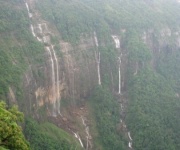
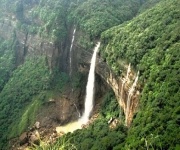
On the southern edge of Meghalaya’s Khasi Hills, a limestone escarpment breaks into a spectacular curtain of water. During the monsoon, Nohsngithiang Falls appears as several silver streams dropping side by side from the plateau, creating the famous image associated with Sohra, also widely known as Cherrapunji or Cherrapunjee.
Many visitors know it as the Seven Sisters Falls or Mawsmai Falls, yet its story reaches beyond a scenic viewpoint. The waterfall reflects Khasi geography, oral tradition, seasonal rain, limestone formation, and the continuing relationship between local communities and their landscape.
The falls are especially dramatic when the southwest monsoon fills the streams and ravines around Mawsmai village. In the drier months, the water may become thinner, but the high cliffs, forested valleys, and layered rock still reveal how the landscape was shaped.
Names That Carry Local Meaning
Nohsngithiang is commonly translated as “the fall of seven sisters,” referring to the waterfall’s seven visible streams. These channels may merge or separate depending on rainfall, making the number appear especially clear during heavy monsoon flow. The name connects the physical shape of the waterfall with a memorable human image.
The name Mawsmai is associated with the nearby village and the Mawsmai Cave, one of the best-known limestone attractions in the region. For travelers, “Mawsmai Falls” is a familiar alternative name, while “Nohsngithiang Falls” is the local name most closely tied to the waterfall itself. Using both names can be helpful when arranging transport or asking for directions.
The “seven sisters” description is often presented as a legend, but it is also a visual interpretation of the waterfall. There is no single universally documented origin story that explains the name in the way a written historical record might. Its strength lies in the way generations of residents and visitors have understood the seven channels as a group.
A Waterfall Built by Limestone and Rain
Nohsngithiang Falls is a product of Meghalaya’s dramatic elevation change. Water gathers across the plateau, moves through soil and cracks in the limestone, and eventually reaches the edge of the escarpment. At the cliff, gravity takes over, sending the streams down toward the valleys below.
The rock around Sohra is largely limestone, a material that can be slowly dissolved by rainwater. Over long periods, this process creates caves, underground drainage routes, fissures, and uneven cliff surfaces. The nearby Mawsmai Cave is another visible expression of the same karst landscape. The waterfall and cave therefore belong to one broader geological story rather than existing as unrelated attractions.
Rainfall is the force that changes the character of the falls from month to month. During the wet season, channels that seem modest in winter can become powerful white ribbons. Wind may scatter the spray before it reaches the lower slopes, while cloud and mist can hide the bottom of the drop entirely.
The Seven Streams Through the Seasons
The monsoon is the most popular time to see Nohsngithiang Falls at its fullest. From the viewing area, visitors can often watch the water divide into distinct strands before plunging over the cliff. The surrounding hills turn vivid green, and low clouds add a shifting backdrop to the scene.
Peak rainfall also brings practical limitations. Roads can be slick, visibility may change quickly, and intense showers can interrupt a planned sightseeing route. A clear morning does not guarantee a clear afternoon in Sohra, so travelers should allow extra time and carry weatherproof layers.
Outside the monsoon, the waterfall may lose some of its volume and visual force. This does not make a dry-season visit meaningless. With fewer clouds, the cliffs and valleys may be easier to see, and the softer flow helps reveal the separate drainage lines that feed the fall. The best time depends on whether a traveler values maximum water, clearer views, or a balance between the two.
| Aspect | What Visitors Can Expect |
|---|---|
| Local name | Nohsngithiang Falls |
| Common names | Seven Sisters Falls and Mawsmai Falls |
| Setting | Limestone escarpment near Mawsmai village, Sohra |
| Main spectacle | Multiple streams descending from a high cliff |
| Strongest flow | Monsoon and the months following heavy rain |
| Viewpoint experience | Panoramic sight from above rather than a conventional swimming spot |
| Nearby attractions | Mawsmai Cave, other waterfalls, villages, and living root bridges |
A Landscape Woven Into Khasi Country
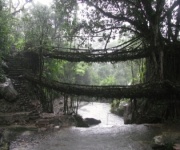
The falls stand within a region where natural sites are closely connected with Khasi settlements, customary practices, and living landscapes. The Khasi Hills are known for community-managed forests, traditional village institutions, and living root bridges created by guiding the roots of rubber fig trees across streams and ravines.
That wider cultural setting matters when visiting a waterfall. Nohsngithiang is not simply a photograph placed at the end of a road. The viewpoint, access routes, nearby villages, food stalls, forests, and drainage channels all form part of a lived environment. Treating the area with care helps preserve the experience for residents as well as travelers.
The story of the waterfall is therefore both geological and cultural. Rain has shaped the cliff, but local names and shared knowledge have given the scene its identity. A responsible visit means observing local rules, using marked paths, avoiding litter, and remembering that village landscapes are not unrestricted recreational spaces.
What the Viewpoint Reveals
The main viewing area gives travelers a high, open perspective over the waterfall and the deep valleys beyond it. Rather than standing at the base of the cascade, visitors see the streams as they approach the cliff edge and then disappear into the green gorge. This elevated angle explains why the waterfall is so closely associated with the broad panorama of Sohra.
Photography conditions change rapidly. Morning mist may soften the view, while a brief break in the cloud can illuminate the falling water. A wide-angle lens is useful for including the cliff and valley, but the scale is often difficult to capture in a single image. Looking away from the falls can be equally rewarding, particularly toward the layered hills and monsoon clouds.
Safety should remain part of the sightseeing plan. Wet stone and slippery ground can make the edges hazardous, especially during heavy rain. Visitors should stay behind barriers or within designated areas, supervise children, and avoid attempting to reach unstable slopes or drainage channels for a closer photograph.
Linking Mawsmai Falls With a Sohra Itinerary
A visit to Nohsngithiang Falls works best as part of a wider Cherrapunjee sightseeing circuit. Mawsmai Cave is nearby, while other attractions in the Sohra region include Duwan Sing Syiem View Point, Wei Sawdong Falls, Arwah Cave, Nongriat’s living root bridge, and several smaller cascades. The exact route depends on weather, road conditions, walking ability, and available daylight.
Travelers staying for several days can give the landscape more time to reveal itself. A longer trip allows one day for major viewpoints and caves, another for waterfalls, and a separate outing for a village walk or root bridge trek. This approach is less rushed than trying to fit every attraction into a single return journey from Shillong.
For visitors who want a structured plan covering the plateau, valleys, and local attractions, a seven-night itinerary can provide a useful starting point. A package may also simplify transport between scattered viewpoints, especially for travelers unfamiliar with Meghalaya’s winding roads and changing weather.
Practical Details For A Better Visit
Sohra can be reached by road from Shillong, with the journey taking several hours depending on traffic and conditions. Local drivers are valuable because routes may include narrow sections, sharp bends, construction zones, and roads affected by rain. It is wise to start early when combining Nohsngithiang with caves and other waterfalls.
Comfortable walking shoes with reliable grip are more useful than formal footwear. A light rain jacket or poncho, water-resistant bag, drinking water, sun protection, and insect repellent are sensible additions. During the wet season, spare socks and a small towel can make the rest of the day more comfortable.
Visitors should also plan around the weather rather than treating it as an inconvenience. Keep cameras and phones protected from spray, avoid standing in exposed areas during storms, and check local conditions before heading toward remote viewpoints. Entry arrangements and opening practices at nearby attractions can change, so current local guidance is preferable to relying only on an old itinerary.
Thoughtful Ways To Experience The Falls
- Visit with enough daylight to enjoy the viewpoint without rushing between attractions.
- Follow marked paths and obey local instructions around wet, steep, or restricted areas.
- Carry reusable water bottles and take every piece of packaging back with you.
- Support local guides, food vendors, drivers, and community-run facilities where appropriate.
- Leave the soundscape and landscape undisturbed by avoiding loud music and damaging plants or rock.
Why The Story Still Matters
The enduring appeal of Nohsngithiang Falls comes from the way several stories meet in one place. Seven visible streams give the waterfall a memorable identity. Limestone explains the caves and cliffs. Monsoon rain supplies the changing energy. Khasi place names and local knowledge connect the view to the people who inhabit the surrounding hills.
Seeing the falls in person makes these elements easier to understand. The water is not a fixed monument; it is part of a living system that responds to rainfall, seasons, vegetation, and the condition of the plateau. A misty visit, a bright monsoon break, and a dry-season panorama can all tell different versions of the same landscape.
Include the waterfall in a carefully paced Sohra journey, allow time for weather to change, and explore the surrounding attractions with respect for local communities. Contact Cherrapunjee.net to plan a Meghalaya holiday that brings the story of Nohsngithiang Falls—and the wider character of Cherrapunjee—into focus.