





Five Quiet Waterfalls Around Cherrapunjee Worth The Walk
Cherrapunjee, also known as Sohra or Cherrapunji, is famous for dramatic rain, deep limestone valleys and waterfalls that spill over the Khasi Hills. The best-known viewpoints can become busy during weekends and Indian holiday periods, yet many beautiful cascades remain peaceful when you choose a quieter route or arrive early.
These less-crowded waterfalls offer a more personal experience of Meghalaya. Some involve steep steps, slippery forest paths or a short drive beyond the usual sightseeing circuit, so they reward travellers who allow extra time. For visitors from Australia, the combination of cool monsoon mist, village roads and powerful watercourses feels very different from a typical coastal walk near Sydney, Melbourne or Brisbane.
Choosing Waterfalls Beyond The Famous Viewpoints
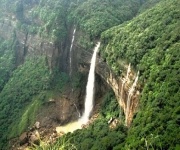
Nohkalikai and the Seven Sisters Falls deserve their reputation, but they are not the only places to see water around Sohra. Smaller falls often provide a stronger sense of landscape because you can hear birds, watch clouds move across the plateau and pause without competing with a large tour group for photographs.
Water levels change significantly through the year. The monsoon, generally from June to September, gives the falls their greatest volume, although heavy rain can make trails hazardous. October to April usually brings clearer conditions and more manageable paths, while the flow may be gentler. A local driver or guide can confirm whether a track is open after rain.
The five waterfalls below are especially appealing for travellers seeking a quieter day:
- Wei Sawdong Falls for a striking three-tiered descent
- Dainthlen Falls for open scenery and Khasi legend
- Kynrem Falls for a broad seasonal spectacle
- Lyngksiar Falls for a secluded forest setting
- Mawsawa Falls for a peaceful stop near rural communities
Wei Sawdong Falls
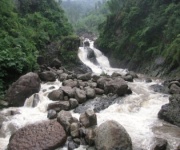
Wei Sawdong is one of the most photogenic waterfalls near Cherrapunjee, with water dropping through several turquoise pools enclosed by steep rock walls. Its layered shape makes it look almost designed, yet the surrounding forest and rough edges keep the setting firmly wild. The viewpoint is more compact than the major attractions, so early morning is the best time for stillness and softer light.
Reaching the lower viewpoints involves a descent on stairs and uneven ground. After rain, moss-covered surfaces can be slick, and the climb back up is more demanding than the short distance suggests. Comfortable shoes with a firm sole are essential; smooth sneakers or open sandals are poor choices.
Take time to look beyond the main pool. Ferns, dripping cliffs and shifting mist create the atmosphere, while the sound of falling water fills the narrow gorge. Swimming should be avoided unless local advice confirms that conditions are safe, as submerged rocks and sudden changes in flow can be difficult to judge.
Dainthlen Falls And Its Open Plateau
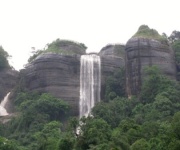
Dainthlen Falls lies in a wide, dramatic landscape where water tumbles over a rocky edge before disappearing into the valley. The falls are associated with the Khasi story of Thlen, a destructive serpent defeated by a local hero. The legend adds meaning to the unusual rock formations and helps explain why the site remains important beyond its scenic appeal.
Compared with enclosed gorge waterfalls, Dainthlen offers broad views across grassland and escarpment. It can feel particularly spacious in the late afternoon, when clouds gather over the plateau and the valley becomes layered in blue-grey tones. During the wet season, the main cascade grows forceful, while in drier months the rocks and channels become easier to study.
The approach is usually less strenuous than the stairway to Wei Sawdong, although exposed rocks may be slippery. Keep well back from edges, especially when the ground is wet or visibility drops. A short visit can be combined with other western Sohra attractions, but leave enough time to appreciate the landscape rather than treating it as a quick roadside photograph.
Kynrem Falls And Thangkharang Country
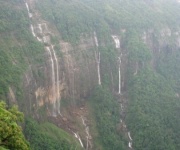
Kynrem Falls is among the tallest waterfalls in the area, descending in several stages through thick green hills. It is viewed from the Thangkharang Park side, where the wider setting includes forest, lawns and long views towards the plains of Bangladesh. The waterfall can be especially impressive after sustained rain, when separate streams merge into a powerful white ribbon.
The park environment makes Kynrem a comfortable choice for travellers who want a scenic stop without a strenuous trek. Even so, the best viewpoints may be damp, and cloud can obscure the lower valley. Visit early when possible, before tour vehicles arrive and before afternoon mist becomes dense.
Thangkharang also demonstrates how quickly conditions change in the Khasi Hills. A clear drive from Sohra may become cool and foggy within minutes. Carry a light waterproof layer even if the morning begins brightly, and avoid standing close to railings or exposed viewpoints during gusty weather.
Lyngksiar And Mawsawa
Lyngksiar Falls is suited to travellers who prefer a quieter, more rural experience. The waterfall is reached through a less polished setting than the major viewpoints, and the surrounding slopes, vegetation and village atmosphere are part of the appeal. Its appearance varies with rainfall, from a delicate seasonal fall to a fuller stream cutting through the green hillside.
Mawsawa Falls offers a similarly understated stop. Rather than relying on one huge drop, it combines forest, rock shelves and flowing water in a calm natural setting. It may not produce the same instantly recognisable photograph as Nohkalikai, but that is precisely why it can feel more rewarding for visitors who value space and atmosphere.
Conditions and access can change locally, particularly after landslips or intense rain. Ask your accommodation or driver about the current route before setting out. Respect village land, avoid crossing private paths without permission and follow any signs placed by residents or local authorities.
Useful Kit For A Waterfall Day
- Waterproof walking shoes with reliable grip
- A compact rain jacket and a dry change of clothes
- Reusable water bottle, snacks and personal medication
- Small towel, insect repellent and a sealed phone pouch
- Cash for local stops where card payments may not work
Planning The Walks
A private car with a local driver is usually the simplest way to link the waterfalls around Sohra. Roads can be narrow, winding and slower than the map suggests, especially when rain, roadworks or livestock affect traffic. Indian vehicles drive on the left, which will feel familiar to Australians, but the traffic patterns and overtaking style can be very different from driving around Adelaide or Perth.
If you hire a vehicle, confirm that your licence and insurance are accepted in India before travelling. An International Driving Permit may be required alongside your Australian licence, and local rental conditions vary. For most visitors, arranging transport through a Cherrapunjee tour operator reduces stress and allows a driver to adjust the itinerary according to weather.
Start early for the quietest experience and carry small notes in Indian rupees. A roadside tea, a simple meal or a local entry fee may be inexpensive, but electronic payments and Australian cards are not reliable everywhere. Allow for unplanned pauses: mist, a village market or a clear valley view can easily add half an hour to the day.
A Practical Day-Bag Checklist
- Passport copy and a secure digital backup
- Indian rupees, phone power bank and offline maps
- Light fleece for cool viewpoints and evenings
- Biodegradable tissues, hand sanitiser and rubbish bags
- A basic first-aid kit with blister treatment
Travel Details For Australian Visitors
Australian passport holders generally need an Indian visa before arrival, and many travellers use the official e-Visa system. Check the current requirements, permitted entry points and processing times before booking flights, since visa rules can change. Keep your passport, visa information and accommodation details accessible during the journey.
There is no need to assume that every Meghalaya attraction operates like a national park in Australia. Entry arrangements, opening times and small local charges can differ by site. Your accommodation or tour provider can help verify practical details for the day, including whether a foreign visitor registration step applies to your route.
Flights from Sydney, Melbourne, Brisbane or other Australian cities commonly connect through an Indian hub before continuing towards Guwahati. From Guwahati, the road journey to Cherrapunjee takes several hours depending on traffic and weather. Build recovery time into a two- to seven-night Meghalaya holiday rather than trying to visit the waterfalls immediately after a long international connection.
Australians are accustomed to strong sun protection, but the cloud and rain of Sohra can make UV exposure easy to underestimate. Use sunscreen, carry a hat and drink regularly even on cool days. When returning home, clean mud from footwear and outdoor equipment and declare anything that may carry soil or organic material, as Australia’s Biosecurity Act 2015 imposes strict controls at the border.
Staying Safe And Respectful In Sohra
Waterfalls are powerful natural features, not swimming pools. Never stand beneath a torrent, climb wet rock faces or cross a stream simply to reach a better photograph. Flash floods can occur upstream even when the immediate sky looks clear, and a calm pool may conceal deep water or sharp stones.
Local communities manage many of the places visitors enjoy. Use marked paths, keep noise low and take all rubbish with you. Avoid plastic bottles where possible, and do not leave food scraps near trails. A small tip for a local guide, driver or community-managed viewpoint is appropriate when service has been helpful.
Sohra’s cultural landscape deserves the same care as its scenery. Ask before photographing people, homes or ceremonies, and dress modestly when visiting villages or religious places. The region also carries a rich colonial history; reading about the British-era bungalows can add context to the old buildings and layered identity of Cherrapunjee.
Choose accommodation that can explain local access and weather conditions, whether you prefer a resort, homestay or practical hotel. A knowledgeable host can often recommend the right waterfall for the day: a sheltered option in heavy rain, a clear viewpoint after a storm or a shorter walk when legs are tired.
Plan your Cherrapunjee escape around these quieter cascades and allow the landscape to set the pace. Explore available Meghalaya packages, organise transport and contact India Beacons Sojourn through Cherrapunjee.net to shape a waterfall-focused holiday that fits your time, comfort and travel dates.