





Six Nights in Cherrapunjee: A Complete Meghalaya Experience
Planning a trip from Australia to one of the wettest corners of the planet sounds odd to anyone raised on sun-baked summers in Adelaide or Brisbane's humid coast. Yet Cherrapunjee, perched on the southern edge of Meghalaya's Khasi Hills, draws travellers from Sydney, Melbourne and Perth precisely because it offers the opposite of what most Australians experience at home. The six-night package sold through India Beacons Sojourn has matured into the ideal way to sample this region, long enough to reach remote living root bridges and limestone caves, short enough to fit inside two weeks of annual leave.
This Meghalaya itinerary begins in Guwahati, climbs into the plateau around Sohra, and threads through forests, waterfalls, traditional villages and colonial-era bungalows before looping back. Below is a guide to what the week holds, how it lines up with Australian travel habits, and where to find practical booking details.
Why six nights is the sweet spot
Australian holiday-makers tend to plan in week-long blocks, often stretching long weekends into nine or ten days by tagging on a Saturday flight. A six-night stay inside Meghalaya fits neatly into that pattern. It leaves time for recovery from the Doha or Singapore stopover, two full days of highland exploration, a slower cultural day, and a return buffer before the flight home from Guwahati.
Racing through Cherrapunjee in two or three nights squeezes the best features into a blur. The Nohkalikai Falls deserve an unhurried afternoon, the double-decker root bridge at Nongriat swallows a full day, and Mawsmai Cave rewards a morning visit when the light hits the limestone. The itinerary spreads rest days across the week rather than front-loading them, which matters after twenty-plus hours in the air from Australia.
Waterfalls worth the detour
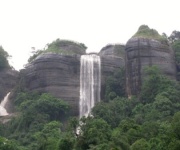
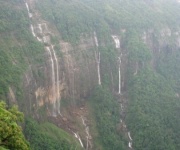
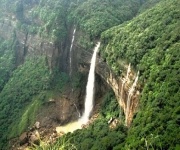
Nohkalikai drops 340 metres into a turquoise pool framed by rainforest, its spray drifting kilometres downwind. Seven Sisters Falls, a segmented curtain across the cliff face, is best appreciated from a viewpoint platform that most tour groups skip. Dainthlen, closer to town, offers a shorter walk and a quieter picnic ground where the local stream runs clear even in heavy weather.
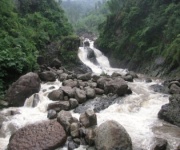
For Australians accustomed to the gorge walks of the Blue Mountains or the cascades around Mount Field in Tasmania, Meghalaya delivers a different scale entirely. The volume of water during the south-west monsoon is something even visitors from Cairns during the wet season rarely witness. A Cherrapunjee waterfalls photo journey gives a clear sense of the conditions to expect.
Photographers should bring more than a smartphone. Long exposure shots benefit from a tripod, and the variable light under the canopy demands fast lenses. Australians familiar with CASA drone rules should check the equivalent Indian regulations before flying above the cliff edges.
Living root bridges and Khasi heritage
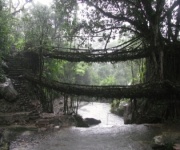
The living root bridges of the Khasi Hills are unlike anything in the Australian landscape. Ficus elastica trees have been trained over generations, sometimes two hundred years long, to span streams. The most photographed, at Nongriat, is a double-decker structure reached by 3,500 steps down and back up through the forest, with rainwater pooling in the steps during monsoon showers.
The package allocates a full day to Nongriat, including time with the local guides who maintain the bridges and a traditional Khasi lunch in the village. The Khasi matrilineal system, where inheritance passes through the mother's line, is briefly explained during the village walk, offering a cultural contrast to most Western norms. Nearby Mawlynnong, marketed as Asia's cleanest village, rounds out the day with bamboo dustbins, communal sweeping shifts and a sky-viewpoint platform above the Bangladesh border.
Caves and limestone labyrinths
Mawsmai Cave is the easiest introduction to Meghalaya's cave systems, with electric lighting and short walkways. Arwah Cave, longer and less commercialised, requires a headlamp and offers fossilised shells embedded in the limestone walls. Krem Mawmluh, one of the longest caves in the subcontinent, is for those who book the more adventurous trek through its river passages.
For Australians used to Jenolan Caves in New South Wales or the Buchan Caves in Victoria, the scale is again different. The cave entrances swallow entire hillsides, and the streams inside can rise rapidly during heavy rain. Guides from the package carry helmets, lights and first-aid kits, and they know which passages flood first. Birders should also watch for the great hornbill in the forests above, often spotted during a dawn session with a Khasi naturalist who knows the calling trees.
Heritage bungalows and Khasi cuisine
Accommodation is where the package distinguishes itself. Rather than chain hotels, India Beacons Sojourn places guests in a mix of colonial-era bungalows, eco-lodges and family-run guesthouses. The British-era properties, set on the Sohra plateau, were originally built for tea planters, district officers and missionaries, and their broad verandas, fireplaces and wooden floors offer a calmer base than a city hotel.
Those curious about the lineage of these buildings will appreciate the history of the British era bungalows in Cherrapunjee, which traces their role from the 1800s through independence into today's tourism era. Several bungalows have been restored using reclaimed timber, period fittings and locally woven cotton, and meals lean toward Khasi classics such as smoked pork with bamboo shoot, jadoh, and pickled bamboo shoots.
Practicalities for Australian travellers
Australian passport holders require a valid Indian visa. The e-Visa scheme accepts applications online and grants a 30-day tourist visa suitable for a six-night Cherrapunjee stay, provided the entry point is listed. Australians typically fly into Delhi, Mumbai or Kolkata, then connect to Guwahati on a domestic flight, and from Sydney return fares in economy generally range from AUD 1,400 to 2,200 depending on season with Singapore Airlines, Malaysia Airlines and Qantas offering the most convenient one-stop routings.
The Indian rupee trades well against the Australian dollar, so on-the-ground costs usually come in well below what visitors spend on a comparable week in Sydney or Melbourne. ATM access is reliable in Guwahati and around Sohra, though smaller villages along the route prefer cash. Mobile connectivity is patchy in the hills, the package includes a local SIM option on arrival, and most bungalows offer Wi-Fi though speeds slow during heavy rain.
When to travel from Australia
Cherrapunjee is famous for rain, and the monsoon actually makes the destination what it is. June through September brings the waterfalls to full volume, turns the forests emerald, and occasionally closes minor roads. October to February is drier, cooler, and arguably the most comfortable window for Australian travellers escaping their own summer heat, with December-January school holidays aligning perfectly with Meghalaya's cool, clear season when daytime temperatures sit around 15-20°C and the fog lifts by mid-morning.
Travellers from Perth or Adelaide who want to swap dry December heat for cool highland mist will find this an easy mental shift. The package runs year-round, but availability narrows around Diwali and the Khasi festival of Shad Suk Mynsieng, when homestays fill quickly.
Packing and preparation checklist
- Pack a lightweight rain jacket and quick-dry trousers; the south-west monsoon lives up to its reputation, even in shoulder months.
- Bring sturdy hiking shoes with good grip for the Nongriat steps and cave floors; thongs or runners are unsuitable.
- Carry a small headlamp for the longer caves and for power cuts, which still occur in remoter villages.
- Carry small Indian rupee notes for village shops and entry fees; cards are rarely accepted outside the main town.
- Register for the Protected Area Permit if planning side trips near the Bangladesh border; the tour operator handles most paperwork.
- Keep a copy of passport and visa separately from the original, and store digital scans in cloud storage accessible from any device.
- Reserve the package well ahead of Australian school holidays, when demand from Sydney and Melbourne families spikes.
Reach the India Beacons Sojourn team through the contact details on cherrapunjee.net to check departure dates, request a tailored version of the itinerary, or confirm space during the Australian travel windows above. Early booking is the surest way to secure the heritage bungalow of your choice and to align the trip with flight deals from your nearest Australian capital.