





The ultimate guide to Cherrapunjee’s Seven Sisters Falls
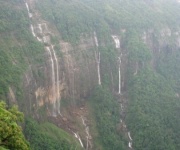
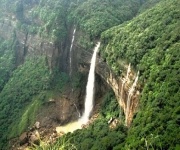
Seven Sisters Falls is one of the most memorable sights in the Cherrapunjee region of Meghalaya. Known locally as Nohsngithiang Falls, this broad cascade appears as seven ribbons of water descending over the limestone cliffs of the Khasi Hills. The falls are especially striking during the monsoon, when rain-fed streams gather strength and turn the escarpment into a dramatic wall of silver.
The viewpoint lies near Mawsmai village, a short drive from the main Cherrapunjee tourism area. It is easy to combine with Mawsmai Cave, Eco Park, and other nearby attractions, making the falls a practical stop on a day of sightseeing. However, the experience changes greatly with weather, visibility, and the season in which you visit.
A rewarding trip involves more than arriving at a viewpoint, taking a photograph, and leaving. Knowing when to go, what to expect on the road, how to stay safe, and where to pair the visit with other attractions will help you appreciate this famous Meghalaya waterfall at its best.
Why the Seven Sisters Falls are special
The name refers to the seven distinct streams that traditionally form the waterfall as they plunge from the plateau. Depending on rainfall and cloud cover, the separate channels may look sharply defined or merge into a wider, more powerful cascade. The surrounding cliffs, green valleys, and distant hills give the scene its characteristic scale.
The waterfall is also called Nohsngithiang Falls, a Khasi name associated with the location and its natural setting. In clear conditions, the water drops in a long, nearly vertical descent before disappearing into the forested landscape below. The view is expansive rather than intimate: visitors generally see the falls from across the valley, which makes the viewpoint ideal for landscape photography.
The falls are part of a wider Cherrapunjee experience shaped by rain, rock, and living traditions. Meghalaya’s limestone terrain has created caves, cliffs, gorges, and underground waterways, while Khasi communities have developed distinctive relationships with the region’s forests and hills. A visit becomes more meaningful when the waterfall is understood as one feature within this larger natural and cultural landscape.
Finding the viewpoint and planning the route
Seven Sisters Falls is situated in the Sohra area, often written as Cherrapunjee or Cherrapunji, in the East Khasi Hills district. From Shillong, the drive generally takes several hours depending on traffic, road conditions, and stops. From central Sohra, the viewpoint is much closer and can usually be reached as part of a local sightseeing circuit.
Road travel is the most convenient way to reach the falls. Private taxis, hired cars, and organized Meghalaya tours are commonly used because public transport between individual attractions can be limited. The route includes winding hill roads, so journeys may take longer than the map distance suggests. Leave time for scenic stops rather than planning every minute of the day.
The viewpoint area is designed for a straightforward visit, with a place to stop and observe the falls. Facilities can be basic, and conditions may be wet or muddy during the rainy season. Carry small amounts of cash for local expenses, keep valuables protected from rain, and avoid assuming that mobile connectivity or card payment will be reliable throughout the circuit.
The best time to see the waterfall
The monsoon, broadly from June through September, is when Seven Sisters Falls usually has its greatest volume. Frequent rain feeds the channels and creates the full, powerful appearance that attracts most visitors. The atmosphere can be atmospheric and dramatic, with mist moving across the valley and clouds changing the view within minutes.
Rainy weather can also hide the falls completely. A low cloud bank may settle over the cliffs, while strong showers can make photographs difficult and roads slower. If you travel during this period, build flexibility into your schedule and accept that the most famous view may come and go rather than remain visible all day.
October and the months following the monsoon often offer a useful balance between greenery and clearer skies. The waterfall may be less forceful than in peak monsoon, but visibility can improve considerably. In the drier months, the flow may reduce, and the seven separate streams may appear thinner; the surrounding cliffs and valley remain scenic even when the cascade is not at its strongest.
| Travel period | What you may see | Practical considerations |
|---|---|---|
| June to September | Maximum water flow, intense greenery, misty views | Expect rain, slippery surfaces, and changing visibility |
| October to November | Green landscapes with more frequent clear spells | A strong option for sightseeing and photography |
| December to February | Cooler weather and clearer conditions | Water flow may be reduced; mornings can feel chilly |
| March to May | Pleasant hill travel with developing pre-monsoon showers | The falls may look less dramatic than in the wet season |
What to do at Seven Sisters Falls
The main activity is enjoying the panoramic view from the designated lookout. Give yourself time to observe how the water divides across the cliff face, especially when sunlight breaks through the clouds. Early or late in the day can bring softer light, although visibility depends more on weather than on a guaranteed “perfect” hour.
Photography works best with a wide-angle lens or a phone held horizontally. Include foreground vegetation, the valley, and the cliff edge to show the waterfall’s scale. A small tripod can be useful in dim conditions, but avoid placing equipment where it obstructs other visitors. Protect cameras and phones with waterproof covers because sudden showers are common around Sohra.
The falls are not generally approached as a swimming or walking destination. The viewpoint is the safe and practical way to experience the cascade, and visitors should never attempt to climb barriers, move toward unstable edges, or follow unofficial paths. The cliffs become particularly hazardous when wet, and the force of the waterfall and hidden drops cannot be judged accurately from a distance.
Nearby attractions to add to your day
Mawsmai Cave is one of the easiest companions to a Seven Sisters Falls visit. Its limestone passages offer a different view of the same region’s geology, with narrow sections, natural chambers, and textured rock surfaces. Wear shoes with reliable grip and expect wet patches inside, particularly after rain.
Eco Park provides another broad outlook across the surrounding landscape and is often included in local sightseeing routes. On clear days, the open views help visitors understand the plateau, valleys, and distant plains more clearly. The park and waterfall work well together because one emphasizes a waterfall within the valley while the other offers a wider regional perspective.
Other Cherrapunjee attractions may include Nohkalikai Falls, Dainthlen Falls, Arwah Cave, Wei Sawdong Falls, and nearby living root bridges, depending on route and available time. Distances and road conditions vary, so a two-day or longer stay allows a more comfortable pace than trying to cover every landmark in a single outing.
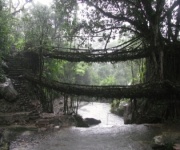
The living root bridges deserve particular care in planning. Many require walking on uneven trails and steps, and the most famous examples are not located beside the Seven Sisters viewpoint. Visitors should check current local access, weather, and walking conditions before including one in the itinerary rather than treating it as a quick roadside stop.
Essential advice for a comfortable visit
Cherrapunjee’s weather can shift quickly, so practical clothing matters more than elaborate equipment. A waterproof jacket, quick-drying trousers, and shoes with good traction are useful in every wet-season itinerary. Even during a dry forecast, pack protection for electronics and a light layer for cooler hill conditions.
Avoid littering, loud behavior, and damage to vegetation or local facilities. Stay within marked viewing areas and listen to instructions from local staff or guides. The landscape is shared by residents, travelers, and wildlife, and respectful conduct helps preserve the quality of the destination.
Use the following checklist when preparing for a waterfall-focused day:
- Carry a waterproof jacket, phone pouch, and a small towel.
- Wear closed shoes with firm grip instead of smooth sandals.
- Bring drinking water and light snacks, especially when visiting several attractions.
- Keep cash available for entry fees, refreshments, parking, or local transport.
- Check the weather and road conditions before leaving your hotel or resort.
A local guide can add useful context about Khasi place names, seasonal water flow, village routes, and nearby viewpoints. Tour operators can also arrange transport and accommodation around the attractions, which is helpful when the weather changes or when travelers want to combine Sohra with Shillong and other Meghalaya destinations. Visitors can learn more about the local travel team organizing regional stays and sightseeing services before making booking arrangements.
Choosing the right way to visit
A short day trip from Shillong is possible, but it can feel rushed once driving time and the number of nearby sights are included. Travelers who want to see Seven Sisters Falls, Mawsmai Cave, a second waterfall, and a viewpoint should consider staying in or near Sohra. An overnight stop provides more flexibility if mist blocks the first attempt.
A multi-day Cherrapunjee vacation package can be convenient for families, first-time visitors, and travelers without their own vehicle. Transport, accommodation, and sightseeing can be coordinated in advance, reducing the need to negotiate separate rides between attractions. It also gives the itinerary room for weather-related changes, which are a normal part of travel in the wettest parts of Meghalaya.
Independent travelers may prefer selecting a hotel or resort in Sohra and arranging local taxis for individual days. This approach offers greater control over departure times and stops, although it requires more advance coordination. Ask about seasonal road access, expected driving times, meal availability, and whether the property can help arrange a local driver.
Whichever style you choose, avoid treating the waterfall as a guaranteed single-photo stop. Cloud, rain, and sunlight are part of its character. Allow a little time at the viewpoint, keep the route flexible, and combine the visit with attractions that remain enjoyable even when the falls are partly covered.
Seven Sisters Falls captures the essence of Cherrapunjee: dramatic rainfall, steep limestone country, changing mountain weather, and wide views shaped by the Khasi Hills. Visit during the wet season for maximum water, choose the shoulder months for a clearer balance, and prepare properly for slippery roads and sudden showers.
Start planning your Sohra journey with enough time for the waterfall and its neighboring caves, parks, viewpoints, and living root bridges. A thoughtfully arranged stay makes it easier to experience the landscape at its own pace and turn a brief stop at Nohsngithiang Falls into a memorable Meghalaya holiday.