




Discovering the Sohra region's remarkable flora and fauna
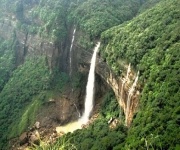
Sohra, the name locals use for Cherrapunjee, holds a quiet kind of magic that few corners of the world can match. Tucked into the East Khasi Plateau and drenched by some of the highest precipitation on Earth, the hillsides have grown into a layered world of mosses, ferns, orchids and ancient forest groves. Travellers stepping off the road from Shillong often feel they have crossed into another climate entirely, where every ravine hides a waterfall and every trunk wears a cloak of green.
For visitors arriving from Sydney, Melbourne or Brisbane, the contrast with the woodlands back home is immediate. Australian travellers used to long drives through dry sclerophyll forests will find themselves in a sub-tropical evergreen world where visibility at ground level is measured in steps, not metres. The air smells different, the birdsong is denser, and the understorey is alive with movement at every altitude.
The rainforest canopy and endemic trees
The canopy around Sohra is constructed from species that have evolved to deal with relentless moisture. Trees such as the Khasi pine and various figs form an upper tier that can reach thirty metres, while the middle story is woven with holly, laurel and numerous endemic relatives of plants found nowhere else on the planet. Below them, a permanent shade layer of shrubs, saplings and seedlings keeps the humidity close to a hundred percent for much of the year, even when the sun briefly breaks through.
Botanists have long treated the Khasi Hills as a living laboratory. The British surveyor J.D. Hooker and his colleague Thomas Thomson collected specimens here that still anchor herbarium collections at Kew, and contemporary scientists continue to name new species from these valleys. Walking the trails around Mawsmai and Mawmluh, you can spot climbing vines with strap-like fronds, tree ferns that look like something from a Cretaceous film set, and strange parasitic plants clinging to bark without ever touching the soil.
Australian trekkers who know the Gondwana-era rainforests of the Tarkine in Tasmania will recognise a handful of familiar structural cues, even though the species themselves are different. The layered architecture, the soft forest floor, the way light filters through a thousand shades of green, are echoes of ancient forests that once connected southern lands. Bringing a small notebook on a guided walk often rewards visitors with identifications they would otherwise walk straight past.
Orchids and wildflowers of the Khasi Hills
Meghalaya is sometimes described as a kingdom of orchids, and Sohra sits near its heart. The region's cool, damp slopes support an astonishing number of species, from the tiny bulbophyllum clinging to roadside trees to the showier dendrobiums that burst into bloom during the warmer months. Several are endemic, meaning a sighting here is the only place on the planet you will ever see them in their natural setting.
The flowering calendar shifts with the altitude: lower valleys may be in colour while the higher ridges are still waiting for their cue. Travellers visiting between March and October usually encounter the richest displays, though the post-monsoon months have a softness of their own, with mist curling through the blooms at dawn. Local guides often know exactly which fallen log hosts a particular colony, and asking respectfully before any photograph goes a long way toward preserving that trust.
For those planning a wider South-East Asian itinerary, it is worth thinking about how the stops complement one another. A family itinerary that includes a stop at Malaysia's family theme parks can be balanced beautifully with a few quieter days in Meghalaya, where the entertainment comes from waterfalls and the natural soundtrack of the forest rather than roller coasters. Combining the two creates a rhythm that suits travellers of mixed ages and energy levels.
Birds worth watching in the mist
The birdlife around Sohra rewards patience. The Great Hornbill, with its enormous yellow beak and whooshing wingbeats, is the bird that visitors remember most, but the supporting cast is equally striking. Species like the Silver-eared Mesia, the Black-eared Shrike-babbler and several laughingthrushes move through the mid-storey in sociable groups, while smaller flycatchers sally out from exposed perches to snatch insects mid-air.
Early mornings are the most rewarding window, particularly when a thin mist still hangs in the valleys. Birders familiar with sites like Lamington National Park or the Atherton Tablelands in Queensland will feel at home with the layered approach, sitting quietly on a forest edge and letting the birds come to them. Binoculars are essential; a spotting scope is a luxury that transforms long minutes of searching into genuine identifications.
Keep an ear out for strange calls coming from the canopy. Many Sohra birds sound nothing like their Australian counterparts, and a handful have vocalisations that take a moment to place. Listening carefully while a guide points to a perched bird brings a depth that photographs alone rarely convey.
Mammals, primates and small wildlife
Sohra is home to several primate species, including the Capped Langur and the Golden Langur, both of which can be glimpsed along forest trails with a measure of luck and quiet. The langurs, with their long tails and graceful movements, are particularly rewarding to watch as they leap between branches in the early morning. Smaller mammals, ranging from various species of squirrels and porcupines to civets and the occasional red panda in the higher, more remote forests, keep mostly to the undergrowth.
Reptiles and amphibians thrive in the constant moisture. Tiny frogs the size of a thumbnail call from leaves and damp stones, while several lizard species bask on trailside logs. Visitors familiar with Australian wildlife regulations, particularly the strict rules that govern handling of reptiles under state biosecurity laws, will appreciate how important it is to look without touching here as well. Snakes are present but rarely encountered, and most are shy.
The insect life is where the diversity becomes most vivid. Butterflies in electric blues and soft ochres drift across clearings, beetles the size of a finger crawl along fallen branches, and the night air fills with the hum of cicadas and crickets. Photographers who travel with a macro lens often find these small forest-floor creatures the most rewarding subjects of the entire trip.
Trails, lookouts and hidden corners
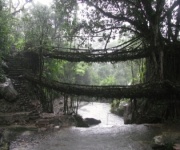
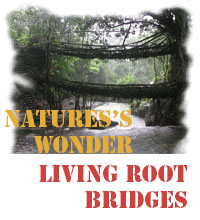
Several marked trails around Sohra wind through the richest habitats, and the journey shifts dramatically depending on the season. The double-decker living root bridges near Nongriat sit at the heart of a particularly biodiverse valley, where every step down reveals new species at each altitude. Living root bridges themselves are biological structures, grown over decades from the roots of rubber fig trees trained by Khasi communities.
Lookouts such as those around the Mawsmai cave area and the various cliff edges near Sohra offer sweeping views that help visitors read the landscape. From these vantage points, the patchwork of fields and forests becomes legible, and the relationship between human settlement and biodiversity comes into view. Local trails often pass through community forests where medicinal plants, fruit trees and protected groves sit side by side.
Visitors planning their trip should bear in mind that Australian travellers need a valid Indian visa, easily obtained as an e-visa before departure. The Department of Foreign Affairs and Trade smartraveller service also publishes regularly updated advisories that are worth checking well before booking. The monsoon months bring spectacular greenery but also reduced visibility, while the cooler dry months are generally the most comfortable for long forest walks.
Guidelines for spotting flora and fauna respectfully
- Stay on marked trails and follow your local operator's instructions at all times.
- Keep voices low and avoid sudden movements, particularly around known nesting or feeding sites.
- Never feed wildlife, no matter how approachable a macaque or langur may appear.
- Use a telephoto lens or binoculars rather than approaching animals closely.
- Carry out all litter, including biodegradable waste such as fruit peel.
- Hire a local guide, whose knowledge of trails and species transforms a simple walk into a meaningful encounter. Choosing the-top-reasons-to-choose-a-local-tour-operator-for-cherrapunjee is one of the single best ways to support both the local economy and conservation in equal measure.
- Check the latest Australian smartraveller advice before you travel, and confirm your e-visa status well in advance.
Reach out to the team at India Beacons Sojourn through the contact page to begin shaping a tailored itinerary around Sohra's wild side, from a gentle two-night introduction to a full week of forest walks, birding mornings and quiet evenings by the fire in a local cottage. The rain is part of the experience, the wildlife part of the world, and the welcome part of what makes this corner of Meghalaya linger long after the flight home to Sydney or Perth.