




Visiting Mawlynnong Village in Meghalaya
Mawlynnong is a small village in Meghalaya’s East Khasi Hills, close to the Bangladesh border and surrounded by lush forests, betel nut palms, streams, and rolling green landscapes. It became widely known as Asia’s cleanest village, a reputation built through community participation, careful waste management, and a strong local culture of public cleanliness.
The village offers a gentle contrast to the dramatic waterfalls and caves of nearby Sohra, also called Cherrapunji. Visitors come to walk along tidy lanes, see traditional Khasi homes, visit the famous living root bridge at Riwai, and enjoy wide views from a bamboo skywalk. The experience is simple, quiet, and rooted in everyday village life rather than large-scale tourism.
A visit works well as a day trip from Shillong or as part of a longer Meghalaya holiday. Travelers planning several destinations can find useful regional details, accommodation information, and Meghalaya travel packages while building an itinerary around Mawlynnong, Sohra, Shillong, Dawki, and nearby villages.
Reaching Mawlynnong from Shillong and Sohra
Mawlynnong is approximately 90 kilometres from Shillong, and the drive generally takes three to four hours depending on traffic, road conditions, and stops. The route passes through forested hills and rural settlements, making the journey part of the sightseeing experience. Hiring a private vehicle is usually the most convenient option, especially for families or travelers combining the village with Riwai and Dawki.
From Sohra, the distance is roughly 80 to 90 kilometres. A direct transfer can take several hours, so many visitors choose to spend a night in or around Sohra before continuing to Mawlynnong. Shared taxis may be available on parts of the route, but schedules are less flexible than a reserved car.
The final approach includes winding hill roads and stretches where mobile connectivity may be limited. A driver familiar with Meghalaya is helpful during the rainy season, when heavy showers can slow travel. Start early to make the most of daylight and avoid rushing through the village’s attractions.
What makes the village distinctive
Mawlynnong’s clean appearance is connected to local responsibility rather than a single tourist project. Residents have traditionally encouraged households to keep streets and paths free of litter. Bamboo dustbins are placed around public areas, and visitors are expected to use them. Waste collection, drainage maintenance, and village rules are supported by community involvement.
The village’s environmental character is also visible in its architecture and surroundings. Bamboo features heavily in bins, viewpoints, fencing, and small structures. Gardens are maintained around homes, while narrow paths lead through a landscape of orchids, ferns, areca palms, and subtropical vegetation.
The phrase “Asia’s cleanest village” attracts attention, but the deeper appeal is the opportunity to observe how a rural community manages shared spaces. Mawlynnong is not a theme park or a heavily commercialized attraction. Its appeal depends on residents’ daily habits, which means visitors should keep noise low, avoid littering, and treat private homes and religious sites with care.
Sights around Mawlynnong
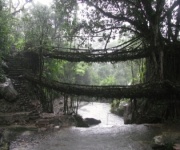
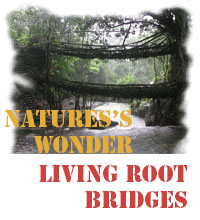
The most famous nearby attraction is the living root bridge at Riwai, a village located a short drive from Mawlynnong. Khasi communities create these bridges by guiding the aerial roots of rubber fig trees across streams and allowing them to strengthen over many years. The result is a natural structure that can support people while blending into the forest.
Reaching the bridge usually involves a walk along steps and uneven paths. During the monsoon, the trail can become slippery, but the surrounding greenery is especially vibrant. Comfortable shoes with good grip are more useful than fashionable footwear, and visitors should allow time to enjoy the forest rather than treating the bridge as a quick photo stop.
Mawlynnong’s bamboo Sky View, sometimes called the Mawlynnong viewpoint, rises above the tree canopy and offers views toward the plains of Bangladesh on clear days. The structure is modest and may sway slightly, so follow local instructions and avoid overcrowding it. The Balancing Rock, a naturally poised stone near the village, is another brief stop often included in local tours.
A small church and village lanes provide additional places to explore. The settlement is best experienced slowly: notice the gardens, listen to birds, and observe the way homes and public paths fit into the landscape. Photography is welcome in public areas, but ask permission before photographing residents or entering private property.
When to go and what to expect
Mawlynnong can be visited throughout the year, although each season creates a different experience. The monsoon, generally from June to September, brings heavy rainfall, full streams, mist, and intensely green forests. It also creates slippery paths and occasional travel delays. Anyone visiting during this period should carry waterproof bags, a rain jacket, and footwear suitable for wet ground.
October to April is often more comfortable for walking and road travel. Skies can be clearer, making the Bangladesh plains more visible from the Sky View. Winter mornings may feel cool, while the days are generally pleasant for exploring. May can bring pre-monsoon showers and changing weather, but the landscape remains attractive.
Accommodation in Mawlynnong is generally made up of homestays and small guesthouses rather than large hotels. Staying locally gives visitors more time to explore and supports village households. Rooms may be simple, and facilities can vary, so travelers should check what is included before booking. Electricity, hot water, and internet access may not match city standards.
Food options are also modest. Local meals may include rice, seasonal vegetables, dal, pork, chicken, or fish, depending on the homestay. Carrying drinking water and a few snacks is sensible, particularly when visiting Riwai or traveling onward to Dawki.
Planning a day trip or overnight stay
Mawlynnong is often included in a broader Khasi Hills itinerary. A day trip can cover the village, Sky View, Balancing Rock, and Riwai’s living root bridge, though the long drive from Shillong leaves limited time for unhurried exploration. An overnight stay makes the journey more relaxed and allows visitors to experience the settlement in the quieter early morning and evening.
Travelers coming from Sohra can combine the trip with other East Khasi Hills destinations, but the distances between attractions should be considered carefully. Meghalaya’s roads are scenic yet slow, and a route that looks short on a map may require several hours. Building in extra time helps accommodate weather, meal stops, and walks.
| Travel style | Recommended duration | Best for | Main considerations |
|---|---|---|---|
| Shillong day trip | One full day | First-time visitors with limited time | Early departure and several hours on the road |
| Shillong overnight | Two days, one night | Travelers wanting a calmer visit | Book a homestay in advance |
| Sohra and Mawlynnong circuit | Two to three days | Waterfalls, caves, and village scenery | Plan road transfers carefully |
| Mawlynnong and Dawki | Two days or more | Village landscapes and river views | Border-area travel may require flexible timing |
| Slow village stay | Two nights or more | Walks, photography, and cultural immersion | Facilities are simple and availability is limited |
Before setting out, confirm current entry arrangements, local vehicle access, and accommodation availability. Some attractions may have locally managed fees, and rules can change during festivals, heavy rain, or maintenance periods. Indian visitors generally need standard identity documents for travel, while international travelers should carry a valid passport, visa, and any required permits for their wider Meghalaya route.
Respectful ways to explore
Mawlynnong’s reputation depends on behavior that visitors can easily support. Keep all wrappers and bottles until a suitable bin is available, and avoid leaving food waste along forest trails. Refillable water bottles reduce disposable plastic, while a small waterproof bag can hold personal waste during longer walks.
The village is home to people going about their daily lives. Ask before photographing homes, children, ceremonies, or individuals. Dress modestly, especially around churches and community spaces, and keep voices low near residential areas. Do not climb on fragile structures, remove plants, or treat the living root bridge as playground equipment.
A responsible visit can also support the local economy. Choose a village homestay when practical, eat at local establishments, and purchase crafts or produce directly from residents. Paying local guides for forest walks helps preserve knowledge about the area and provides an income connected to conservation.
Helpful habits for a smoother visit
- Carry sturdy walking shoes, a light rain jacket, sunscreen, and insect repellent.
- Bring cash because card payments and ATMs may not be dependable in rural areas.
- Use reusable bottles and bags, and take non-biodegradable waste back if no collection point is available.
- Ask permission before taking photographs of residents, homes, or religious activities.
- Keep extra time in the itinerary for rain, road delays, and walks around Riwai.
Adding Mawlynnong to a Meghalaya holiday
The village fits naturally into a multi-day Meghalaya journey. A longer itinerary can begin in Shillong, continue to Mawlynnong and Riwai, travel toward Dawki and the Umngot River, and then move to Sohra for waterfalls, caves, and dramatic escarpments. This sequence balances cultural landscapes with the region’s famous natural attractions.
Travelers interested in local traditions may also encounter Khasi food, village stories, traditional architecture, and community-led tourism. The experience is strongest when approached with patience. Mawlynnong is small, and its charm lies in details that can be missed when visitors try to cover too many stops in a single afternoon.
The village is especially suitable for couples, families, photographers, and travelers who prefer nature and community experiences over crowded commercial attractions. It may be less suitable for those seeking nightlife, luxury resorts, or a packed schedule of developed facilities. Setting realistic expectations makes the visit more rewarding.
A well-planned trip to Mawlynnong brings together clean village lanes, living root bridges, forest trails, and panoramic hill views. Reserve your transport and homestay early, allow enough time for the roads, and include the village as part of a thoughtful Meghalaya itinerary.