





Packing smart for a photography trip to Cherrapunjee
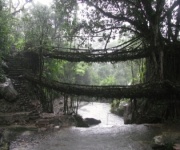
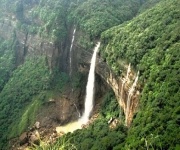
Cherrapunjee sits on the southern edge of Meghalaya's Khasi Hills, a region that records some of the highest annual rainfall on earth. Photographers travel there for the waterfalls that tumble from limestone cliffs, the living root bridges woven generations ago by the Khasi people, and the cave systems that hide rivers and stalactite chambers beneath the rainforest floor. Mist drifts through the valleys for much of the year, and when the sun breaks through, the light turns the mossy landscape into a shifting palette of green, silver and gold. The visual reward is immense, but the conditions are demanding on both body and equipment.
Travellers flying from Sydney, Brisbane or Melbourne usually connect through Delhi, Kolkata or Guwahati before driving up to Sohra. That means at least two flights, a long road transfer on winding mountain roads, and several days of humidity, drizzle and uneven terrain. A well-considered kit lets you focus on the shot rather than on leaking boots or a fogged lens. This guide walks through the gear and supplies worth carrying, with notes drawn from the practicalities faced by visitors who begin their journey on the east coast of Australia.
Camera bodies, lenses and glass for shifting light
Two bodies are better than one in Cherrapunjee. The Khasi Hills deliver a mix of soft, low-contrast scenes under heavy cloud and sudden shafts of golden light after a squall. Having a second body with a different focal length attached lets you catch the moment a rainbow forms over Nohkalikai Falls without fumbling through a backpack in the rain. A weather-sealed full-frame model copes well with the humidity, though a well-treated APS-C body will also perform. Whichever system you bring, pack a microfibre cloth in a sealed zip bag and a rocket blower for the mist that creeps into every crevice.
Lens choice matters more than megapixel count. A wide zoom in the 16-35mm range captures the scale of waterfalls like Seven Sisters and Wei Sawdong, while a 70-200mm lens pulls in distant detail across the valley. A fast standard prime, around 35mm or 50mm, earns its place for village portraits and the textured bark of the rubber fig trees used in root bridge construction. If your kit allows, add a macro lens for orchids, frogs and the tiny crimson flowers that cling to cliff faces after rain.
Filters earn space in the bag. A circular polariser cuts glare off wet leaves and deepens the colour of the rainforest canopy. A set of neutral density filters lets you use longer exposures at the falls, smoothing the water into silk even in the grey light of the monsoon. A graduated ND is useful at viewpoints where the bright sky would otherwise blow out the foreground. Carry them in a hard case, because the rocky paths leading to lookouts are unforgiving on dropped glass.
Rain covers, dry bags and humidity control
Meghalaya is not a place to trust the weatherman. Squalls arrive with little warning, and a fine drizzle persists for hours. A dedicated camera rain cover that wraps around the body and lens is worth more than a plastic bag. Look for one with a clear panel so you can still read the top dial and see the rear screen. Pair it with a strap or harness so you can shoot one-handed under a tree while the downpour passes.
A waterproof pack cover is the second line of defence. Many popular hiking packs sold in Brisbane and Melbourne outdoor stores already include one tucked into a small pocket. Pair it with a dry bag inside the main compartment for anything that must stay absolutely dry: spare batteries, memory cards, a change of socks, and any paperwork you might need at a checkpoint. Silica gel packets scattered through camera bags help absorb ambient moisture during long spells between showers.
Once back at the resort, do not simply leave the gear to dry on a chair. Wipe down the body and lenses, leave the battery door open, and let everything acclimatise to the room before putting caps on. A small electric dehumidifier or even a box of reusable silica gel can prevent fungus from colonising your lenses over the course of a week. Local guides often have a drying room or a corner set aside for guest equipment, and it pays to ask at check-in.
Clothing for mist, mud and cool mornings
Layering is the rule of thumb for Meghalaya. Mornings can be a brisk 12 degrees at viewpoints above 1,400 metres, while midday climbs into the mid-twenties when the sun appears. A base layer that wicks moisture, a fleece or light down jacket, and a hard-shell raincoat with taped seams will see you through most conditions. Avoid cotton, which stays wet and cold against the skin for hours.
Trousers should be quick-dry and abrasion-tolerant. Zip-off styles work well for river crossings near the living root bridges, where you might wade knee-deep in cold water. A wide-brim hat keeps rain off the lens and off your face, and a buff or light beanie adds warmth on misty cliff walks. For photographers who shoot handheld for extended periods, fingerless gloves or convertible mitts keep hands warm without sacrificing dexterity.
Colours matter more than style. Neutral tones like olive, charcoal and stone blend into the environment, which earns more natural interactions with villagers and avoids startling wildlife in Mawsmai Cave or along forest trails. Bright reds and high-vis colours also draw the eye of curious children in villages, which can work for portraits but may shift the mood away from candid moments.
Power, batteries and staying connected
India runs on Type C, Type D and Type M plugs at 230 volts, 50 hertz. Travellers from Perth or Hobart will need a universal adaptor that accepts Indian round-pin sockets. Many Australian multi-adaptor sets sold at luggage stores in Melbourne's CBD already cover the right pins. Pack a small power board so you can charge camera batteries, a phone and a torch from a single wall outlet, which is useful in older guesthouses where sockets are scarce.
Batteries drain faster in the cool, damp air than they do on a Sydney summer afternoon. Carry at least three spares for the main camera body, two for the second body, and a power bank rated above 10,000 mAh for the phone. Cold-rated lithium batteries hold their charge better in the mist. Memory cards should add up to at least 256 GB across two or three cards so that a single failure does not cost a day's work.
Connectivity is patchy outside the main town of Sohra. A local SIM with a data pack works better than roaming, and booths in Guwahati airport sell prepaid cards to foreign visitors with passport and visa documentation. Offline maps downloaded before the trip cover most needs, and a small torch or headlamp is invaluable for cave visits where phone batteries often die from the cold.
Documents, money and travel logistics
Australians visiting India need a valid visa before departure, which is applied for through the official Indian e-Visa portal. Carry printed copies of the visa approval, passport, flight tickets and hotel confirmations, and store digital scans in cloud storage as a backup. Some viewpoints near the Bangladesh border require a special permit, and your tour operator can arrange the paperwork in advance. Travellers building a wider Indian Ocean itinerary often compare regional visa procedures, and the Mauritius visa portal is a useful point of reference alongside the Indian e-Visa system.
Currency exchange is straightforward at Guwahati airport, but Indian rupees are easier to manage in small towns if you carry a stash of smaller denominations for entry fees, tips and village donations. ATMs in Sohra accept foreign cards, though they occasionally run out of cash in peak season. Notify your bank before departure to avoid a frozen card at a critical moment, particularly if your home branch is in Adelaide or Canberra and the spending pattern suddenly looks unfamiliar.
Travel insurance that covers medical evacuation is essential in a region where the nearest major hospital is several hours away. Read the small print on camera gear cover; some policies cap single-item value and require separate rider policies for high-end equipment. Keep receipts for any gear bought specifically for the trip, as customs officials on departure may ask for proof of purchase for new electronics.
Footwear, daypack and trail comfort
Trails in the Khasi Hills are often slick with moss and red mud, even in the dry months. Waterproof hiking boots with a grippy Vibram sole prevent slips on the descent to Double Decker Root Bridge and the climb back out. Break them in around the Adelaide Hills or the You Yangs before the flight, because brand-new boots in monsoon conditions lead to blisters within hours.
A 25 to 30-litre daypack carries the day's essentials without weighing you down on steep paths. Look for one with a padded hip belt that transfers load to the lower body, a ventilated back panel for humid climbs, and external attachment points for a tripod. A rain cover that matches the pack's dimensions is more useful than a generic one floating loose inside.
Walking poles are optional but welcome on the longer hikes to Umshiang Root Bridge and the longer cave treks in the Jaintia Hills. They spare knees on the descents and add stability when crossing slick logs over streams. A small first-aid kit with blister plasters, antihistamines and water purification tablets rounds out the daypack and weighs almost nothing.
Health, hygiene and personal items
The food in Cherrapunjee is generally safe, but the water is not. Stick to bottled or filtered water throughout your stay, and use it for brushing teeth if you want to be cautious. Pharmacies in Sohra stock the basics, but bring paracetamol, rehydration salts, motion sickness tablets for the winding roads, and any personal prescriptions in their original boxes with a copy of the script.
Insect repellent with DEET or picaridin is useful for evenings outdoors, and a long-sleeve layer keeps mosquitoes at bay. Sunscreen still matters on bright days above the cloud line, and lip balm prevents cracking in the wind at higher viewpoints. A small pack of wet wipes and hand sanitiser is a small luxury that earns its space when mud and clay make a mess of hands and cameras.
Photography is patient work. Pack a notebook, or use a notes app, to record the location, time of day and settings of every keeper shot. Memory fades faster than memory cards, and a few lines of context turn a nice picture into a portfolio piece. Locally, the Khasi communities appreciate guests who learn a few words of the local greeting, and the courtesy often unlocks access to scenes that other visitors miss.
A pre-departure checklist for the camera bag
- Two weather-sealed camera bodies, a 16-35mm wide zoom, a 70-200mm telephoto, and a fast standard prime around 35mm or 50mm
- A dedicated rain cover, pack cover, hard filter case, and at least four silica gel packets for humidity control
- Universal power adaptor, a small power board, three spare camera batteries, and a 10,000 mAh power bank
- At least 256 GB of memory cards split across three devices, with a waterproof wallet for spares
- Waterproof hiking boots broken in on the Adelaide Hills or a similar trail before the flight
- Layered quick-dry clothing in neutral tones, a hard-shell raincoat, and a wide-brim hat for lens protection
- Travel insurance confirmed for medical evacuation and full camera gear, with printed copies stored separately from the originals
Wrapping up the kit list, what matters most is flexibility. Weather changes by the hour, light shifts in seconds, and the most rewarding frames often come after a wrong turn down a slippery path. Travellers who arrive prepared spend less energy worrying about gear and more time noticing the cathedral of bamboo, the slow fog lifting from the cliffs, or the face of a Khasi grandmother lighting incense at the village shrine. When you are ready to put a trip together, the team behind this site can be reached through the About Us page, where you can also browse the full range of multi-night packages that include guided visits to the most photogenic corners of the Khasi Hills.