




Restricted-area permits near Cherrapunjee
Cherrapunjee, also called Sohra in Meghalaya, has famous waterfalls that are straightforward to visit, yet nearby caves, forest paths, community land and sensitive heritage places have different entry conditions. A tourist permit may mean a local pass, a no-objection certificate, a guide-only authorisation or a community fee; these arrangements are not interchangeable.
For travellers from Sydney, Melbourne and Brisbane, a common mistake is treating an Indian tourist visa as permission for every destination. Open attractions, resort stays and transfers may need no site permit, but any controlled area requires its own current confirmation. Identify what is genuinely restricted, verify who grants access and allow approval time before locking in the rest of the holiday.
Separate entry permission from a tourist visa
An Indian visa establishes your eligibility to enter India. It does not grant access to a protected cave, forest compartment or privately managed trail. Likewise, a Sohra tourist registration or general sightseeing ticket may cover only the main visitor area rather than every site nearby.
Restrictions usually exist for conservation, landslide safety, community ownership or cultural sensitivity. Access can change with weather or conservation work, making old reviews unreliable. The operator should name the responsible authority, the exact place covered and the date of its latest check. Without those specifics, treat the excursion as unconfirmed rather than assuming a package includes approval.
Restricted status is not always a blanket ban on foreign visitors. Some sites apply a different process to non-residents, while others restrict everyone. Ask for the rule applying to an Australian passport holder on your specific date, and have the operator check with the Sohra administration, relevant forest office or community committee as appropriate.
What Australian visitors should carry
Australian passport holders should verify current Indian visa or eVisa requirements before purchasing anything. Eligibility and processing can depend on the passport and trip details, and a visa application does not secure a restricted-area approval. Carry the passport used for the application, visa approval, onward travel details and site permissions as originals, since police or tourism checkposts may inspect them.
Keep separate copies, an offline map and accommodation and operator contacts in case road closures cause delays. Check your Australian travel insurance for emergency treatment, medical evacuation, cancellation and activity exclusions; a policy can still exclude unapproved cave exploration. If access approval is critical, retain a spare day in Shillong before a Guwahati or Kolkata connection instead of risking a missed flight.
Before departure, check Smartraveller and the relevant Indian consular advice for passport, visa and health rules. These advisories change independently of Meghalaya’s local access arrangements, so international and on-the-ground requirements should be reviewed separately rather than treated as substitutes.
Caves, forests and community-managed trails
Caves around Sohra, Arwah and Nongriat do not all have the same status. Some close seasonally or for conservation, some require local permission or a guide, and others involve difficult ground. A waterfall ticket does not authorise a side trip into a cave. Request written details of the cave name, visitor limit, guide requirement, route and valid dates, then accept the local decision if conditions change.
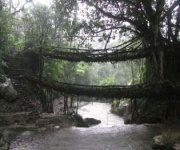
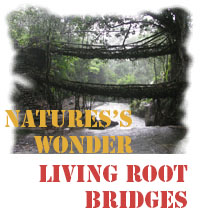
Living root bridges follow a similar rule. Famous examples may be easy to reach, while connecting paths cross private or community-managed land with separate fees or permissions. Nokrek and border-region landscapes further east have their own conservation and community considerations. Avoid unofficial trailheads and areas near state or international boundaries. Your operator should identify every landholder or committee that must approve the route.
Confirm whether a restriction applies to the return path as well as the entrance. A route can be open at one end and closed at another, and a guide may be required for only part of the journey. This is particularly important for caves and living-root-bridge walks, where the route rather than the destination determines the permit conditions.
Community access and visitor etiquette
Weekend markets in Melbourne and Sydney are familiar to many Australians, but the same courtesy applies in Shillong’s Bara Bazaar: ask before taking close photographs of vendors or stalls. In Khasi and Garo communities, permission also extends to ceremonies, sacred groves and burial places. Keep to marked paths, follow a community guide where requested and avoid treating people or restricted objects as photo stops.
Once access is sorted, ordinary evening experiences still need practical checks. Before adding one of the dark-sky stargazing locations to your schedule, confirm night access, road conditions and guide availability for the same date. These details keep the request precise:
- The exact cave, bridge, forest trail or viewpoint, not just “Cherrapunjee”
- The current opening status, visitor limit and seasonal closure notice
- The authority or community committee responsible for permission
- Whether a licensed or resident guide is compulsory
- The document or receipt to carry and where it must be shown
Ask whether community contributions are optional donations or obligatory access charges, and keep the receipt. That distinction matters when reconciling the final bill with the package quote. It also helps identify unauthorised charges if someone presents a general “permit fee” without explaining which site it covers.
Budgets, timing and operator questions
Permits can affect cost as well as access. Guides, entry charges, conservation levies and vehicle waiting time may sit outside a resort package, and some sites prefer cash. Australian travellers should convert live INR prices into dollars, check card fees and carry local currency for smaller settlements. Cards may work at established hotels, but network outages can interrupt payment, so do not rely on one method throughout.
Timing matters equally. Heavy monsoon rain, usually strongest between May and September, can close roads or destabilise trails, while the clearer October-to-March season still requires flexibility. In the Australian travel market, “permits arranged” should appear in writing with named sites, charges and responsibility for approval. Travellers comparing group holidays across Asia can learn more about booking group tours earlier; for Cherrapunjee, early planning helps secure a guide and confirm a restricted route before deposits become non-refundable.
Before paying a separate permission charge, establish who issues the receipt, whether the amount appears in the package and what evidence you will receive. A message promising instant approval without naming a site or authority is not a substitute for official confirmation. These points are particularly useful when comparing the many inclusions advertised by operators across the Australian travel market:
- Which immigration document you must carry and whether assistance is included
- Which site-specific permissions, guides and entry charges are in the price
- Whether approval is required before the deposit or before departure
- What happens to the booking if rain closes a cave or trail
- Which local contact handles an emergency or last-minute change
Compare access arrangements
Open attractions, community sites, restricted areas and conservation closures create four different travel conditions. Open access usually means standard entry requirements; community access can include a local fee or guide; a restricted area needs explicit approval; and a closure cannot be overridden by money or a general itinerary. Keep those categories separate when reading a brochure.
A written comparison makes obligations clearer. Request evidence that matches each place in your itinerary and covers the visit date and whole route, rather than only the town where you stay.
| Access arrangement | Common requirement | Evidence to request | Main limitation |
|---|---|---|---|
| Open public attraction | Standard entry ticket and occasional identity check | Opening hours and the latest closure notice | An open ticket does not cover adjacent paths |
| Community-managed site | Local fee, resident guide or landholder approval | Community contact, fee receipt and approved route | Community conditions govern access |
| Restricted cave or forest | Advance approval, a no-objection certificate or licensed guide | Written approval naming the site and dates | Approval may be withdrawn for safety |
| Conservation closure | No visitor entry | Alternative route or cancellation terms | Permission cannot override a closure |
| Complete tour package | Bundled transport, guiding and entry arrangements | Itemised inclusions and excluded charges | “Permits included” may cover only named sites |
Arrange access before you book the final night
Build the booking sequence around the most constrained part of the trip. Identify the exact caves, trails, community sites and viewpoints you want; have the operator confirm the issuing authority, approval process, guide allocation and fallback route. Keep passport and visa documentation ready at the same time, and allow working days for access checks before paying non-refundable costs that depend on approval.
Carry the written access summary offline, along with your guide’s phone number, accommodation details and emergency contacts. If a route changes, the document should show whether the alternative site has separate conditions. This is more useful than a general confirmation that simply names the town of Cherrapunjee.
Contact India Beacons Sojourn through the booking details on Cherrapunjee.net for a route-specific permit check. Ask them to state which approvals are required for your dates, which are included in the package and what happens if rain closes a site. With the access plan, guide arrangements and contingency route confirmed, you can reserve your Cherrapunjee stay and travel with fewer last-minute surprises.