





Swimming in Cherrapunjee’s natural waterfall pools
Swimming in the natural pools at Cherrapunjee’s waterfalls can be appealing, especially after seeing vivid blue water in photographs. Yet these are wild plunge pools, not managed swimming facilities. Currents, hidden rock shelves, unstable edges and sudden rises in water can turn a quick dip into a serious emergency.
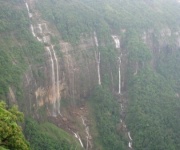
Sohra, widely known as Cherrapunji, sits in Meghalaya’s East Khasi Hills, where heavy rain constantly reshapes the falls and streams. Water that appears calm near a viewpoint may be flowing hard above it or draining through an undercut channel nearby. A clear sky at the attraction does not guarantee safe conditions upstream.
For Australian travellers, Cherrapunjee is usually reached through Guwahati rather than by a direct international flight. The journey continues over hilly roads, with monsoon traffic, landslides and journey times that can change quickly. Planning the waterfall visit as part of a broader Meghalaya itinerary gives you room to wait for suitable access and weather.
The safest answer to whether you can swim is site-specific. Signs, local guides, hotel staff and current authority notices matter more than old travel posts. Treat swimming as optional, check conditions on the day, and be prepared to enjoy the falls from a safe path if entry is closed or the water is unsuitable.
What Cherrapunjee’s plunge pools are really like
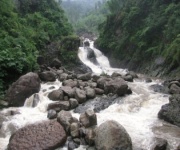
Cherrapunji’s rock basins are carved by rainwater, not built for recreational use. Some collect beneath a single cascade, while others sit beside smaller runoff channels. Their depth can change within hours, and the dark openings beneath white water may conceal far more force than the surface suggests.
| Location | Typical setting | Swimming conditions | Sensible approach |
|---|---|---|---|
| Elephant Falls | Cascades and basins around broad lower rocks | Strong runoff, slippery edges and changing depth; access may be restricted | View from designated paths unless local authorities explicitly permit entry |
| Dainthlen Falls | Shallow-looking pools near a roadside viewpoint | Fast channels, uneven bedrock and no lifeguard | Photograph and wade only in clearly permitted, shallow areas |
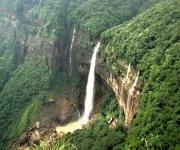
| Nohkalikai | Deep blue basin above a very high waterfall | Exposed edges, severe fall hazards and generally prohibited entry | Stay at the viewing area |
| Kynrem Falls | Tiered falls reached along a wooded route | Water levels rise quickly and trails can become hazardous | Use a local guide and regard pools as viewing features |
| Mawsmai Cave | A limestone chamber with a pool and wet steps | Low light, slippery surfaces and possible no-swimming rules | Join an authorised visit and do not enter the water without explicit permission |
Water may look intense from a distance but be deceptively placid above a drop. Conversely, a thin sheet falling over rock can hide a powerful recirculating current. Depth markers, ladders, lifeguards, rescue equipment and safe exits are generally absent, so there is no supervised fallback if a swimmer tires.
The best bathing candidates, where permitted, are broad, shallow margins with an obvious gentle outlet rather than a basin under active pour-off. Even then, the surrounding rock can be covered with algae, loose stones and moss. Test footing away from the current, and never rely on footwear for protection from a drop.
How waterfall currents change the risk
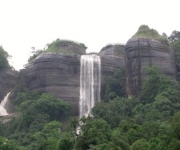
A waterfall creates a current that ordinary pool swimmers may not recognise. Water accelerates over the lip, pulls downward, rebounds underwater and can trap a leg against bedrock. This is why calm-looking basins below a fall can be more dangerous than the churning water that attracts attention.
Rainfall matters more than the amount visible from the car park. A storm over the catchment can send a surge down a channel while the visitor area still looks dry. Do not enter during or soon after heavy rain, and avoid pools fed by streams carrying leaves, branches or foam. A sudden increase in noise, cloud, vibration or debris is a clear signal to leave.
Never swim alone or attempt to rescue someone by entering the current. Throw or reach for a throwable item only if it can be done without stepping into the flow, and alert park staff or emergency services immediately. Save the property’s local emergency number in your phone; Australian 000 or 112 services are not automatically routed to Meghalaya.
Seasons and routes for Australian visitors
Cherrapunji has a monsoon-influenced climate, so Australian seasonal expectations need adjustment. The relatively drier December-to-February period brings cool mornings, busy viewpoints and occasional rain. The wettest phase is generally May to September, with June and July often especially wet. October and November can offer a useful balance, but a shower remains possible throughout the year.
Most visitors depart from Sydney, Melbourne, Brisbane or Perth, connect through Delhi, Mumbai, Bengaluru or a Southeast Asian hub, and then fly to Guwahati. From there, Sohra is commonly reached by prearranged car or shared transport on a journey that can take around three to four hours. Build in a weather buffer rather than booking a tight onward flight immediately after the road transfer.
Australian summer can also mean heat and high UV exposure, even at a wet, cool-looking destination. A brimmed hat, long sleeves, high-SPF sunscreen and a refillable bottle are more useful than a large umbrella on exposed trails. Pack a warm layer for vehicle journeys and slippery steps, and keep phones in a waterproof pouch during cave walks and mist.
Permissions, local laws and Australian habits
Australian passport holders should verify the current Indian visa or e-visa process, entry conditions and Meghalaya permit requirements before travel. Official Indian government advice and the Australian Department of Foreign Affairs and Trade’s Smartraveller guidance should both be checked, while travel insurance must cover the planned activities. Carry the original passport, approval evidence and emergency contact details rather than relying on phone photographs alone.
Several Australian habits transfer usefully, but others change. India and Australia both drive on the left, yet Sohra’s narrow roads, motorbikes, livestock and sharp bends require slower, more alert driving than a typical Australian route. Prices are in Indian rupees; cards may work at larger hotels and established shops, but UPI is common locally and not every foreign card will work with a QR payment. Small market stalls often need cash. Tipping is not a routine Australian expectation here, and service charges may already apply.
Swimming rules at falls, caves and tourist sites can be posted, informal or enforced differently by local authorities. Obey barriers and staff instructions, and never assume that an absence of a sign means permission. Cross-checking recent local reports and independent travel guidance is helpful, but current on-site instructions should have the final say.
Practical preparations for a pool day
Speak with your hotel, driver or licensed guide before leaving, then make the decision again at the site. Waterproof footwear should have a secure heel and grippy sole; a flip-flop can slip on wet rock. Children need close, active supervision rather than a pool toy and an occasional look across the area.
Before entering the water, confirm these points:
- Check that swimming is permitted in that exact basin on the current day.
- Ask whether rain has fallen upstream in the catchment during the previous 24 hours.
- Stay behind barriers and away from ledges, spillways, cave walls and active channels.
- Use a buddy system, keep children within arm’s reach and prohibit jumping or diving.
- Leave at once if the water rises, becomes cloudy, foamy or carries debris.
For the rest of the day, pack these essentials:
- Quick-dry clothing and a warm layer for the return journey.
- Grippy shoes or sandals with a fixed heel and a small waterproof phone pouch.
- Refillable water, electrolytes, sunscreen, a hat and insect repellent.
- A modest cash supply in rupees for parking, stalls or guides where digital payment is unavailable.
- Personal medication, a small first-aid kit and emergency details for the nearest health facility.
Even when entry is allowed, the experience is safer in a group and with a clear exit route. Avoid alcohol before swimming or exploring slippery paths, take nothing into the water that could snag, and photograph the basin first so nobody is tempted to stand on an unsafe edge for a better angle.
Using a longer stay to see more safely
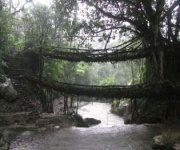
A waterfall swimming stop should occupy only part of a Meghalaya trip. Sohra also has limestone caves, scenic ridges, markets and living root bridges, many of which require walking on uneven or wet ground. Spread activities across several days so fatigue, rain or a closed attraction does not compress everything into one rushed itinerary.
For visitors who want enough time for both Cherrapunji and nearby natural attractions, the six-night Cherrapunji itinerary offers a practical starting point. A longer stay also creates time to change routes when rainfall closes a path and to revisit a pool under safer, supervised conditions rather than forcing a swim on the first afternoon.
Ask the operator which attractions require a local guide, which permits are current and what the fallback plan is for heavy rain. Use licensed transport, avoid walking on active roads during monsoon traffic and keep your final day light if an international flight leaves little margin for a Sohra-to-Guwahati delay.
Book with safety built in
Before confirming a tour, send the operator your swimming dates, preferred falls and questions about current access rules, lifeguards, guides and wet-weather alternatives. Confirm that the package covers the places you actually want to visit, along with private or shared transport, accommodation, entry fees and any permit or guide charges. This prevents a “waterfall sightseeing” package from being mistaken for a guaranteed bathing excursion.
Cherrapunjee.net is operated by India Beacons Sojourn, whose team can help organise a two-to-seven-night trip and advise on the most suitable season for your route. Use the booking enquiry details on the site, request the safety information you need, and reserve with enough flexibility to prioritise a closed-pool day over a missed connection or unsafe swim.