





What to Know About Local Transport In Cherrapunjee
Cherrapunjee, also known as Sohra or Cherrapunji, is a hill destination in Meghalaya where transport is shaped by steep roads, heavy rain and scattered attractions. There is no single central sightseeing district, so reaching waterfalls, caves, viewpoints and living root bridges usually requires a combination of road transfers and short walks.
For Australian travellers, the most important difference is the limited availability of spontaneous transport. You will not find a large fleet of app-based rides waiting outside every hotel as you might in Sydney, Melbourne or Brisbane. Taxis, shared sumos, private vehicles and locally arranged transfers are the practical ways to travel.
A little planning makes the experience far easier. Distances can look short on a map, yet winding mountain roads add time, and rain may slow traffic further. Organising a vehicle through your accommodation or tour operator is often more comfortable than trying to negotiate every journey after arrival.
Getting To Cherrapunjee
Most visitors reach Cherrapunjee from Shillong or Guwahati. Shillong is the closer base for a Meghalaya itinerary, while Guwahati is the main transport gateway for travellers arriving by air or long-distance train. Guwahati’s Lokpriya Gopinath Bordoloi International Airport has broader connections, including routes through major Indian cities such as Delhi, Kolkata and Mumbai.
The road from Guwahati to Cherrapunjee generally takes several hours, depending on traffic, weather and stops. Travellers often break the journey in Shillong, which allows time to see the state capital before continuing to Sohra. A private taxi is the simplest choice for visitors carrying luggage, while shared vehicles can be cheaper if you are comfortable with less flexibility and limited space.
From Shillong, taxis are the most common option for reaching Cherrapunjee. Hotels, resorts and tour providers can arrange a car with a driver for a one-way transfer or a return journey. If you are booking a multi-day holiday, check whether transport between Guwahati, Shillong, Cherrapunjee and other destinations is included before paying a deposit. A five-night itinerary can be useful for understanding how accommodation and road travel may fit together.
How Taxis And Shared Vehicles Work
Private taxis are the most convenient local transport option for sightseeing. Drivers familiar with the area can take you to popular places such as Nohkalikai Falls, Mawsmai Cave, Seven Sisters Falls, Arwah Cave and the viewpoints around Sohra. A hired car also lets you leave early, avoid waiting and carry waterproof clothing, food and spare footwear.
Fares may be quoted for a route, a day or a complete tour rather than calculated by a meter. Confirm what the price covers, including fuel, parking, driver allowances, waiting time and additional stops. It is sensible to agree on the itinerary in writing, especially if you want to visit attractions spread across different parts of the plateau.
Shared sumos and other shared jeeps connect towns and villages across Meghalaya. They are an important part of everyday travel and can be economical, but services may depart when full, operate on changing schedules and leave little room for large suitcases. They are better suited to independent travellers with time and a willingness to adapt than to families following a tightly timed holiday plan.
Local buses are available on some routes, although they are less useful for a sightseeing schedule. Services can be infrequent, and a bus may not stop close to a waterfall, cave entrance or trailhead. Australians accustomed to checking real-time transport through apps should expect to rely more on hotel staff, drivers and local information points.
Road Conditions And Journey Times
Cherrapunjee’s roads pass through hilly terrain, forest and villages. India drives on the left, as Australia does, so the basic road direction will feel familiar. The driving style, traffic mix and road environment can still be very different, with motorcycles, pedestrians, livestock, trucks and sharp bends sharing narrow sections.
Monsoon rain is a major factor in transport planning. Cherrapunjee is famous for some of the heaviest rainfall on Earth, and wet-season conditions can reduce visibility, create slippery roads and cause temporary delays. Water may run across the road, while minor landslips or maintenance work can affect a route without much notice. Build extra time into every transfer rather than scheduling an attraction immediately before a flight or train.
Distances should be judged by travel time rather than kilometres. A journey of 25 or 30 kilometres may take much longer than a similar drive between suburbs in Melbourne or Perth. Motion sickness is also worth considering because winding roads can continue for hours. Sit near the front of the vehicle, look towards the road and carry any medication you normally use.
Night driving is best kept to essential transfers. Roads may have limited lighting, and heavy rain makes bends and pedestrians harder to see. Arriving during daylight gives you a better chance to check the property, locate nearby shops and settle into the area before evening weather develops.
Moving Between Sights
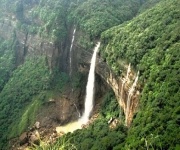
The main attractions are spread across a broad region, so one sightseeing day can involve several separate drives. Nohkalikai Falls is relatively accessible by road, while Mawsmai Cave has a designated visitor area and a short approach. Other places involve longer walks, uneven ground or steps after the vehicle has parked.
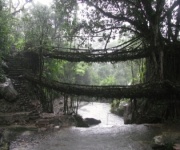
The living root bridges require special planning. The famous double-decker bridge at Nongriat is reached by a demanding descent and climb involving thousands of steps. A taxi can take you to the starting village, but it cannot continue along the footpath. Start early, carry water and allow enough time for the return ascent. A guide can help with directions, local conditions and pacing.
Some attractions are seasonal or weather-sensitive. Waterfalls may look most dramatic during and after the rains, although mist can obscure viewpoints and paths can become muddy. During drier months, clear views may improve while water levels change. Ask your driver or accommodation team about current access before setting out, rather than assuming an attraction will operate exactly as described online.
Walking is useful within villages, near markets and around some resort areas, but Cherrapunjee is not designed as a fully walkable town for sightseeing. Pavements may be uneven or absent, and roads can carry fast-moving vehicles. Treat walking as part of an attraction visit rather than a substitute for transfers between distant sites.
Walking, Transfers And Accommodation
Choosing accommodation carefully can reduce daily travel. A resort near the attractions may provide quiet surroundings and shorter morning transfers, while staying closer to the main market can make it easier to buy snacks, cash, toiletries and simple meals. Ask whether the property has parking and whether it can arrange a driver for early starts.
Many hotels and homestays have reliable relationships with local taxi drivers. This can be more practical than searching for a new vehicle at each attraction, especially during busy weekends or holiday periods. Confirm the vehicle type if you are travelling with several people, backpacks or hard-shell luggage; a compact car may feel cramped on mountain roads.
Transport around Cherrapunjee is primarily cash-based. Keep smaller Indian rupee notes for short rides, parking charges, entry fees, snacks and tea stalls. Australian bank cards may work at larger hotels, but mobile coverage and card facilities are inconsistent. An Australian-style assumption that contactless payment will be accepted everywhere can lead to inconvenient delays.
The local market is useful for fruit, biscuits, bottled water, umbrellas and inexpensive rain protection, but opening hours and stock vary. Carry essential medication and specialised equipment from Shillong or Guwahati. Australian travellers may recognise the practical value of planning like a long regional road trip from Adelaide to the Flinders Ranges: buy necessities before entering a remote area, keep a flexible timetable and do not rely on the next town having exactly what you need.
Practical Transport Recommendations
The most comfortable arrangement for a first visit is usually a private car with a local driver, particularly if you are travelling as a couple, family or small group. Shared transport can reduce costs, but it may add waiting time and make it difficult to combine several attractions in one day. Check current entry conditions, regional guidance and travel requirements through reliable travel information before setting off.
Use these habits to make local travel smoother:
- Reserve airport, railway and intercity transfers ahead of time, especially during Indian public holidays and Australian school holiday periods.
- Agree on the vehicle fare, route, waiting time and extra stops before beginning a private taxi journey.
- Carry cash in small denominations, drinking water, snacks, sunscreen and a waterproof layer every day.
- Wear shoes with firm grip for cave approaches, wet steps, village paths and the route to living root bridges.
- Leave generous space between sightseeing and onward flights, trains or fixed hotel check-in times.
- Avoid packing each day with distant attractions; two or three well-spaced stops are often more enjoyable.
Keep your itinerary adaptable during the wet season. A driver may recommend changing the order of stops because of fog, roadwork or heavy rain, and that local judgement can be valuable. The best transport plan is one that allows time for a viewpoint to clear, a trail to dry or a village stop to happen without turning the day into a race.
Organising transport as part of a package can simplify communication and budgeting. Ask whether the quoted service includes airport pickup, sightseeing transfers, driver accommodation, tolls, parking and any local guide fees. Clear inclusions reduce the chance of confusion when you are already tired after a long road journey.
Once your dates are set, arrange your Cherrapunjee transfers and sightseeing vehicle before arrival through a trusted local operator. With the right transport plan, you can spend more time experiencing Meghalaya’s waterfalls, caves, forests and root bridges and less time searching for a ride in the rain.