




What to Know About the Orange Festival in Sohra, Meghalaya
The Orange Festival arrives each December in the mist-soaked town of Sohra, formerly known as Cherrapunjee, when the Khasi Hills orchards flush with ripe, golden fruit. Travellers who arrive in Meghalaya during this brief window witness a celebration that is equal parts harvest fair, cultural pageant, and community reunion. It is one of those rare events where the calendar and the climate line up perfectly, and a visit rewards anyone willing to time their trip carefully.
Sohra holds a special place in Indian travel lore thanks to its record-breaking rainfall, dramatic limestone caves, and the iconic living root bridges stitched together by generations of Khasi villagers. Adding the Orange Festival to this mix turns a standard sightseeing holiday into something far more personal, with locals eager to share their heritage and produce. The festival is small by international standards, but that intimacy is exactly what draws repeat travellers from distant places.
For Australians planning a trip, the timing works surprisingly well. December sits at the start of monsoon-recovery in Meghalaya, while summer holidays in Sydney and Melbourne are winding down, making it a sensible window for a long-haul getaway. Travellers leaving from Brisbane or Perth often route through Singapore or Kuala Lumpur before connecting to Guwahati, then driving up to Sohra. The contrast between Australia's dry December heat and Sohra's cool, misty mornings is part of the appeal.
This guide covers the history, the highlights, and the practical side of attending, plus ideas for pairing the festival with other Meghalaya experiences. Whether you are a seasoned visitor to the North-East or booking your first Indian holiday from Adelaide, there is plenty here to help shape an itinerary worth remembering.
Origins and Significance of the Harvest Celebration
The festival traces its roots to the Khasi tradition of honouring the Sohriamit, or Khasi mandarin orange, which has been cultivated on hillside orchards for centuries. Families pass down grafting knowledge the way others pass down recipes, and the orange harvest marks a genuine turning point in the agricultural year. The state tourism department formalised the event in the early 2000s to draw attention to this heritage and to support growers who were struggling against cheaper imports.
Sohra's geography made it an obvious host. The region receives some of the heaviest rainfall on the planet, and the moisture-rich soil gives the local oranges their particular sweetness and thin, easy-peel skin. Visitors at the festival will notice that the fruit looks slightly different from the navel oranges stocked in Coles or Woolworths back home. Locals are fiercely proud of this distinction, and most are happy to explain their grafting methods if you ask.
The cultural significance runs deeper than agriculture. The Khasi people follow a matrilineal system, and the festival reflects that, with women playing a central role in organising stalls, judging competitions, and leading traditional dances. Travellers familiar with multicultural festivals in Parramatta or Footscray will find a different texture here, but the same energy of community-driven celebration.
Highlights and Activities During the Festival
Across the two or three days of festivities, the town square fills with stalls selling orange juice, marmalade, jams, and fresh fruit by the basket. One of the headline events is the orange-eating competition, where contestants race to peel and devour as many fruits as possible within a set time. It looks simple until you see seasoned locals make it look effortless while first-timers struggle with the slippery skins.
Music and dance performances run on a makeshift stage near the venue, with troupes performing the Shad Suk Mynsiem and other Khasi traditional numbers. The Shad Phoh, a contemporary rock-based Khasi genre, often makes an appearance in the evenings, and the sound carries surprisingly far through the cool December air. Visitors from Melbourne's live-music scene or Sydney's Inner West will recognise the universal pull of a festival crowd, even when the language is unfamiliar.
Other draws include a citrus cook-off, a photography exhibition focused on village life, and a beauty pageant showcasing traditional Khasi attire. The latter is a striking contrast to the formal gowns seen at Australian pageants like Miss Universe Australia, with contestants wearing heavy silk wraps, gold headdresses, and intricate beadwork. Children run around in woollens, and the smell of woodsmoke and frying snacks drifts from the food stalls throughout the day.
A quieter highlight is the chance to walk out to a nearby orchard during festival week. Several families welcome guests for a tour and a tasting, often followed by a simple meal of rice, smoked pork, and seasonal greens. These visits feel like the farm-gate experience Australians associate with the Barossa or the Tamar Valley, but set against a very different landscape of cliffs, waterfalls, and cloud forest.
Practical Travel Information for Australians
Australians do not need a visa in advance for short tourist visits if they are eligible for the e-Visa, which most passport holders can apply for online. The fee is modest and approval usually arrives within 72 hours. Carry a printed copy of the approval along with your passport, because hotel staff and checkpoint officers will sometimes ask for it. Travellers coming from New Zealand or holding an Australian PR visa should double-check the rules, as conditions occasionally change.
The best route from Australia is via Singapore or Kuala Lumpur to Guwahati's Lokpriya Gopinath Bordoloi International Airport, followed by a three-hour drive to Sohra. Direct flights from Melbourne or Brisbane to Guwahati are uncommon, so most travellers will overnight in Singapore. The road from Guwahati to Sohra climbs through the East Khasi Hills and the views become dramatic within the first hour.
Money matters are simple. Indian rupees are the only currency accepted locally, and ATMs are available in Guwahati and a few in Sohra itself. Inform your bank before departure, particularly if you hold an account with CBA, NAB, or Westpac, because Indian transactions occasionally trigger fraud alerts. Carry small denominations for tips and market purchases, as change can be hard to come by in the orchards and smaller villages.
Connectivity is patchy outside Sohra town. A local SIM with data works best for maps and translation, and most guesthouses offer Wi-Fi reliable enough for calls home. December temperatures in Sohra range from roughly 8 to 18 degrees Celsius, which feels brisk by Australian standards but mild for locals. Pack layers, a light waterproof jacket, and sturdy shoes for muddy trails if you plan to explore beyond the festival grounds.
Where to Stay and What to Explore Nearby
Accommodation in Sohra has improved noticeably in recent years. Options range from budget guesthouses to mid-range resorts with views over the Bangladesh plains on a clear day. Bookings during festival week fill quickly, so it pays to reserve at least a couple of months in advance if you are flying in from Perth or Adelaide. Most properties offer all-meals plans, and the food is reliably fresh, with rice, dal, fish, and seasonal vegetables as staples.
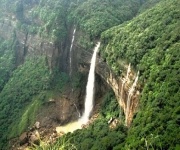
Within an hour's drive, you can reach Mawsmai Cave, one of the most accessible limestone caves in the region, and the famous Nohkalikai Falls, which drops from a cliff edge into a vivid green pool. Travellers drawn to longer underground adventures often pair their stay with caving excursions deeper into the hills, and A beginner's guide to caving in Cherrapunjee is worth reading before you arrive to understand what to expect.
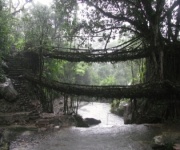
The living root bridges at Nongriat and Double Decker are the other headline draw. Reaching them involves a steep descent of more than 3,000 steps, and the climb back up rewards the effort with one of the most photographed spots in North-East India. Plan a full day for this and carry water, snacks, and a change of socks. The bridges are living structures that grow stronger with each passing year, and standing on one feels like stepping into a different century.
Before leaving Sohra, spend a quiet hour at the local viewpoint that overlooks the Bangladesh floodplains. It is the kind of spot that lingers in memory long after the flight home, particularly for visitors from Australia's flat inland towns who rarely see elevation like this. Browse the photo gallery for a sense of what to expect and to start daydreaming about the trip.
Extending Your Trip Through Meghalaya
The Orange Festival makes a natural anchor for a longer Meghalaya itinerary. Many visitors add a night or two in Shillong, the state capital, about two hours from Sohra, which offers a livelier restaurant scene, bookshops, and a bustling local market. From Shillong, day trips to Dawki and Mawlynnong are straightforward, with the crystal-clear waters of the Umngot River being a favourite among photographers.
Dawki's boat rides, where the water is so clear the boats appear to float on glass, are popular with visitors from Sydney's harbourside suburbs who are used to seeing boats but rarely this close to the surface. Mawlynnong has been labelled the cleanest village in Asia by several travel publications, and the cleanliness is genuinely impressive on the ground.
For travellers with more time, Kaziranga National Park in neighbouring Assam offers a chance to see one-horned Indian rhinos on safari. The park sits about six to seven hours from Sohra by road, so it works best as the final leg of a trip before flying home from Guwahati. Australians who enjoy safari experiences in Kenya or Tanzania will find Kaziranga a more compact and very different alternative.
Back in Sohra itself, take time to walk through the village lanes even after the festival wraps up. The slower pace, the call-and-answer greetings from locals, and the smell of woodfire cooking are the kinds of details that turn a holiday into something worth retelling. Booking enquiries and package options are available through the Cherrapunjee travel team, who can help shape an itinerary around the festival dates, accommodation preferences, and side trips across Meghalaya and Assam.