





The Best View Across the Bangladesh Plains from Cherrapunjee
From the high escarpment around Cherrapunjee, also known as Sohra or Cherrapunji, the land falls away towards the broad plains of Bangladesh. On a clear day, the view changes dramatically from Meghalaya’s forested hills to a distant, almost level landscape stretching towards the horizon. It is one of the most memorable sights to include in a Meghalaya holiday.
The finest outlook is generally found at Thangkharang Park, a scenic reserve located a short drive from Sohra. Several other roadside lookouts and cliff-edge viewpoints offer similar panoramas, but Thangkharang combines elevation, open sightlines and a well-known position above the plains. Your experience will depend heavily on cloud, rain and visibility.
For travellers from Australia, Cherrapunjee is a rewarding addition to a north-east India itinerary. Most journeys involve flying from Sydney, Melbourne, Brisbane, Perth or another capital to an Indian gateway, then connecting through Kolkata, Delhi or Guwahati. A local driver and pre-arranged accommodation make the final journey far easier than trying to coordinate transport after a long international flight.
The plains outlook is just one part of a Sohra stay. Waterfalls, caves, living root bridges, forest trails and Khasi villages give the region a strong sense of place. A two-night visit can cover the major sights, while three to five nights allow time for sunrise walks, weather delays and slower exploration.
Why Thangkharang Park stands out
Thangkharang Park sits near the southern edge of the Sohra plateau, close to the Bangladesh-facing escarpment. From its viewpoints, visitors can look across deep valleys and layered ridges towards the low country. On exceptionally clear mornings, the contrast between the green Meghalaya highlands and the flatter terrain below is striking.
The park is also associated with Khoh Ramhah, a distinctive rock formation shaped like an upturned vessel. It provides a memorable landmark within the wider landscape, although the Bangladesh panorama is the main reason many visitors make the detour. The surrounding forest and maintained paths make it a more comfortable viewing stop than an exposed roadside pull-over.
Arrive early if you want softer light and a better chance of seeing the plains before afternoon cloud builds. Sunrise is not guaranteed to reveal the horizon, especially during the wettest months, but early visits are usually quieter. Travellers keen on elevated morning scenery can also explore these sunrise hikes in Cherrapunjee while planning a wider walking itinerary.
Other lookouts around Sohra
Duwan Sing Syiem Viewpoint, often called Sohra Viewpoint, is another useful stop for broad valley scenery. Its position near the town makes it convenient on a sightseeing circuit, and the outlook can be particularly attractive when low cloud gathers in the valleys. It may not provide the same uninterrupted sweep as Thangkharang Park, but it is easy to combine with local markets, accommodation and nearby attractions.
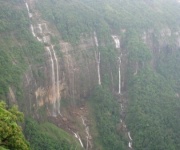
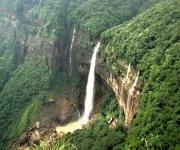
The route towards Nohkalikai Falls also includes dramatic viewpoints over the surrounding plateau. From the falls area, the landscape is dominated by forested cliffs and the famous blue-green plunge pool, yet breaks in the cloud can reveal distant lowlands. Mawsmai and other cave areas are more focused on geology than long-distance views, though they fit naturally into the same day’s driving route.
Roadside viewpoints should be treated with care. Some have limited barriers, uneven ground and wet stone, while mist can make the edge difficult to judge. A driver familiar with Sohra can stop at safer pull-offs and adjust the route when visibility changes. This is especially valuable for visitors accustomed to Australian roads, where signage, shoulder width and safety infrastructure may be more predictable.
Choosing the right season for clear horizons
The dry and cooler period, broadly from October to April, usually gives the best chance of seeing far across the Bangladesh plains. November to February can bring crisp mornings, while March and April often offer warmer conditions before the southwest monsoon becomes dominant. Clear weather is still variable because Sohra’s elevation and exposed position create fast-changing conditions.
The monsoon months bring Cherrapunjee’s legendary rainfall, powerful waterfalls and deep green scenery. They are less reliable for a distant horizon, as cloud and rain can conceal the plains for hours or days. Some visitors consider the moody atmosphere part of the attraction, but anyone travelling specifically for the panorama should allow spare time rather than relying on a single viewing attempt.
Australian holiday calendars can influence the best booking strategy. December and January are popular periods for Australians taking a longer summer break, and accommodation around Shillong and Sohra can fill during Indian school holidays as well. If your plans line up with the Australian winter, May can offer a useful shoulder-season option, though rain may already be increasing.
Pack for changing conditions rather than assuming a tropical destination means constant heat. A lightweight waterproof jacket, quick-drying clothing, grippy walking shoes, sunscreen and a small daypack are practical. Australians used to saying “arvo” for the afternoon may find that the most useful local habit is starting sightseeing early, before the afternoon cloud and traffic make every stop slower.
Planning the journey from Australia
Sohra is around two hours from Shillong by road in favourable conditions, although traffic, rain, roadworks and photo stops can lengthen the journey. Guwahati is the main aviation gateway for many itineraries, followed by a road transfer of several hours. Shillong Airport has a more limited schedule, so it should not be treated as the only option when comparing flights.
An organised package can simplify the connections, particularly for first-time visitors to north-east India. Cherrapunjee itineraries commonly combine airport transfers, hotels or resorts, local sightseeing and guided visits to attractions such as Nohkalikai Falls, Mawsmai Cave and living root bridges. When comparing operators, check whether meals, entry fees, transport, guides and extra nights are clearly listed rather than assuming the headline price covers everything.
Australians should arrange an Indian visa or e-Visa through the applicable official process before departure and carry a passport with suitable validity. Travel insurance should cover medical care, trip interruption, trekking and weather-related disruption. It is also sensible to carry some Indian rupees for small purchases, while larger hotels and established operators may accept cards or digital payments.
For broader itinerary research and regional arrangements, Meghalaya travel planning can help travellers compare practical options beyond a single viewpoint. A local contact is particularly useful when flights arrive late, roads are affected by heavy rain or a popular trail requires a change of plan.
Making the viewpoint part of a wider stay
The Bangladesh plains view works best as one element in a carefully paced Sohra itinerary. On the first day, settle into your resort or hotel and visit an accessible viewpoint. The next day can include Thangkharang Park, Nohkalikai Falls, Mawsmai Cave and other nearby stops. Extra nights create room for a living root bridge walk, a village visit or a second attempt at the panorama.
The living root bridges near Sohra require more physical effort than a scenic park. Some routes involve steep stairs, uneven paths and humid conditions, so a realistic schedule matters. A traveller who spends the morning walking to a bridge may prefer a quiet viewpoint and an early dinner rather than packing every attraction into the same afternoon.
Mist is common and can arrive suddenly on the plateau. Visibility may fall from several kilometres to a few metres, particularly near exposed bends and forest roads. If you are self-driving, review the local conditions before leaving and avoid treating a clear departure as a guarantee for the return journey. This guidance on driving through mist is worth reading before hiring a vehicle.
Photography is most rewarding when you allow the scene to change. Cloud may part briefly, revealing distant ridges and the plains below, then close again minutes later. A phone can capture the scale, but a wide-angle camera, lens cloth and waterproof cover are useful additions. Do not lean over barriers or approach cliff edges for a wider frame.
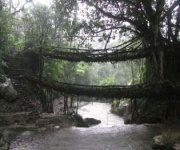
A stay in Sohra also offers cultural context that a quick viewpoint stop cannot provide. The Khasi people have shaped and protected many of the region’s living root bridges, and local guides can explain how the bridges grow over generations. Respect village customs, ask before photographing people and keep noise low at sacred or community-managed sites.
Allow at least thirty minutes at Thangkharang Park, and longer if the weather is shifting. The best vantage point may change as cloud moves across the escarpment, while the rock formations and forest paths deserve more than a rushed photograph. Visitors who build flexibility into their schedule have a better chance of seeing the distant lowlands at their clearest.
Book your Cherrapunjee holiday with enough time for weather, road conditions and a second chance at the plains view. Explore the available two- to seven-night packages, choose accommodation suited to your route and contact Cherrapunjee.net for help arranging transfers, stays and local sightseeing from Australia.