





Sunset over the plains from Cherrapunjee’s cliffside benches
At sunset, Sohra’s green escarpment turns gold above the Bangladesh plains. From the cliffside lookouts around Cherrapunji, the lowlands appear almost limitless, with forests, rivers and distant settlements fading into the haze. A fixed bench or concrete ledge provides a comfortable place to watch the light change, although seating varies between viewpoints and cannot be guaranteed.
The panorama depends heavily on the weather. Clear late afternoons can reveal the entire plain, while mist may conceal everything except the nearest ravines. Rain is possible throughout the year, with the heaviest downpours generally arriving between May and September. Winter often offers longer views, but sharper air and faster-moving clouds can close the horizon within minutes.
There is no single cliffside bench that works for every sunset. Nohkalikai is known for its broad view, Wah Kaba combines the plain with waterfall country, and Shillong Peak is a practical choice for a relaxed evening session. Dympep Valley is more atmospheric, while the central Sohra viewpoint is convenient but often busier.
Travellers should choose one main viewpoint and treat another as a backup rather than rushing between them in fading light. Allow at least 45 minutes before sunset to find the seating, check the horizon and protect phones or cameras from sudden rain. From Australia, the journey usually involves an Indian flight connection and a road transfer through Shillong, so an overnight stay near Sohra gives the best chance of reaching the cliffs before the golden hour.
Nohkalikai viewpoint: the broad-plains classic
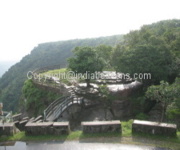
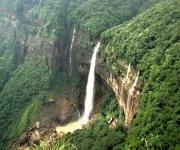
About four kilometres from central Cherrapunji, Nohkalikai is the most widely recommended viewpoint for scenery. Fixed seating and concrete platforms near the upper lookout provide places to sit, although the main attraction is the edge itself. Beyond the Kynshi gorge, the Bangladesh plain spreads across the horizon beneath the blue folds of the Meghalaya hills.
On a clear afternoon, late sunlight moves across the distant fields and wooded ridges. The sun does not appear to sink directly into Bangladesh from every position on the platform, but the entire lowland region catches the changing colour. Photographers often wait for the foreground plants to become silhouettes while the plain retains a soft bronze glow.
The path around the viewpoint is manageable for most visitors, though wet stone can be slippery and the lower edges are exposed. Arrive with a light rain layer, keep distance from unguarded drops and avoid blocking families or photographers who have positioned themselves at the best spots. If cloud gathers at Nohkalikai, do not assume the sunset is lost; the illuminated cloud layer itself can be striking above the gorge.
Wah Kaba: falls, clouds and a dramatic drop
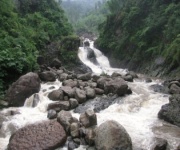
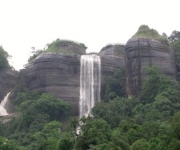
Wah Kaba, roughly six kilometres from Sohra, offers a more dramatic combination of waterfall and landscape. The upper viewpoint sits above the Kynshi river valley, with low benches and concrete ledges close to the cliff. From there, the ground appears to fall sharply into forest before opening towards the Bangladesh plains.
Water spray and drifting mist give this viewpoint a different character from Nohkalikai. During clear weather, the layered ridges remain distinct and the plain forms a pale band beyond them. When moisture rises, the falling water and low cloud merge into a temporary whiteout, making it especially important to remain on the established viewing area.
Stay near the upper shelter rather than descending towards the lower falls after sunset, as the steps and rocks become difficult to judge in poor light. The approach road is generally suitable for a taxi, but the final stretch may be narrow or uneven. Drivers should proceed slowly around livestock, pedestrians and hairpin bends, and travellers should follow local advice if recent rain has affected the surface.
Shillong Peak: a practical sunset favourite
Shillong Peak is a popular choice for visitors who want a broad sunset view without the intense sense of height found at Nohkalikai or Wah Kaba. Seating around the summit area offers a comfortable place to watch the evening light spread across the Cherrapunji valley. On clear days, distant lowlands are visible between the surrounding ridges.
The summit is less exposed than a sheer cliff, making it a sensible option for families or anyone who prefers a stable bench and a short walk from the parking area. It is also easier to combine with an afternoon visit to Sohra’s market or caves. The main compromise is that a substantial ridge can block the sun itself, so the best views may occur before the official sunset time.
Clouds often gather around the peak, particularly during the monsoon, and strong wind can make an open platform uncomfortable. Ask a local driver about current conditions and carry a warm layer. If visibility is poor, head towards Wah Kaba or Nohkalikai rather than waiting indefinitely for the summit to clear.
Dympep Valley and the central Sohra viewpoint
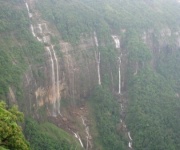
Dympep Valley is a deep, forested bowl reached by a winding road and a short walk from the parking area. Rocky platforms and concrete seating provide elevated views into the green valley, where waterfalls and mist commonly appear. Late light can illuminate the upper foliage beautifully, although the enclosed landscape does not always provide the uninterrupted plains horizon visible elsewhere.
This viewpoint is especially rewarding when sunlight catches the spray and creates a rainbow across the valley. It is less dependable for a formal sunset because the western ridges may hide the sun before it reaches the horizon. Treat it as a place for changing light, shifting clouds and dramatic colour rather than a guaranteed view of the sun dropping over Bangladesh.
The central Sohra viewpoint, often listed among Cherrapunji’s main lookouts, provides a much easier option for visitors with limited time or mobility. It is close to town and gives a broad view across the escarpment towards the lowlands, but the area can become crowded around sunset. A better strategy is to inspect the available benches early, then settle near a safe edge while leaving room for local families and day visitors.
Planning an Australian journey around the sunset
Most Australian travellers begin in Sydney, Melbourne or Brisbane and connect through a major Indian city before continuing to Guwahati. Guwahati has the broader flight network, while Umiam’s Shillong airport can reduce the final road journey when schedules and weather permit. Flights into Meghalaya change through the year, so the entire domestic connection should be protected rather than booked as a separate last-minute purchase.
Australian travellers are accustomed to tapping cards for everyday purchases, but small shops and market stalls around Sohra may prefer cash, and UPI payment apps generally require an Indian bank account or setup. Carry a controlled amount of rupees in small notes and confirm the price before buying food or souvenirs. This differs from the familiar routine at a Sydney or Melbourne farmers’ market, where displayed prices are usually treated as fixed. Mobile eSIMs and international roaming may work in Meghalaya, but checking home-carrier coverage and charges in advance is sensible.
Australia and India both drive on the left, which gives Australian drivers a useful starting point. Indian roads nevertheless present different challenges, including livestock, shared vehicles, pedestrians, monsoon damage and traffic that may not follow a predictable lane pattern. Book a car with a local driver for the sunset journey and avoid unfamiliar mountain roads after dark. Australian passport holders must also meet current Indian visa rules, and any drone should remain grounded until DGCA registration and permission requirements have been checked. Returning to Australia requires equal attention to biosecurity law, with food, plant material, soil and wooden objects declared before arrival.
Weather changes quickly on the escarpment, so pack layers, a waterproof jacket, reliable footwear and a small dry bag for phones. A sheltered bag is more useful than a large umbrella near the cliffs. For a longer stay, compare Sohra hotels and Cherrapunji resorts according to their distance from the viewpoints rather than location alone. Heritage properties add another dimension to the trip, and British-era bungalow history explains how these retreats became part of the region’s distinctive story.
Your strongest sunset will come from choosing the right viewpoint for the day’s visibility, not chasing the final minutes of daylight. Keep Nohkalikai for the widest plain, Wah Kaba for waterfalls and dramatic mist, Shillong Peak for relaxed seating, and Dympep for changing light over a forested valley.
Review the multi-day Cherrapunjee packages on Cherrapunjee.net and send a booking enquiry to India Beacons Sojourn with your travel dates, group size and preferred viewpoints. A well-timed stay turns the cliffside benches into a memorable evening above Meghalaya’s eastern edge.