





Where to Stay for Direct Access to the Living Root Bridges
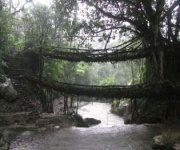
Most visitors plan Cherrapunjee as a day trip from Shillong, but the area rewards a slower stay. Trailheads for the famous living root bridges sit around Nongriat, Tyrna and Riwai, so choosing the right accommodation can turn a crowded excursion into a walk beginning before the day-trip buses arrive. Prioritise access to a trailhead, not simply a room with a bridge view.
Staying near the bridges does not mean sleeping on a fragile structure or beside a waterfall. It means selecting a guesthouse, homestay or resort within practical walking or short-driving distance of a trailhead while checking trail conditions, transport arrangements and post-rain access. For Australians accustomed to sealed paths and dependable resort services, those details matter more than a familiar hotel format.
For a first visit, two nights in the Sohra area offer the best balance of access and choice. One night works for a fast itinerary, while three or more allows time for Tyrna, Nongriat, a cave and a market morning without rushing every transfer. The following guide explains where to base yourself, which facilities to ask about and how to build a comfortable walking itinerary.
Find the Base That Shortens Your Trek
Sohra is the main service hub for Cherrapunjee’s bridges, waterfalls and caves. Nongriat lies roughly 11 kilometres from Sohra centre, with a further approach of around three kilometres to the celebrated Double-Decker Bridge. Riwai has its own access point and a quieter walking environment, while Tyrna provides a separate route to a single-decker bridge. A property advertised merely as “near Cherrapunji” may therefore save only the journey from Shillong, not the morning walk.
Nongriat accommodation gives you the strongest chance of reaching the Double-Decker Bridge early, before the steep path becomes crowded. Staying at the edge of Sohra can achieve a similar result if your host arranges a taxi for dawn. Sohra centre is more convenient for restaurants, fuel, shops and organised tours, although a departure time of 5.30 or 6 am may still require a pre-booked vehicle rather than finding one at the door.
Tyrna suits travellers who prefer a shorter, less demanding forest walk, and Riwai appeals to those prioritising village atmosphere over the closest starting point for Nongriat. Ask each accommodation provider which trailhead it uses, how long the transfer takes and whether the route remains accessible during rain. A short drive on paper can become a slow mountain journey during heavy monsoon weather.
Stay Close to Nongriat and Tyrna
The Double-Decker Bridge attracts more walkers than the surrounding network, and the final approach includes roughly 3,500 uneven steps. Nongriat village accommodation therefore has a clear practical advantage: you can begin before the first substantial group of visitors. The path can be slippery even without rain, so trainers with good grip are more useful than smooth-soled shoes. Carry water, a waterproof outer layer and a small daypack rather than a full suitcase.
Nongriat guesthouses and family-run homestays provide a closer connection with the landscape, but facilities vary. Confirm whether hot water is available, whether electricity runs through the evening and where wet boots can be left to dry. Some properties use bucket water or supply hot water at set times. A Sohra-edge hotel offers more predictable comforts while retaining a manageable transfer to the trailhead, making it a practical compromise for Australian visitors who value a proper bed and private bathroom.
Tyrna’s single-decker route is often easier to fit into a shorter trip, while Riwai rewards travellers with a peaceful village setting. Heavy rain changes the equation for every option, so maintain a flexible schedule and check local safety guidance around waterfalls and streams. If the bridges are unsuitable that day, indoor rainy-day activities provide alternatives such as cave visits, local museums and indoor viewpoints.
Match Sohra and Riwai to Your Travel Style
Sohra centre works well for independent travellers who want restaurants, cafés, fuel and easy access to transport. It is also the most straightforward place to arrange a guided excursion or a multi-day Meghalaya package. Accommodation there can range from simple guesthouses to larger hotels, but rooms near the main road may experience traffic and noise. Ask for a quieter location if rest is a priority, and check how close the property is to the actual trailhead rather than just the town centre.
Riwai has a more residential character and fewer late-night conveniences. Village homestays and bungalows can offer direct access to the quieter bridge route, often with home-cooked meals prepared by arrangement. Confirm dinner and breakfast times before arrival, particularly when arriving late from Shillong or Guwahati. Mobile coverage may be inconsistent, cash may be needed for small purchases, and departure vehicles should be organised in advance rather than assumed.
Choose Nongriat if your priority is the Double-Decker Bridge and an early start. Choose Sohra if you prefer more services, a broader choice of accommodation and easier tour booking. Consider Riwai for a slower stay centred on village life. Compare the total journey time to each attraction, including transfers and walking, instead of judging accommodation by nightly price alone.
Account for Australian Needs and Local Customs
Australian travellers commonly depart from Sydney, Melbourne or Brisbane, with many journeys connecting through Singapore or Bangkok before continuing to Kolkata or Guwahati. From Guwahati, a road journey reaches Shillong before the climb to Sohra. Some visitors instead use Kolkata and connect with an overnight train, which can save a hotel night. Allow generous time between international and domestic flights, particularly when the connection involves a change of airport or a separate baggage check. Check Smartraveller advice and the current Indian e-visa rules for Australian passport holders before departure.
Carry a useful amount of Indian rupees in small notes for guides, porters, village homestays and market stalls. Larger hotels and established restaurants often accept cards, but smaller businesses may not, and UPI generally assumes a local bank account. Traffic drives on the left, as in Australia, although mountain roads, livestock and sudden rain require caution. Tips for guides and porters are appreciated in modest amounts rather than coins, and agreeing the amount beforehand prevents confusion. In markets, ask the price first; bargain gently only where bargaining is expected.
Meghalaya is home to distinct Khasi and Garo communities, and Khasi society is matrilineal. Respect local religious customs, ask before photographing people and observe access rules around sacred groves and culturally significant sites. Meghalaya allows alcohol at licensed venues, though it is not widely available outside towns. Many Khasi dishes contain pork, so vegetarians should identify themselves and ask about ingredients before ordering. A market visit offers opportunities for tasting local dishes, including jadoh, putaro and seasonal bamboo-shoot preparations.
Recommendations for Choosing and Booking Your Stay
The best base depends on which bridge matters most, how comfortable you are with local transport and how much time you have. Compare the practical characteristics of each area before selecting a property, and confirm current availability directly with the operator.
| Base | Best for | Typical accommodation | Main consideration |
|---|---|---|---|
| Nongriat | Early access to the Double-Decker Bridge | Guesthouses and family-run homestays | Basic services; confirm hot water, electricity and dinner |
| Tyrna | A quieter single-decker bridge and a shorter approach | Simple homestays and bungalows | Limited dining and fewer evening transport options |
| Riwai | Village atmosphere and slower travel | Homestays and small bungalows | Allow extra transfer time and carry cash |
| Sohra centre | Restaurants, fuel, shops and organised tours | Hotels, guesthouses and resorts | Farther from the early-morning Nongriat trailhead |
| Sohra edge | A balance between trail access and hotel comforts | Small hotels and guesthouses | Confirm vehicle access and the exact walking distance |
Descriptions can blur the distinction between Sohra’s centre, its outskirts and Nongriat village. A map pin alone may not reveal steep access roads or a long final approach, so request clear directions and an arrival pickup where possible. Hotel photographs should be checked against recent traveller reviews, particularly for cleanliness, hot water and mobile signal.
The following recommendations help make a Cherrapunjee base work smoothly:
- Book Nongriat and Sohra accommodation ahead for weekends, school holidays and the wettest period.
- Confirm whether trail transfers, guide fees and porter charges are included in the quoted price.
- Ask about hot water, drying space for wet clothing, luggage storage and access to a local restaurant.
- Pack grippy trail shoes, a lightweight rain jacket, dry bags for electronics and a second pair of footwear.
- Keep enough Indian rupees for guides, porters, village purchases and locations without card facilities.
- Leave one flexible day in the itinerary so heavy rain does not force a rushed transfer to a departure flight.
For another way to compare routes and packages, review Dexter Travels before contacting India Beacons Sojourn through Cherrapunjee.net for current accommodation, transfers and multi-night package details.