




Reading Khasi monoliths across Meghalaya
Across the hills of Meghalaya, stone is part of the cultural landscape rather than a forgotten relic. Upright pillars, broad memorial slabs, and clusters of weathered rocks appear beside village paths, sacred groves, old settlements, and ceremonial spaces. For Khasi communities, these stones can preserve memory, honour ancestors, and mark relationships between families, clans, and places.
The Khasi Hills around Sohra, also known as Cherrapunji, offer an excellent setting for understanding this tradition. Mist, rain, forests, and steep valleys shape the atmosphere around the stones, but the meaning of each monument comes from living customs and local history. A visit becomes richer when the stones are viewed as part of a community’s identity instead of as isolated archaeological objects.
Khasi monoliths are also connected to the wider megalithic heritage of Meghalaya. Similar traditions can be found among neighbouring communities, including the Jaintia people, although names, ceremonies, and historical associations vary from one location to another. Travellers should therefore approach each site with curiosity and care, allowing local explanations to guide what they see.
Stone traditions in the Khasi hills
The Khasi word maw means stone, and stone-related place names are common throughout Meghalaya. A tall upright stone may be known as a menhir, while a horizontal slab supported by upright stones is often described as a dolmen. Local terminology and interpretation can differ, so these archaeological terms are useful descriptions rather than replacements for indigenous knowledge.
Many Khasi stone settings are associated with remembrance. A vertical monolith may commemorate a respected ancestor, clan head, public figure, or important event. Horizontal stones can be linked with ceremonial seating, offerings, or the symbolic arrangement of a community gathering. The physical form matters, but the social story attached to it matters more.
These memorials were generally not designed as private monuments. They could express a collective relationship with the past, showing how families remembered leadership, kinship, migration, or shared responsibility. In this sense, a stone landscape can function as an open-air record of community values even when there is no written inscription.
Rain and time have softened many edges, covered bases with moss, and blended monuments into the surrounding vegetation. This weathering is part of the visual character of Meghalaya, but it can also make it difficult to identify the original arrangement. A local guide can often explain details that are invisible to a first-time visitor.
What the stones can represent
Khasi society has historically placed strong importance on clan relationships and ancestry. Memorial stones may therefore be connected with the public recognition of a person’s contribution to the community. The act of raising a stone required labour, cooperation, and a shared decision, making the monument meaningful for the people who created it.
In some places, the stones are associated with ceremonial meals, village councils, or the resting places used during gatherings. Their arrangement may suggest a distinction between standing memorial pillars and horizontal slabs intended for sitting or placing objects. However, visitors should avoid assuming that every stone has the same purpose. Interpretation depends on the site, the community, and its oral history.
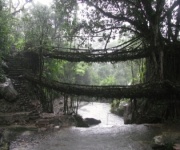
The Khasi cultural landscape also includes sacred groves, living root bridges, springs, caves, and traditional villages. These features should not be separated into unrelated attractions. A monolith beside a wooded area may be understood through the same ideas of continuity, respect, and stewardship that shape the protection of a sacred forest.
This connection is especially important around places such as Mawphlang, where the forest is valued for spiritual and ecological reasons. The stones are part of a wider cultural geography in which land, ancestors, stories, and customary rules overlap. The most rewarding visits pay attention to that relationship rather than rushing from one photograph to the next.
Places to encounter megalithic heritage
Sohra and the surrounding Khasi Hills are a natural base for exploring stone monuments. Some sites are close to established roads, while others are found near villages and require a short walk. Conditions can change quickly during the monsoon, and a path that looks simple on a map may become slippery or difficult after heavy rain.
Mawphlang is well known for its sacred grove and offers an opportunity to see how cultural heritage and forest conservation exist side by side. The village is also useful for understanding the role of customary rules. Visitors should follow local guidance carefully, particularly where collecting leaves, branches, stones, or other natural objects is prohibited.
The wider Meghalaya region contains other important megalithic settings. Nartiang in the Jaintia Hills is particularly famous for its large collection of monoliths and should be understood within Jaintia history rather than presented as a Khasi site. Mawsynram and several villages in the Khasi Hills also preserve stone traditions, though the visibility and accessibility of individual monuments differ.
Mawlynnong is another place where travellers can observe the relationship between village life, landscape care, and local identity. A visit to Mawlynnong village can complement a cultural route through the Khasi Hills, especially when the itinerary includes time to walk beyond the most photographed viewpoints and learn from residents.
How to read a monolith respectfully
The first question at a stone site should be about context. Is the monument part of a memorial ground, a sacred area, a village entrance, or a place used for ceremonies? A guide, elder, caretaker, or local resident may explain whether visitors can approach, touch, sit near, or photograph the stones.
The shape of a monument can offer clues, but it does not provide a complete interpretation. Tall stones often draw attention because of their height, while low slabs may appear ordinary to visitors unfamiliar with their role. Look at the arrangement, the surrounding ground, nearby trees, and any signs or boundary markers before deciding what you are seeing.
| Feature | What it may indicate | Visitor approach |
|---|---|---|
| Upright pillar or menhir | Memorial, honour, ancestry, or a public event | Observe from the permitted area and ask before touching |
| Horizontal slab or dolmen | Ceremonial seating, gathering, or commemorative setting | Do not sit on it unless a local guide invites you |
| Cluster of stones | Community memory or a historic ceremonial space | Look for the overall arrangement rather than one stone |
| Stones beside a grove | Connection with sacred land and customary protection | Follow forest rules and avoid removing anything |
| Weathered or partly buried stone | An old monument altered by time and rainfall | Do not clear soil or vegetation to expose it |
Photography is usually welcome in public areas, but permission is appropriate when people are conducting a ceremony or when a site is privately managed. Avoid climbing on the stones, placing objects on them, or recreating poses that turn a memorial into a prop. Quiet observation is often the most respectful way to appreciate the atmosphere.
Stories carried through oral tradition
Written sources can provide dates, names, and archaeological descriptions, but they rarely capture the full significance of a Khasi stone setting. Oral traditions may explain who commissioned a monument, why it was raised, how the stones were transported, or which community responsibilities were connected with the event.
Stories can also vary between villages and families. This does not make them less valuable. Different versions may show how memory is maintained, adapted, and passed between generations. Travellers should avoid treating variation as a contradiction that needs to be corrected.
A responsible guide will distinguish between documented history, local belief, and personal interpretation. That distinction helps visitors understand the site without flattening a complex tradition into a single dramatic legend. It also gives communities control over how their heritage is represented.
The Khasi language adds another layer of meaning. Place names, words for stones, and terms connected with clans or forests can reveal relationships that are lost in translation. Learning a few basic expressions and listening carefully to pronunciation can make a cultural excursion feel more personal and grounded.
Building a thoughtful cultural route
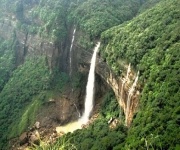
A stone-focused excursion works best when combined with other aspects of Khasi heritage. A route from Sohra may include a sacred grove, a village walk, a waterfall, a living root bridge, and a monolith site. This creates a fuller picture of how people interact with a demanding landscape shaped by intense rainfall and steep terrain.
Allow more time than a simple sightseeing itinerary suggests. Monuments are often located away from main viewpoints, and the most meaningful part of a visit may be a conversation or a slow walk through the surrounding village. Early starts can provide clearer roads and cooler conditions, while the wet season requires additional care with footwear and transport.
Travel arrangements should also account for local access rules. Some sites may be open only at certain times, require a village fee, or be unsuitable for large groups. Conditions can change during festivals, ceremonies, heavy rain, or periods of conservation work, so current information from a local operator is valuable.
A multi-day Meghalaya holiday makes it easier to combine Sohra with Mawphlang, Mawlynnong, Shillong, and the Jaintia Hills. This avoids treating every monument as a brief stop and allows the differences between Khasi and Jaintia cultural landscapes to become clearer. It also reduces the pressure to visit too many locations in a single day.
Practical choices for a respectful visit
Good preparation protects both visitors and the places they come to see. Comfortable walking shoes, modest clothing, rain protection, drinking water, and a small first-aid kit are useful for most Khasi Hills excursions. Mobile coverage may be inconsistent in rural areas, so keep important contact details and directions available offline.
Choose a guide or tour provider that works with local communities and explains cultural etiquette before arrival. A knowledgeable guide can identify which stones are publicly accessible, introduce appropriate local contacts, and help prevent accidental damage. Their insight can also turn a short stop into a meaningful lesson in Khasi history.
- Ask permission before photographing ceremonies, residents, guides, or privately managed monuments.
- Keep voices low and never climb, sit on, mark, or rearrange the stones.
- Follow sacred grove rules, including restrictions on collecting plants, rocks, leaves, or wood.
- Carry reusable water bottles and take all packaging back with you.
- Set aside time to support local guides, homestays, craft sellers, and community-run attractions.
The most important souvenir is an informed memory rather than a physical object. Take notes, record the name of the village, and credit local explanations when sharing photographs or stories. This small effort helps preserve the distinction between cultural learning and casual extraction.
Khasi monoliths invite a slower form of travel. Their power is found in the relationship between stone and story, monument and community, forest and memory. Plan a cultural journey through Sohra and Meghalaya with time for local guidance, respectful exploration, and the living traditions that give these stones their meaning. Explore available Cherrapunjee travel packages and arrange a route that brings the Khasi landscape and its heritage into view.