




Community Tourism in Cherrapunjee and the Khasi Hills
For generations, the Khasi people of Meghalaya have shaped their highland landscapes through co-operative labour, sharing knowledge across hamlets to tend forests, build living structures, and welcome travellers into their world. Community tourism in Cherrapunjee is the modern continuation of that ethos, where villagers themselves design experiences, set fair prices, and decide what visitors may see. The model turns tourism into a livelihood rather than an intrusion, and it is increasingly drawing curious Australians who crave slow, meaningful journeys far from crowded coach circuits.
Many travellers booking flights out of Sydney or Melbourne discover Meghalaya through photography or travel essays shared on social platforms, then realise that the experiences on offer are run by families and village councils. The appeal resonates with Australian values around fair go, environmental care, and the kind of genuine human exchange you simply cannot script. From the moment you land in Guwahati and begin the climb toward Sohra, the rhythm of community-led travel shapes your itinerary in ways most packaged holidays never do.
This guide walks through the philosophy behind the model, the most rewarding projects to visit, and the practical steps needed to plan a trip from Australia. Whether you are coming for the living root bridges, the cave networks, the cleanest village in Asia, or simply to share a meal with a Khasi family, understanding how community tourism works will deepen every moment you spend in the hills.
The Spirit of the Khasi Community Tourism Model
The villages around Cherrapunjee operate on a system known locally as noh ka bor and noh ka sñiaw, traditions that bind the community to shared work and shared responsibility. Tourism cooperatives across Meghalaya have adapted these customs, pooling resources so that guides, porters, cooks, and homestay hosts all share in the income. Travellers who join these experiences typically pay a single fee that is divided among households rather than funnelled to a distant operator. The structure has helped reduce migration from remote villages and has preserved oral traditions, music, and dialects that would otherwise fade.
Australian visitors often compare the experience to the co-operative spirit found in organisations like the Fremantle Markets' community stallholders or the producer-driven wine collectives of the Margaret River region, where shared benefit outweighs individual profit. There is a parallel sense that the place itself, not the business, comes first. Guides speak about their land the way a fourth-generation winemaker speaks about a vineyard, and that pride translates into storytelling that turns each walk into a living lesson.
By choosing a community-run tour, you directly support school fees, healthcare funds, and forest restoration in villages that often receive very little government infrastructure. The economic transparency is unusual by global standards, and many travellers from Brisbane and Perth say it is the single most rewarding element of their Meghalaya itinerary.
Living Root Bridges and the Co-Created Forest
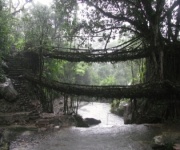
The living root bridges of the Khasi hills are perhaps the most photographed example of community craftsmanship anywhere in Asia. These structures are grown over decades from the aerial roots of rubber fig species, trained by hand across streams and strengthened with stone and bamboo. Villages such as Nongriat, the hamlets surrounding Mawsynram, and the areas around Tyrna maintain the bridges collectively, with knowledge passed from elders to schoolchildren. Visitors are expected to walk carefully, listen to their guide, and avoid leaving any litter behind, since the surrounding forest supplies the village with water, fruit, and medicine.
Australians used to bushwalking in places like the Larapinta Trail or the Blue Mountains will feel at home on the steep stone steps leading down to the double-decker root bridge at Nongriat, though the humidity and constant drizzle are a different proposition altogether. The walk takes roughly three to four hours down and back, and most community groups recommend setting aside a full day. Along the way, your guide will point out edible ferns, medicinal plants, and the small orange flowers that signal an approaching rain shower, the same weather patterns that make Cherrapunjee one of the wettest places on earth.
The funds raised through bridge-side tourism help maintain the rainforest itself. Several villages have planted additional fig saplings near riverbanks to replace bridges lost in floods, a process that takes two decades or more to mature. By visiting with a registered cooperative, you contribute to this slow, patient restoration rather than simply observing it.
Mawlynnong and the Cleanest Village Approach
A short drive east of Cherrapunjee lies Mawlynnong, often called the cleanest village in Asia. The title is not a marketing slogan; it is the outcome of a community-driven sanitation programme begun in 2003 by the village council. Every household sweeps its lane each morning, waste is sorted at the village gate, and plastic bags have been banned for nearly two decades. Tourists arriving from cities such as Melbourne, accustomed to debating single-use plastic policies of their own, find the Mawlynnong approach refreshingly thorough.
A guided walk through the village takes you past bamboo dustbins painted in bright colours, up a sky-view platform built from living roots, and into small tea stalls run by women's collectives. The profit from these stalls funds the local school and a community hall where Khasi dance performances are held on weekends. Travellers are asked to remove their shoes before entering certain homes, to refrain from photography inside private spaces, and to greet elders with a small nod, gestures of respect that the community takes seriously.
The lessons of Mawlynnong have travelled far. Village leaders have hosted delegations from across India, and the model has inspired similar initiatives in places as distant as Tasmania's small eco-communities. A visit here is not a passive sightseeing stop but a chance to learn from a community that has turned environmental discipline into a shared cultural achievement.
Cave Networks Managed by Local Guides
Cherrapunjee and its neighbour Mawsynram sit on a limestone plateau riddled with caves, some of which have only been fully explored in the last two decades. While the well-trafficked Mawsmai and Arwah Caves offer a taste of what lies underground, the greater treasure is found in deeper systems such as Krem Mawmluh, Krem Liat Prah, and several others that require rope work and expert local knowledge. The guides trained by village associations hold the maps, the climbing techniques, and the seasonal understanding needed to enter safely. Without them, even experienced Australian bushwalkers and cavers should not attempt these passages.
For travellers curious about venturing beyond the popular show caves, exploring the hidden caves with experienced Khasi guides opens a quieter, more technical side of Meghalaya. These trips typically require advance booking, modest fitness, and a willingness to get genuinely muddy. The reward is solitude, surreal limestone formations, and the satisfaction of supporting a small group of guides who depend on adventure tourism for their livelihood.
Homestays, Cuisine, and Cultural Exchange
Staying in a community homestay is the most direct way to understand daily life in the Khasi hills. Most homes are built of stone and timber, with corrugated iron roofs and warm hearths that hum through the cool evenings. Hosts typically prepare meals of rice, smoked pork, fermented soybean, river fish, and seasonal greens, with jadoh and tungrymbai among the dishes you may encounter. Travellers from Australia will find the flavours distinct from mainland Indian cooking, with a strong reliance on fermentation, smoked meat, and foraged herbs rather than heavy cream or chilli.
Cultural exchange tends to happen naturally over meals. Khasi hosts are often curious about life in Australia, and conversations may range from cricket scores in Adelaide to Tim Tam preferences and Vegemite loyalties. Bringing a small gift from home, perhaps a jar of local honey, a piece of Aboriginal art, or even a pack of Tim Tams, is a thoughtful gesture and rarely expected. Photography of family members should always be requested first, and many hosts appreciate a printed photograph mailed back to them later as a keepsake.
Several cooperatives also run short craft workshops where visitors can try their hand at weaving, bamboo craft, or cooking a Khasi dish alongside local women. These sessions are light-hearted, accessible, and provide income outside the peak trekking season. They also leave you with skills and memories that no souvenir shop can match.
Planning Your Trip from Australia
Indian visas for Australian passport holders are processed through the secure e-Visa portal, with options for tourist, business, and medical categories. Most travellers apply for the e-Tourist Visa, which allows double entry for up to ninety days and is usually approved within seventy-two hours. Print a copy of the approval letter and carry it through immigration, since officials occasionally ask for the digital record alongside your passport. The most common route involves a flight to Delhi or Kolkata, then a connection to Guwahati, with one-stop itineraries available from Sydney through Singapore, Kuala Lumpur, or the Middle East.
From Guwahati, shared taxis and pre-booked transfers make the four-hour climb into Cherrapunjee straightforward, though road works during the monsoon sometimes add an extra hour. Australian dollars can be exchanged at Guwahati airport, but Indian rupees withdrawn from an ATM usually offer a better rate, so notifying your bank before departure is wise.
Practical points for Australian travellers
- The monsoon runs from June to September, when Cherrapunjee records some of the highest rainfall on the planet. Many travellers prefer the drier months of October to May for trekking and cave visits.
- Pack a light rain jacket, sturdy footwear with grip, and quick-dry layers; the climate is cooler than the Australian coast but far wetter than any Melbourne winter.
- Mobile connectivity is reliable in town but patchy on forest trails. Carry a paper map and download offline maps before leaving Guwahati.
- Pre-booking community homestays is strongly advised during the peak months from November through February, when village capacity fills quickly.
Community-led experiences worth prioritising
- A guided trek to the Nongriat double-decker root bridge with a village cooperative.
- A homestay weekend in Mawlynnong with a women-led cooking session.
- A half-day cave exploration in less-visited systems, led by certified local cavers.
- An evening of traditional Khasi dance and music in a village community hall.
- A sunrise visit to the Thangkharang Park and the distant plains of Bangladesh.
Reach out to India Beacons Sojourn to arrange a tailored itinerary that supports the villages you most want to visit. Their team can coordinate homestays, transport, and guide allocation well in advance, ensuring your journey lifts up the communities that make Cherrapunjee so memorable. Book early, pack a sense of curiosity, and prepare for a trip that will reshape how you think about travel itself.