





A Guide to Eco-Tourism Initiatives in and Around Cherrapunjee
Cherrapunjee, also known as Sohra or Cherrapunji, is celebrated for dramatic waterfalls, rain-fed forests, limestone caves, mountain viewpoints, and living root bridges. These attractions draw visitors throughout the year, yet the landscape depends on careful stewardship. Heavy monsoon rain can renew streams and forests, while unmanaged tourism can quickly damage paths, water sources, and village surroundings.
Eco-tourism in this part of Meghalaya is closely connected with local communities. Village councils, guides, homestay owners, conservation groups, and residents all influence how visitors experience the region. Their work may involve maintaining trails, protecting forests, managing access to sensitive sites, reducing waste, or preserving traditional knowledge.
A responsible trip is therefore more than a sightseeing itinerary. It is a way to support local livelihoods while giving natural and cultural places the time and care they need to recover. Understanding these efforts helps travelers choose better activities, spend money locally, and explore Cherrapunjee with greater respect.
What Eco-Tourism Means in Sohra
In Sohra, eco-tourism is best understood as low-impact travel that benefits residents and protects the environment. It includes guided walks through forested areas, visits to community-managed attractions, stays in locally operated accommodation, and journeys that spread visitor spending beyond a few heavily visited viewpoints.
The approach is especially important because the region has fragile terrain. Slopes can erode during intense rainfall, narrow trails become slippery, and popular waterfalls may receive large crowds during holidays. Simple actions such as staying on marked paths, carrying reusable drinking water, and following local instructions help reduce pressure on these places.
Community participation gives conservation a practical foundation. Local guides know seasonal trail conditions, stream crossings, wildlife habitats, and customary practices. Hiring them adds safety to a journey and ensures that a portion of tourism income remains within the villages surrounding the attraction.
Visitors should also remember that environmental care and cultural sensitivity are connected. Sacred groves, village forests, root bridges, and traditional water systems are part of living communities rather than theme-park displays. Photography, conversation, and movement through these areas should always be guided by local customs.
Living Root Bridges and Forest Stewardship
The living root bridges around Cherrapunjee are among Meghalaya’s most remarkable examples of nature-based engineering. Local Khasi communities have trained the aerial roots of rubber fig trees across streams and ravines, gradually creating strong crossings that can remain functional for generations. Their construction and maintenance require patience, observation, and inherited knowledge.
These bridges are living structures, so careless use can cause lasting harm. Climbing on railings, pulling roots, carving names, or leaving litter near the stream affects both the bridge and the forest around it. Visitors should walk carefully, avoid overcrowding a narrow crossing, and follow directions from local guides or village caretakers.
The forest paths leading to root bridges can be as significant as the bridges themselves. Moist soil, moss, ferns, and small streams support a rich ecosystem, but repeated shortcuts can expose roots and accelerate erosion. Staying on established routes protects vegetation and makes the trail safer for everyone.
A guided visit can also provide cultural context. Residents may explain how the bridge developed, how monsoon water shapes the valley, and why community cooperation is necessary for repairs. Paying a fair guiding fee is a direct way to support the people who protect these landscapes.
Waterfalls, Caves, and Rain-Fed Habitats
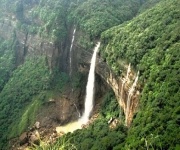
Water is central to the character of Cherrapunjee. Nohkalikai Falls, Dainthlen Falls, Wei Sawdong Falls, and other cascades change dramatically with the seasons. Monsoon rainfall can create immense flow, while drier months may offer clearer views and easier access. Travelers planning a waterfall-focused itinerary can use this guide to the best time for flow before arranging their visit.
Waterfall viewpoints need careful management because crowds gather in concentrated areas. Visitors should use designated observation points, avoid entering dangerous pools, and never cross barriers for photographs. Wet rocks, sudden currents, and poor visibility can turn an attractive viewpoint into a serious hazard, particularly after heavy rain.
The limestone caves near Sohra are equally sensitive. Cave ecosystems develop slowly and may contain unusual rock formations, underground streams, bats, insects, and microorganisms. Touching formations, shouting, feeding wildlife, or leaving plastic inside a cave can disturb conditions that took thousands of years to develop.
A responsible cave excursion uses an authorized route and follows the advice of local guides. Headlamps are preferable to disposable batteries or open flames, and footwear should provide grip without damaging the cave floor. Groups should remain small enough to move safely and avoid blocking narrow passages.
Community Businesses and Conservation Finance
Locally owned hotels, homestays, restaurants, transport services, and guiding businesses play an important role in eco-tourism. When visitors choose these services, their spending can support village employment and reduce the need for residents to leave in search of work. Local operators are also more likely to understand nearby conservation priorities.
Accommodation providers can contribute through rainwater collection, waste separation, solar lighting, efficient fixtures, and reduced use of disposable toiletries. These measures may seem modest, but they matter in a region where waste collection and water management can be difficult, especially during busy travel periods.
Food is another part of the local economy. Choosing Meghalaya dishes made with seasonal ingredients supports farmers, cooks, and small eateries. Travelers can ask for filtered or boiled water, carry refillable bottles, and decline unnecessary plastic packaging. Some establishments may have different systems, so guests should follow the property’s instructions rather than assume a single standard applies everywhere.
Tour operators can strengthen conservation by building realistic itineraries. Allowing enough time for walks, avoiding rushed stops, and using local guides reduce congestion and make the experience more meaningful. Multi-day trips can also distribute visitor activity among waterfalls, viewpoints, villages, forests, and cultural sites instead of concentrating it in one location.
Comparing Conservation Experiences
Different eco-tourism initiatives offer different kinds of value. Some focus on protecting habitats, while others preserve knowledge, create local income, or manage visitor safety. The strongest travel plans usually combine several approaches rather than treating one attraction as the entire experience.
| Initiative | What visitors experience | Main conservation value | Respectful visitor behavior |
|---|---|---|---|
| Living root bridge care | Forest walks and traditional bridge crossings | Preserves Khasi ecological knowledge and reduces trail damage | Walk gently, avoid climbing roots, and follow village guidance |
| Community-guided cave visits | Exploration of limestone formations and underground passages | Protects fragile cave habitats and controls access | Use approved routes, avoid touching formations, and keep noise low |
| Waterfall site management | Viewpoints, seasonal cascades, and mountain scenery | Reduces erosion, accidents, and litter near water sources | Stay behind barriers, carry waste out, and avoid unsafe swimming |
| Local homestays and eco-conscious resorts | Regional hospitality and slower travel | Keeps tourism income in local communities and encourages resource efficiency | Conserve water and electricity and respect household customs |
| Forest and sacred grove protection | Biodiversity, shade, birds, and traditional landscapes | Maintains native habitats and cultural conservation practices | Do not remove plants, collect objects, or enter restricted areas |
| Responsible transport and guiding | Safer access to dispersed attractions | Supports local employment and reduces uninformed activity | Hire local providers and accept route or timing restrictions |
This comparison also shows why eco-tourism cannot be measured only by the appearance of a property or the number of recycling bins available. A genuine low-impact experience includes responsible access, community benefit, protection of biodiversity, and respect for local decisions.
Planning a Lower-Impact Cherrapunjee Trip
Timing affects both comfort and conservation. The monsoon brings powerful waterfalls and vivid greenery, but trails may be slippery and some routes can become difficult or temporarily inaccessible. Post-monsoon months often provide lush scenery with more manageable walking conditions, while drier periods may be better for cave visits and long excursions.
A flexible itinerary is useful. If a trail is closed because of rain, erosion, maintenance, or safety concerns, replacing it with a village experience or a nearby viewpoint is wiser than trying to bypass restrictions. Local guides and accommodation hosts can provide current information that may not appear in older travel posts.
Travelers should pack for changing conditions: shoes with reliable grip, a light rain layer, quick-drying clothing, a refillable bottle, a small first-aid kit, and a bag for carrying waste. Waterproof protection for phones and documents is practical during sudden showers. Visitors should bring only what they need, since every item carried into a forest or cave must eventually be carried out.
Before visiting a village or cultural site, learn a few local etiquette basics. Ask before photographing people, homes, ceremonies, or private spaces. Dress comfortably but respectfully, keep voices low near sacred or community areas, and avoid assuming that every natural place is open for unrestricted access.
Practical Choices That Support Conservation
Small decisions shape the quality of tourism in Cherrapunjee. The following habits are simple to adopt and useful across waterfalls, forests, caves, villages, and accommodation properties:
- Carry a refillable bottle, reusable bag, and personal toiletries to reduce single-use plastic.
- Hire local guides and drivers through reputable operators familiar with current routes and community rules.
- Stay on marked trails, use designated facilities, and take all non-biodegradable waste back to an appropriate collection point.
- Keep a safe distance from wildlife, avoid feeding animals, and never remove plants, stones, roots, or cave fragments.
- Choose locally owned accommodation and restaurants, while conserving water, electricity, and laundry services during your stay.
Responsible behavior should continue after leaving an attraction. A respectful traveler reports unsafe conditions to the operator rather than attempting repairs, gives constructive feedback about waste or crowding, and supports businesses that demonstrate genuine care for the region.
Booking a multi-day package can also support better travel patterns when the itinerary includes locally guided walks, community-run stays, and adequate time at each site. A well-paced journey creates fewer rushed transfers and allows visitors to understand how the landscape, culture, and local economy fit together.
Make Your Visit Count
Cherrapunjee’s eco-tourism initiatives are strongest when visitors recognize that conservation is a shared responsibility. A root bridge survives through generations of care, a forest remains healthy through community protection, and a waterfall destination stays welcoming when guests respect safety and waste rules.
When planning your journey, select an itinerary that combines natural attractions with local experiences and responsible accommodation. Use current guidance from trusted operators, ask about access conditions before setting out, and give preference to services that employ residents and protect the places they showcase.
Explore Sohra with patience, spend locally, leave natural areas unchanged, and let your travel contribute to the long-term care of Meghalaya’s forests, waterways, caves, and living heritage.