





A Seasonal Guide To Wildflowers In Sohra
Sohra, also known as Cherrapunji, is celebrated for its rain-fed landscapes, plunging waterfalls, misty escarpments, and living root bridges. Yet the hills hold another attraction that changes quietly through the year: wildflowers. Small blossoms along a forest path, orchids tucked into mossy branches, and bright flowers growing beside streams add colour to a landscape often dominated by green.
The best time to see flowers depends on the kind of experience you want. The monsoon brings vigorous growth and lush flowering around wet trails, while the months after the rains offer clearer walks and easier access to viewpoints, caves, and forest routes. Winter and early spring bring a gentler display, with woodland plants, seasonal herbs, and occasional orchid blooms appearing in sheltered areas.
Wildflower watching in Sohra is less about finding a single famous garden and more about noticing life at different elevations and in different habitats. Roadside banks, village paths, sacred groves, stream edges, grasslands, and shaded forests each support their own plant communities. A slow pace and a good local guide can reveal far more than a quick drive between attractions.
Why Sohra Supports Such Rich Plant Life
The Khasi Hills receive exceptional rainfall, particularly between June and September. Water runs through porous rock, gathers in forest hollows, and feeds countless small streams. This combination of moisture, mist, and mild temperatures creates ideal conditions for mosses, ferns, climbers, herbs, and flowering plants.
Sohra’s terrain also changes rapidly. A short journey can pass from exposed plateau to deep forest, from sunny grassland to a humid ravine. Each setting receives different levels of light, wind, and moisture, allowing many species to grow within a relatively compact area. Even when large flowers are scarce, the ground layer can be full of colour and texture.
The region’s forests are especially important for epiphytic plants. Orchids and other species grow on tree trunks and branches without taking nutrients from the host tree. Moss-covered bark, leaf litter, and shaded rock faces provide additional habitats for delicate plants that are easy to overlook.
Monsoon Blooms Along Wet Trails
The rainy season is the most dramatic period for vegetation in Sohra. From late May or June, depending on the year, the landscape becomes intensely green. Balsams and other moisture-loving wildflowers may appear beside paths, near stream crossings, and along damp banks. Their colours can range from white and pink to purple and reddish tones.
Impatiens species, commonly associated with wet Himalayan and northeastern habitats, are among the flowers visitors may encounter during the rainy months. Their delicate stems and irregular petals suit the shaded, humid conditions of the Khasi Hills. Wild ginger relatives, turmeric-family plants, and flowering herbs also emerge from the forest floor when the soil is saturated.
The monsoon is rewarding for close observation, though conditions require care. Trails can become slippery, low clouds may reduce visibility, and heavy rain can change stream levels quickly. Waterproof footwear, a rain cover for cameras, and a flexible itinerary make it easier to enjoy the plant life without rushing.
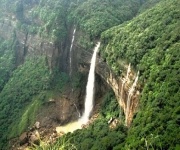
Waterfalls are at their most powerful during this season, and flowers often appear in the same environments that make these excursions memorable. Around falls, spray zones and damp rock faces support mosses, ferns, and small flowering plants. Visitors should keep to established paths because wet ground can conceal unstable edges and fragile vegetation.
Orchids, Ferns, And Forest Companions
Sohra and the wider Meghalaya region are known for their orchid diversity. Wild orchids may be found in forested areas, especially where mature trees, humidity, and filtered light create suitable growing conditions. Some bloom high above eye level, while others grow closer to the ground or along mossy branches. Their flowering periods vary, so sightings are never guaranteed on a particular walk.
The orchid display is often complemented by begonias, aroids, lilies, and small woodland flowers. Many of these plants prefer shade and may grow near boulders, ravines, or old trees rather than in open fields. Their leaves can be as distinctive as their flowers, with patterned, glossy, or unusually shaped surfaces that stand out against dark forest soil.
Ferns are not wildflowers in the botanical sense, but they are essential to the visual character of Sohra’s trails. Tree ferns, maidenhair ferns, and smaller species thrive in the region’s damp air. Together with mosses and liverworts, they create the green backdrop against which seasonal flowers become visible.
Some of the most rewarding walks combine botanical interest with a physical challenge. If you are planning a demanding route through forested terrain, read about challenging Cherrapunjee treks before choosing footwear, timing, and fitness requirements.
| Season | Flowers And Plant Features | Best Habitats | Walking Conditions |
|---|---|---|---|
| Early Monsoon | Balsams, ginger relatives, fresh herbs, mosses | Stream edges, forest paths, wet banks | Increasingly wet; slippery sections |
| Peak Monsoon | Impatiens, orchids in suitable forests, ferns, spray-loving plants | Waterfalls, ravines, shaded woodland | Very wet; heavy rain and cloud cover |
| Post-Monsoon | Lingering herbs, grasses, orchids in select areas, seed heads | Open slopes, village paths, forest margins | Clearer skies and easier visibility |
| Winter | Woodland plants, hardy herbs, dried flower heads | Sheltered forests and sunny clearings | Cooler, generally more comfortable |
| Early Spring | New shoots, seasonal herbs, occasional orchids and lilies | Forest edges, grassland, cultivated margins | Pleasant for longer walks |
Post-Monsoon Colour And Clearer Views
October and November are often excellent months for combining flower watching with sightseeing. The rain begins to ease, roads and trails may be more manageable, and the air can feel fresher after the wet season. Waterfalls continue to flow, though their volume varies, while open slopes reveal grasses, herbs, and late-season blooms.
Post-monsoon vegetation has a different character from the lush display of July and August. Some plants continue flowering, while others produce seed capsules and dried heads that attract insects and add structure to the landscape. Sunlight reaches more of the forest floor, making it easier to identify leaves and small flowers.
This season is particularly suitable for visitors who want to explore several parts of Sohra in one trip. A morning walk can focus on forest plants, followed by a visit to a waterfall or cave and an afternoon at a viewpoint. Clearer conditions also make photography easier, although the soft light of misty weather can be equally appealing.
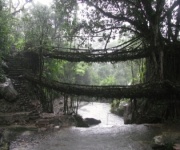
The living root bridges are another place where plant life takes centre stage. The bridges are shaped over generations from the aerial roots of rubber fig trees, and their surrounding forests often contain mosses, ferns, vines, and small flowering plants. Allow enough time to observe the ecosystem rather than treating the bridge as a single photographic stop.
Winter And Early Spring Woodland Flowers
From December to February, Sohra is cooler and usually less rainy. The landscape may appear less flamboyant than during the monsoon, but winter walks can be comfortable and rewarding. Open grasslands turn more muted, while evergreen forest remains rich in texture. Sunny clearings may hold small herbs that are easy to miss during a wetter, faster-paced visit.
Early spring gradually brings new growth. Depending on rainfall and elevation, fresh shoots, woodland herbs, and occasional lilies or orchid flowers may appear. Flowering is influenced by local weather, so the calendar shifts from year to year. A warm spell can encourage early blooms, while an extended dry period may delay them.
Winter and spring are good seasons for visitors who prefer longer walks, photography, and quieter viewpoints. The reduced rain can make routes to caves, forest pools, and root bridges more comfortable. However, exposed cliffs and plateaus can still be windy, and mornings may begin with mist or low temperatures.
At this time of year, plant watching benefits from patience. Look beneath shrubs, around tree bases, and along the edges of footpaths. Avoid picking flowers or moving moss-covered stones, since many woodland plants grow slowly and depend on stable, undisturbed conditions.
Where To Look For Seasonal Wildflowers
Forest margins are among the most dependable places to search. They receive more light than dense woodland while retaining moisture from nearby trees. Village paths, shaded roadside banks, and the edges of cultivated land can also support herbs and climbers, though visitors should remain on public routes and avoid entering private fields.
Stream crossings and waterfall approaches offer humid microhabitats. Here, look for mosses, ferns, balsams, and small plants rooted in cracks or soft soil. Never step directly onto a plant-covered bank to get a closer photograph. A telephoto lens or phone zoom helps preserve the setting without disturbing it.
Sacred groves deserve special respect. These protected forest patches near Khasi communities often retain old trees and an undisturbed understory. Their ecological value extends well beyond flowers, supporting insects, birds, fungi, and medicinal plants. Follow local customs, stay on permitted paths, and do not collect specimens.
Open plateaus provide a contrasting experience. Wind, sunlight, and thinner soil favour grasses, hardy shrubs, and low-growing seasonal plants. These areas can look sparse from a distance but reveal small flowers when viewed slowly. Early morning or late afternoon is usually comfortable for photography and walking.
Planning A Flower-Focused Visit
A local guide can improve the experience by identifying habitats, explaining traditional plant uses, and choosing a route suited to current weather. Guides also know which paths are open and where recent rain may have caused erosion. Since many wildflowers are small, local knowledge can make the difference between an ordinary walk and a memorable botanical outing.
Carry a light waterproof jacket, quick-drying clothes, sturdy shoes with good grip, and a small towel. Insect repellent, drinking water, sun protection, and a dry bag are useful in every season. During the monsoon, protect phones and cameras carefully. Binoculars can be helpful for observing flowers growing in trees or on steep slopes.
Keep a respectful distance from plants and wildlife. Do not pick flowers, dig up bulbs, carve tree trunks, or remove orchids from their natural habitat. Avoid using flash close to insects and refrain from blocking narrow paths while taking photographs. Responsible observation helps preserve the same seasonal displays for local communities and future visitors.
For transport, accommodation, permits, and route details, review the site’s travel information before arriving. Planning around daylight, rainfall, and driving time will leave more room for unhurried walks and unexpected sightings.
Practical Ways To Notice More Flowers
A few simple habits can make a major difference when exploring Sohra’s plant life:
- Walk slowly through transitions between forest, grassland, and streamside habitats.
- Carry a small notebook or use a plant-identification app without uprooting specimens.
- Visit the same area at different times of day, since light and insect activity change.
- Ask a local guide about flowering periods rather than relying on a fixed calendar.
- Leave flowers, mosses, seeds, and rocks where they are for the ecosystem to regenerate.
Wildflower watching works especially well when included within a broader Meghalaya holiday. A two-night stay can cover major viewpoints and waterfalls, while longer packages allow time for root bridges, caves, forest trails, and quiet village surroundings. The flexible pace of a multi-day trip also increases the chance of seeing different weather patterns and seasonal stages.
Sohra’s flowers are rarely presented as a formal spectacle. They appear in the spaces between larger attractions: beside a wet trail, beneath a tree, around a waterfall, or at the edge of a village. That subtlety is part of their appeal. The journey rewards visitors who look closely and allow the landscape to set the pace.
Plan your Cherrapunji getaway with time for seasonal walks, waterfall visits, forest exploration, and local guidance. Explore the available Sohra vacation packages and contact India Beacons Sojourn through Cherrapunjee.net to arrange a stay that brings Meghalaya’s changing plant life into focus.